
 English
 Français
 Español
 العربية
 中文
 עברית
 Deutsch
 Dansk
 हिन्दी
 Soomaali
 Kiswahili
Ethiopian food
Most meals come on injera, a soft, slightly sour flatbread you tear with your right hand to scoop up stews, and this is the birthplace of coffee. Here's what injera is and how to eat it, the dishes to try, the coffee ceremony and what to drink.
What is injera?
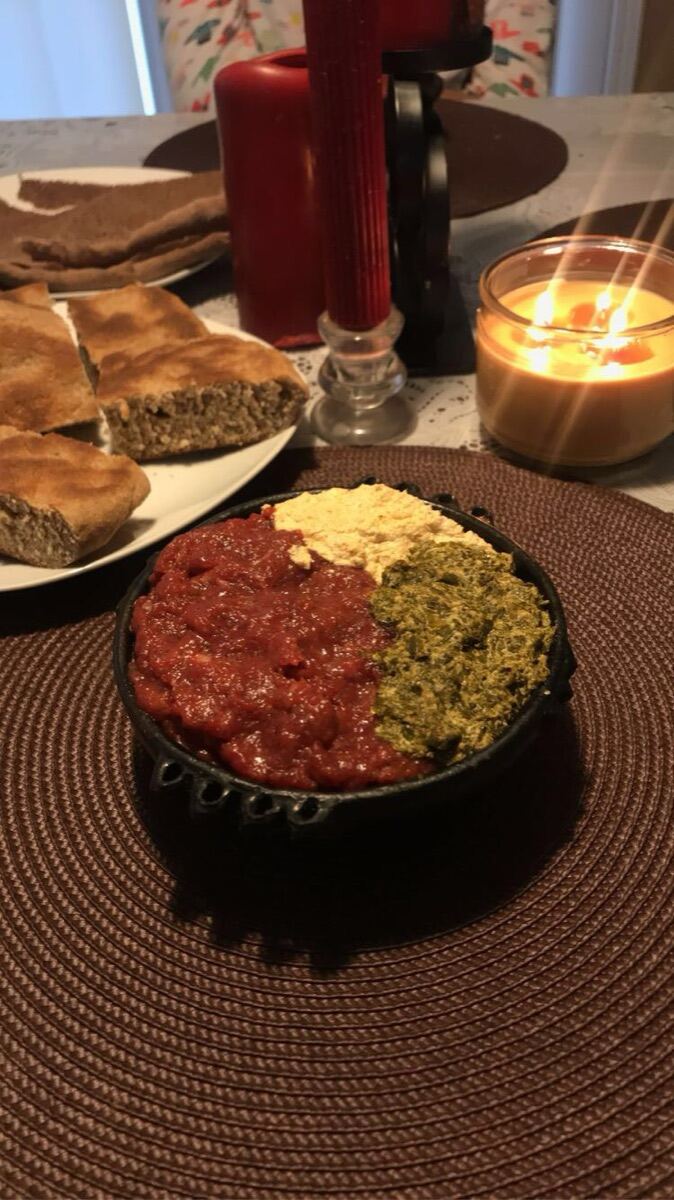
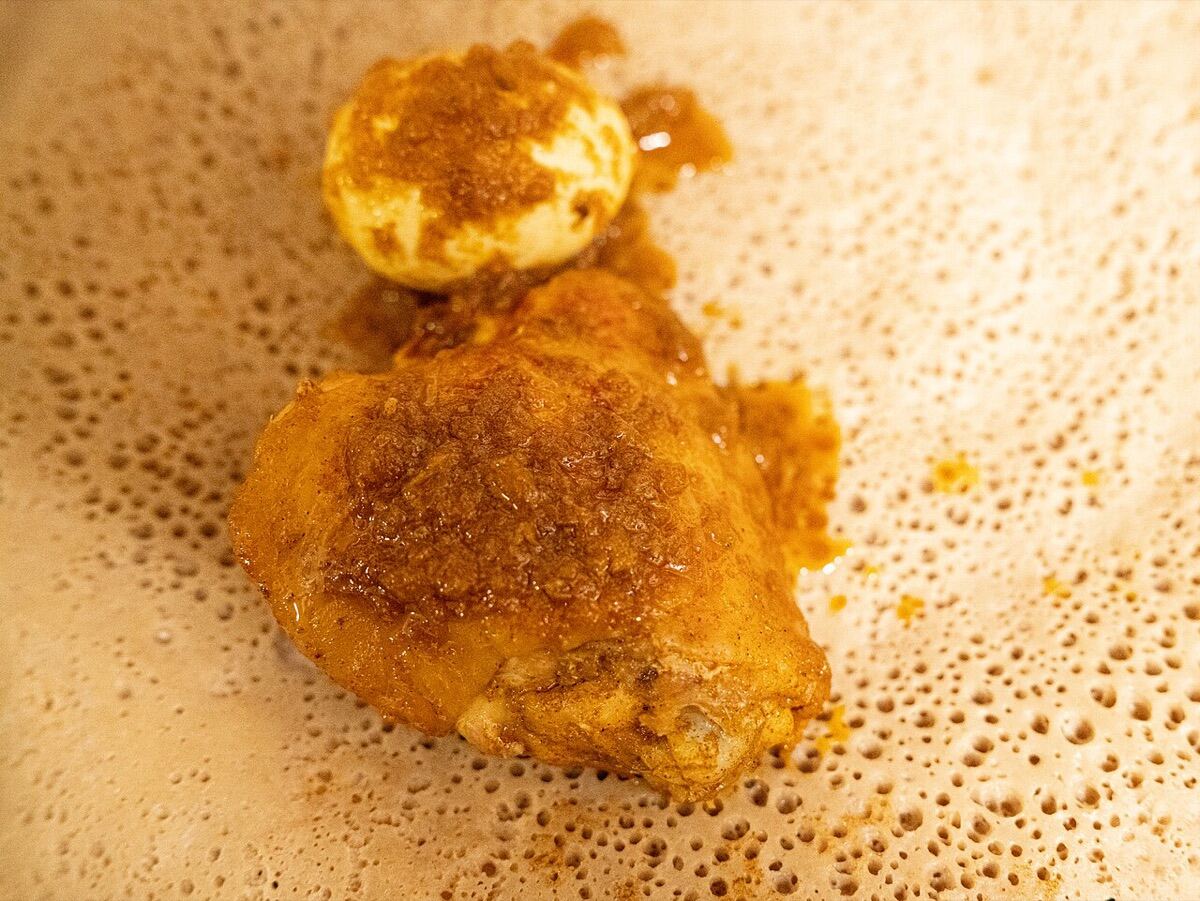
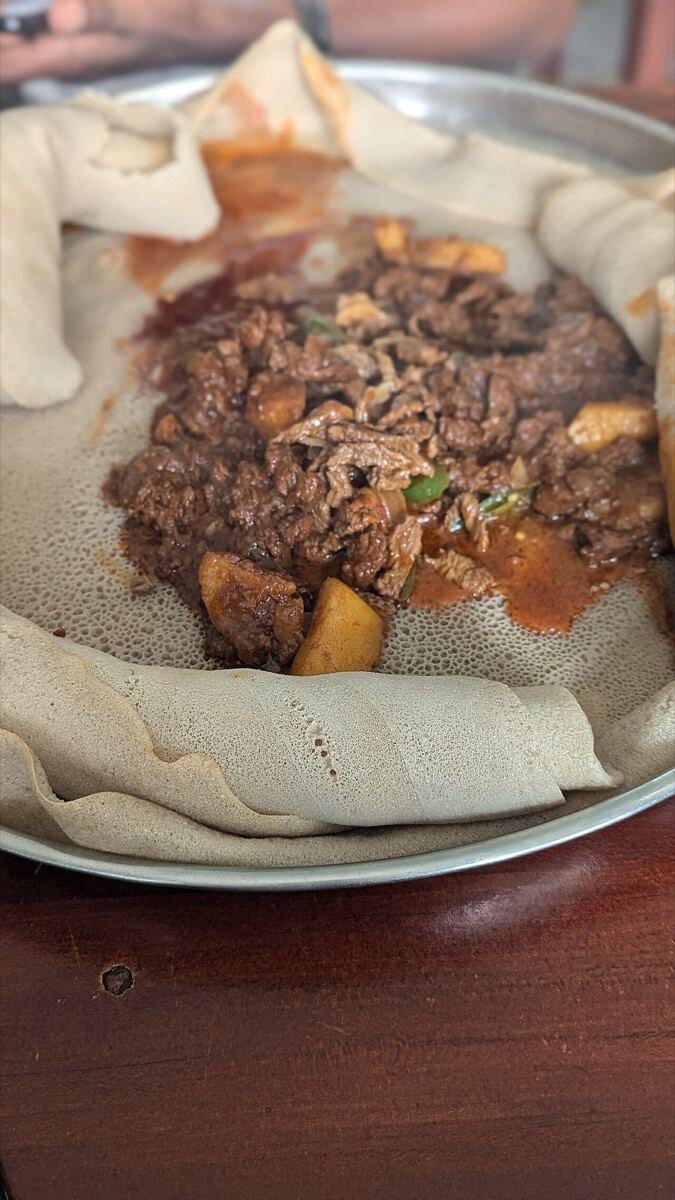
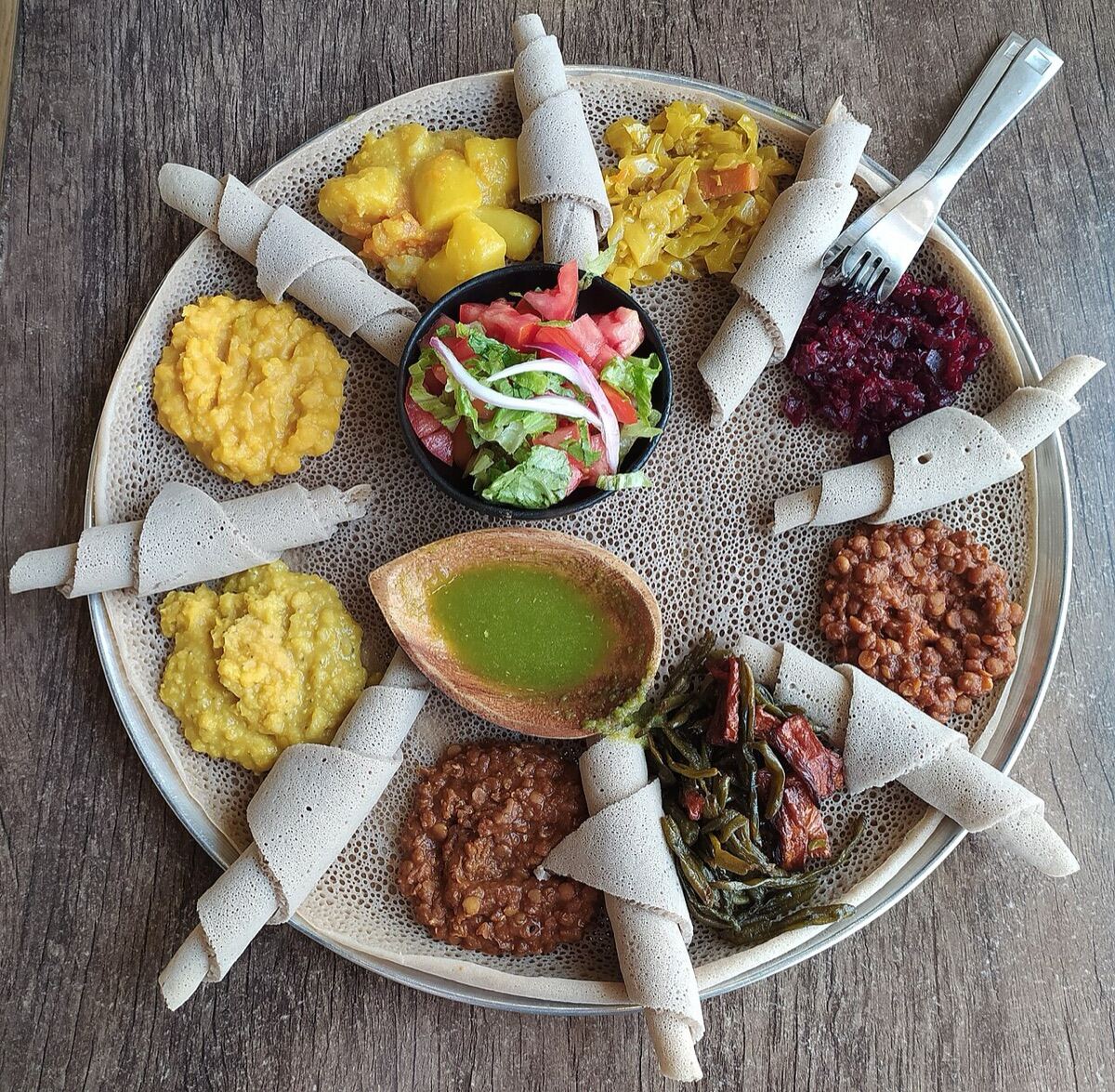
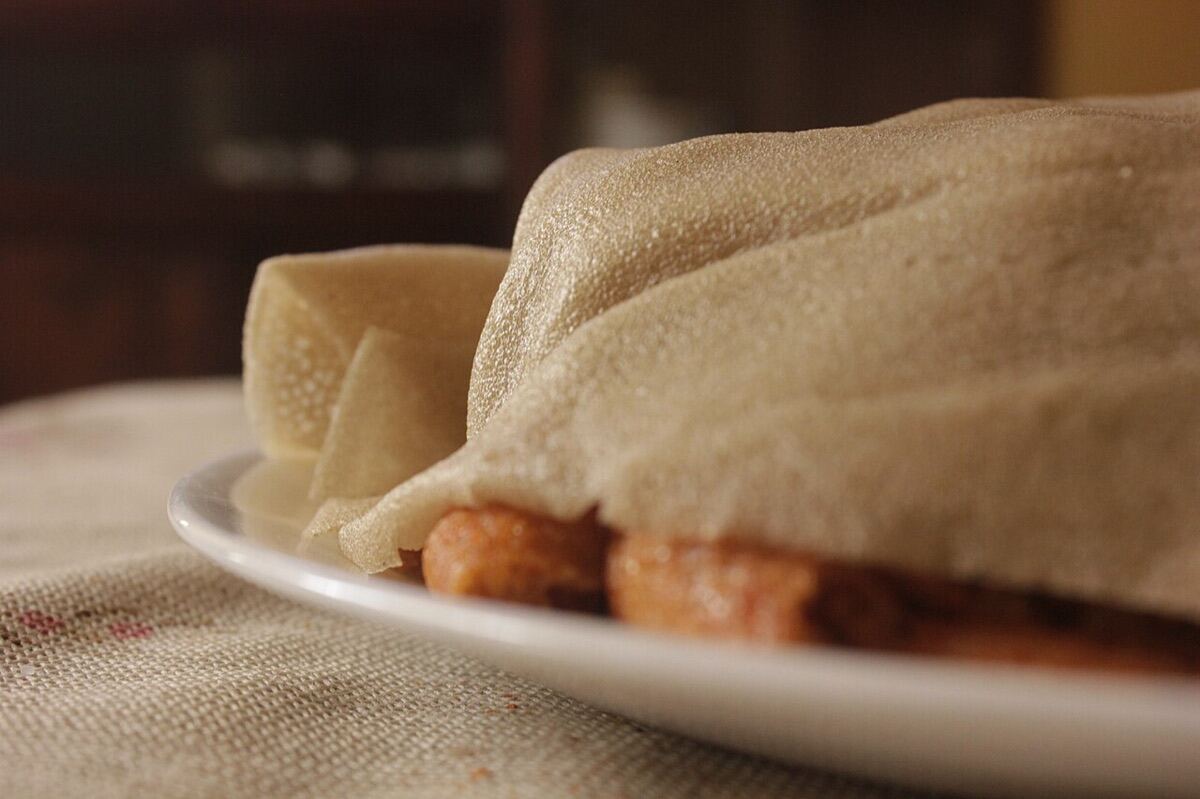
Injera is the soft, spongy, slightly sour flatbread that almost every Ethiopian meal is served on. It's made from teff, a tiny grain grown in the highlands, mixed with water and left to ferment for a few days, then poured into a wide pan and steamed on one side only, which gives it its bubbly top. It's your plate and your spoon: stews are spooned on top, and you eat by tearing off pieces to scoop them up.
How to eat it
- 1Wash your hands first. Restaurants bring water and soap to the table, or have a sink nearby.
- 2Use your right hand only. The left is not used for food.
- 3Tear off a piece from the rolled injera on the side, or from the edge of the big one underneath.
- 4Pinch, don't dip: wrap the piece round a little stew with your fingertips and lift it to your mouth.
- 5Eat from the part in front of you, and save the stew-soaked injera underneath for last: it's the best bit.
- 6Gursha: if someone feeds you a bite with their hand, it's a sign of friendship. Accept it, and return one if you like.
Quoi manger
- Doro watRagoût de poulet épicé avec un œuf dur ; le plat des jours de fête.
- TibsBœuf ou agneau sauté avec oignon et piment.
- KitfoBœuf haché au beurre épicé, servi cru ou légèrement cuit (demandez-le leb leb).
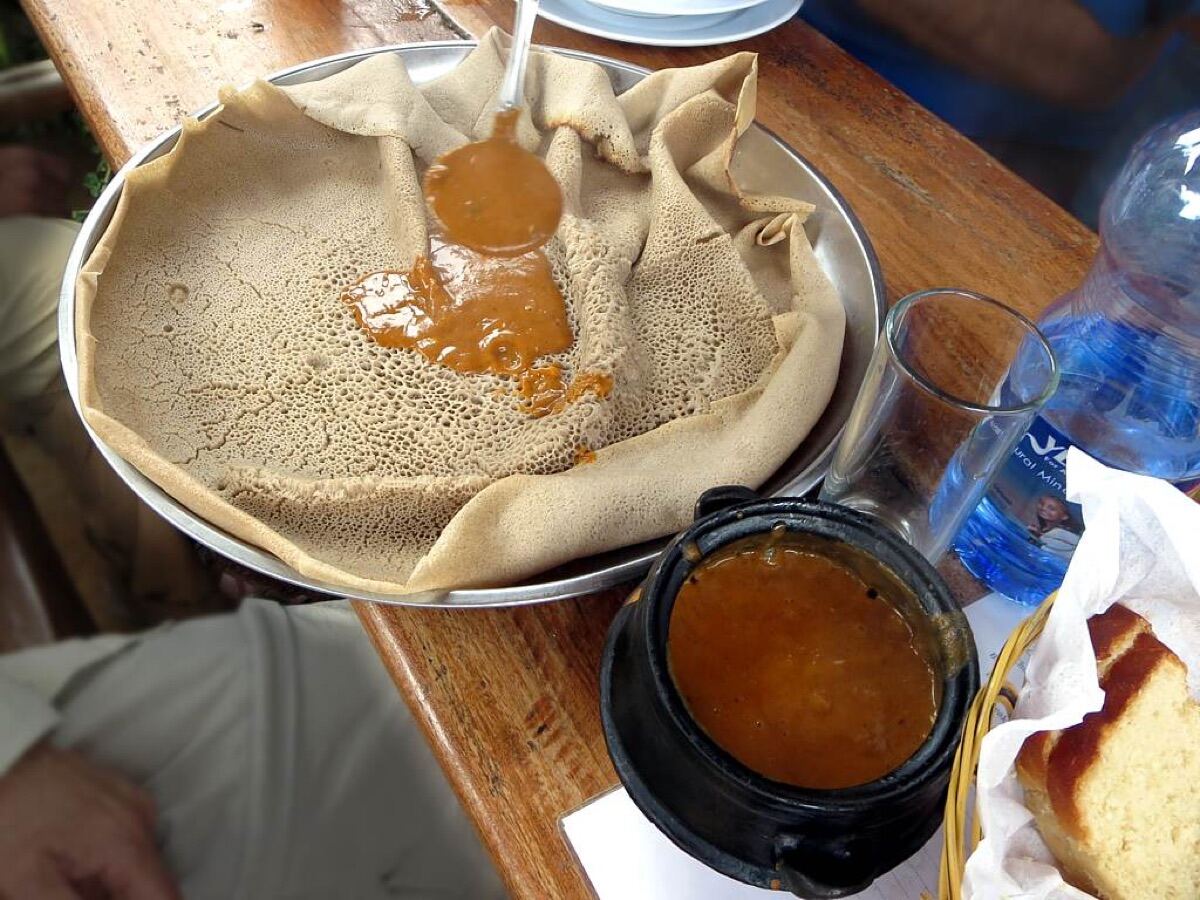 ShiroRagoût de pois chiches ; vegan et partout.
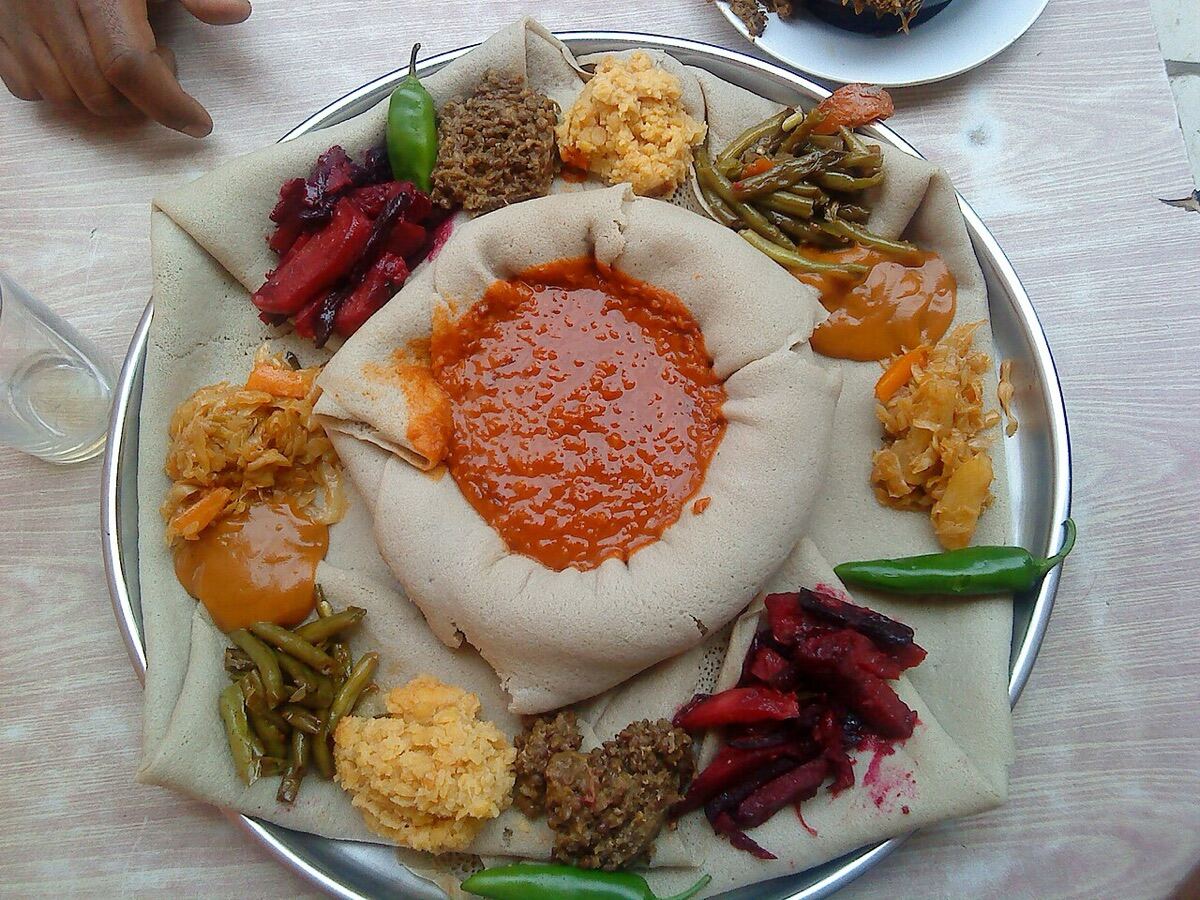 BeyaynetuUn plateau de plats de jeûne vegan. Voir Voyageurs vegan.
- FirfirInjera émiettée en sauce, un petit-déjeuner très apprécié.
Le berceau du café
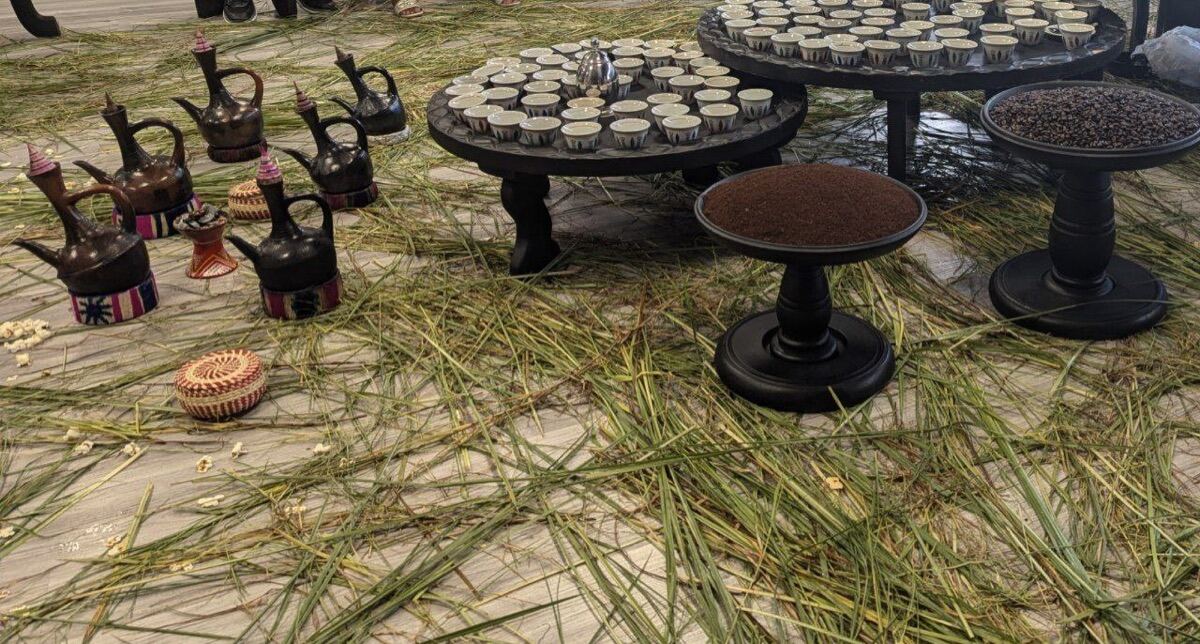
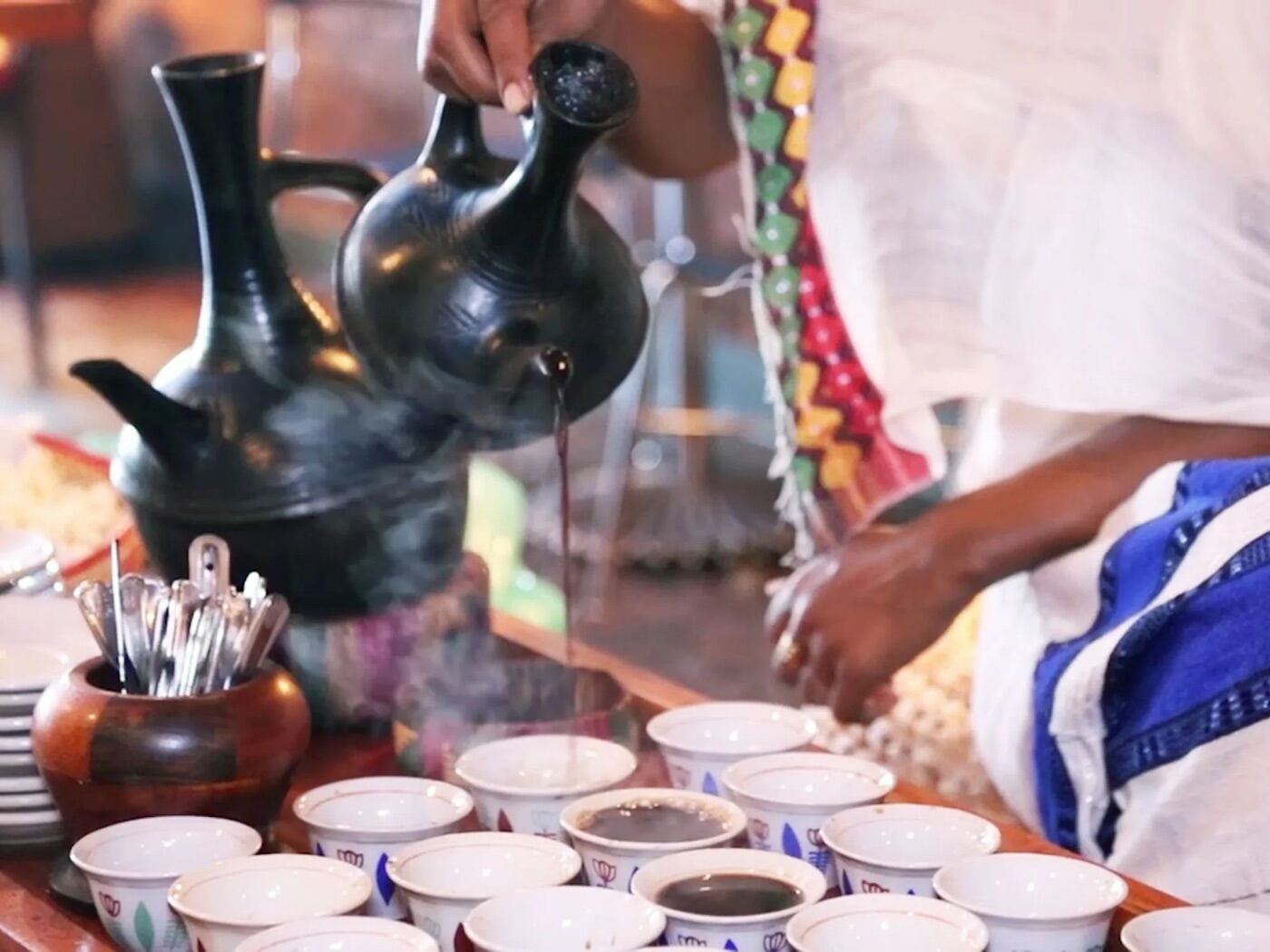 Une cérémonie du café éthiopienne
Le café vient d'Éthiopie. La plante pousse à l'état sauvage dans les forêts du Kaffa, au sud-ouest, et la légende raconte qu'un chevrier nommé Kaldi a été le premier à remarquer ses effets stimulants. Le café est toujours au cœur de la vie quotidienne : le buna, c'est la façon d'accueillir un invité, de conclure une conversation et de passer l'après-midi.
- La cérémonie du café : les grains verts sont torréfiés sur des braises, moulus à la main et infusés dans une jebena en terre cuite, avec de l'encens qui brûle et du pop-corn à côté. Elle dure une heure ou plus, et on attend de vous que vous restiez.
- Trois tournées : abol, tona et bereka. Accepter les trois est poli ; on dit que la troisième porte bonheur.
- Le café au quotidien : de petits buna bets (cafés) se trouvent dans chaque rue, et Addis adore le macchiato. Une tasse coûte quelques dizaines de birr.
- À rapporter : achetez des paquets scellés vendus dans le commerce, de Yirgacheffe, Sidama, Harar ou Guji, et gardez le reçu (limite d'exportation : 2 kg).
Quoi boire
Classé pour qu'il soit facile d'éviter l'alcool ou la caféine.
Café et théCaféine
- Buna · Café éthiopien, noir ou sucré ; essayez la cérémonie.
- Macchiato · La commande préférée dans les cafés d'Addis.
- Shai · Thé sucré, souvent parfumé à la cannelle ou au clou de girofle.
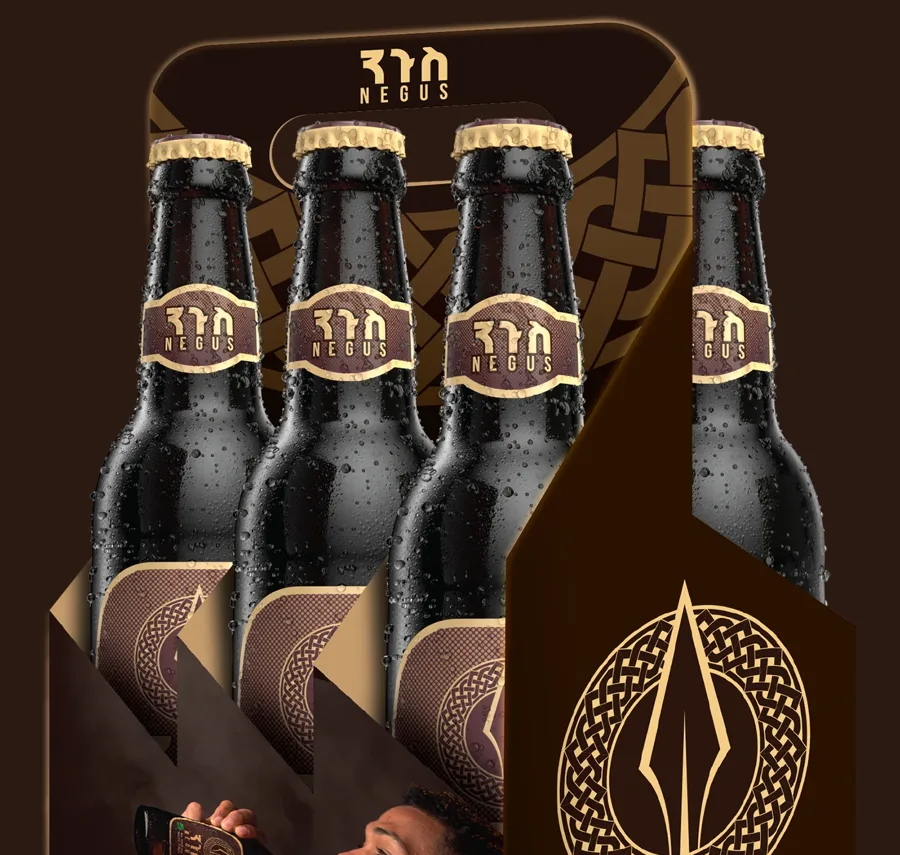 Negus, an Ethiopian coffee-flavoured non-alcoholic malt
Sans alcoolSans alcool
- Sen'q · Boisson maltée de BGI Ethiopia, étiquetée sans alcool.
- Negus · Boisson maltée brune de Habesha Breweries, étiquetée sans alcool.
- Spris · Jus frais en couches : avocat, mangue, papaye.
- Ambo · Eau minérale naturellement gazeuse d'Ambo.
AlcoolAlcool
- Tej · Vin de miel, servi dans une carafe ronde (berele).
- Tella et areke · Bière artisanale et eau-de-vie forte.
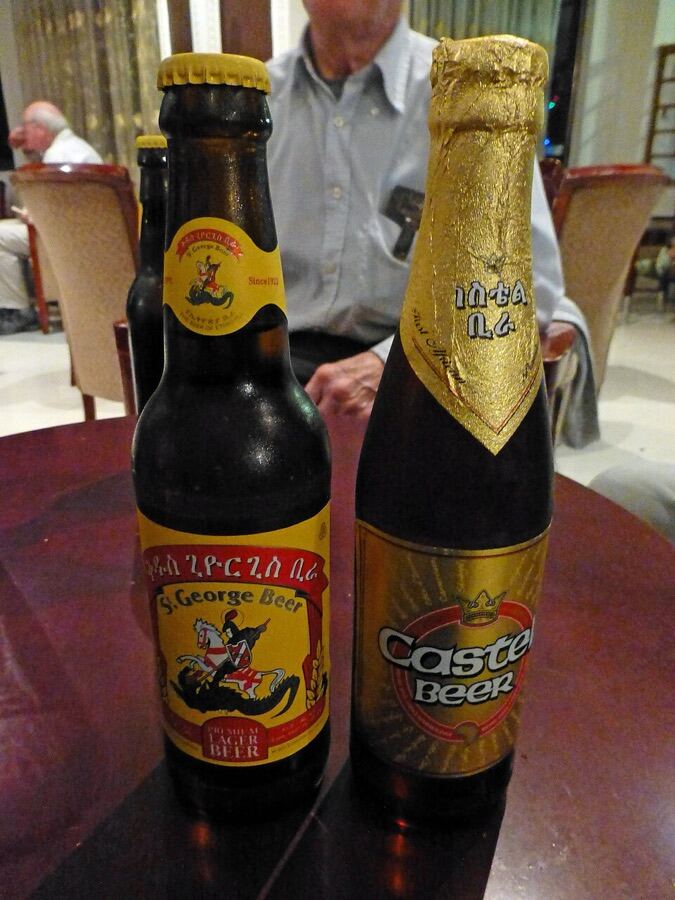
- Bières locales · St. George, Habesha, Walia, Meta, Bedele, Dashen et Harar.
Les questions qu'on pose
What is injera?
Injera is a large, soft, slightly sour fermented flatbread made from teff flour, sometimes mixed with wheat or barley. Ethiopian food is served on it, and you tear it with your right hand to scoop up stews (wat) and vegetables.
Is Ethiopian food good for vegans?
Yes. On Wednesdays, Fridays and during Orthodox fasting seasons, most restaurants serve fasting food (tsom), which is fully vegan. Beyaynetu, a platter of several fasting dishes on injera, is the best first-time order.
Is injera gluten-free?
Only if it's pure teff. Injera is sometimes mixed with wheat or barley flour, so ask.
What is kitfo?
Kitfo is minced beef with spiced butter and mitmita (chilli powder). It's served raw unless you ask for leb leb (lightly cooked) or yebesele (cooked).
How much does a meal cost in Addis Ababa?
About 250 to 500 ETB for shiro or beyaynetu at a local restaurant, or 600 to 1,200 ETB at a mid-range or hotel restaurant. Meat dishes such as tibs or doro wat cost about 500 to 1,000 ETB locally and 1,000 to 2,500 ETB mid-range.