
 English
 Français
 Español
 العربية
 中文
 עברית
 Deutsch
 Dansk
 हिन्दी
 Soomaali
 Kiswahili
Ethiopian food
Most meals come on injera, a soft, slightly sour flatbread you tear with your right hand to scoop up stews, and this is the birthplace of coffee. Here's what injera is and how to eat it, the dishes to try, the coffee ceremony and what to drink.
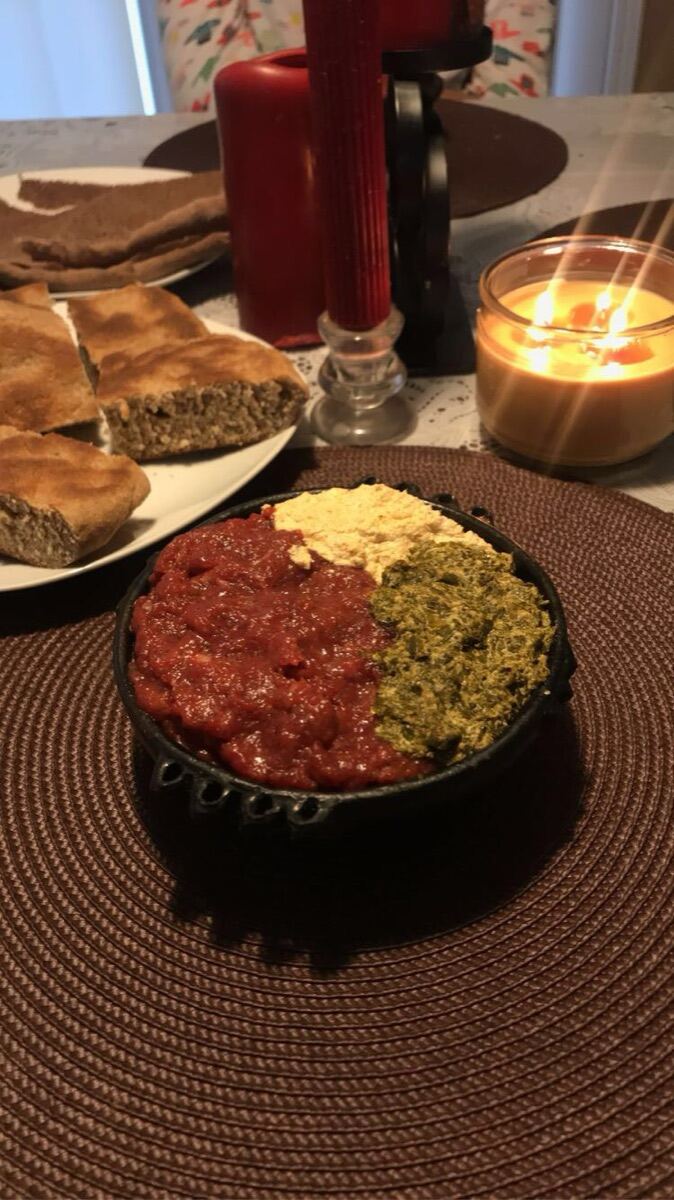
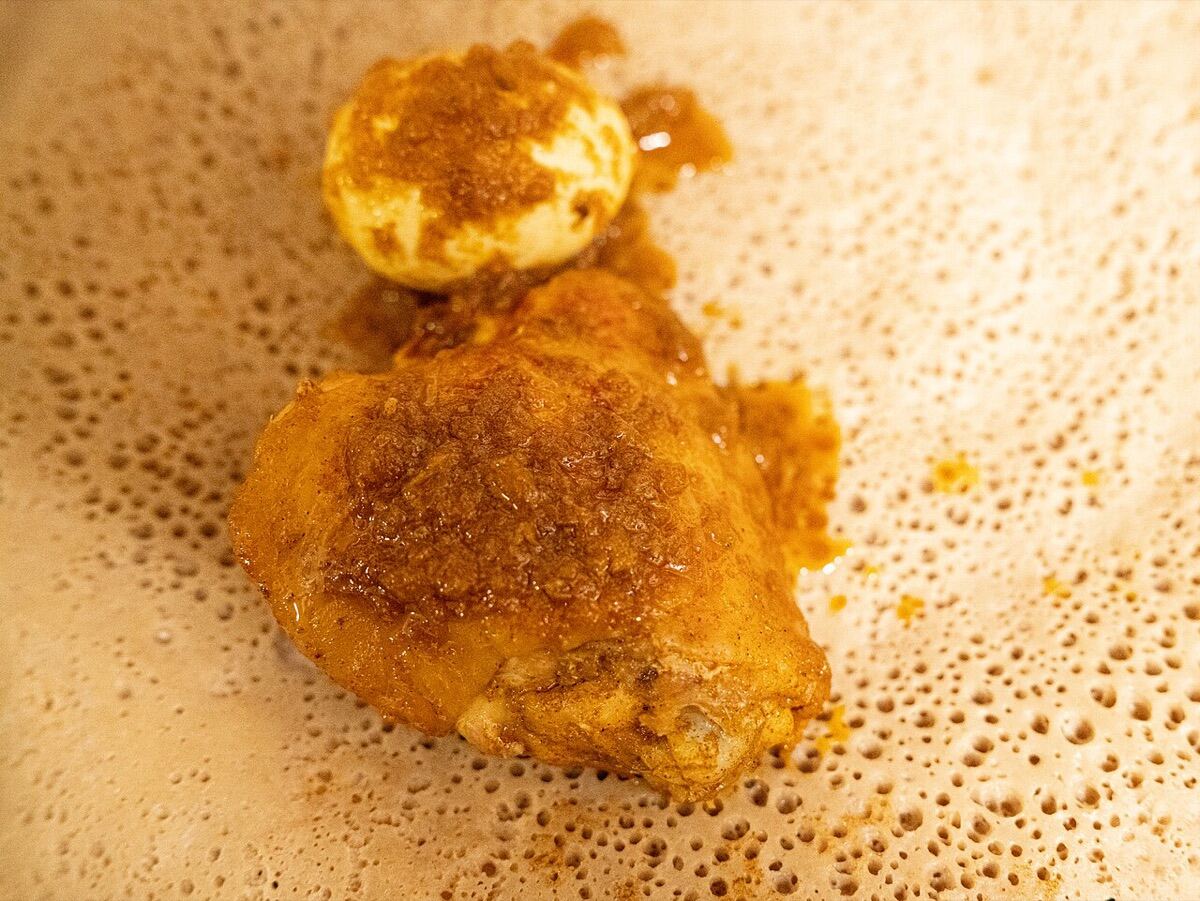
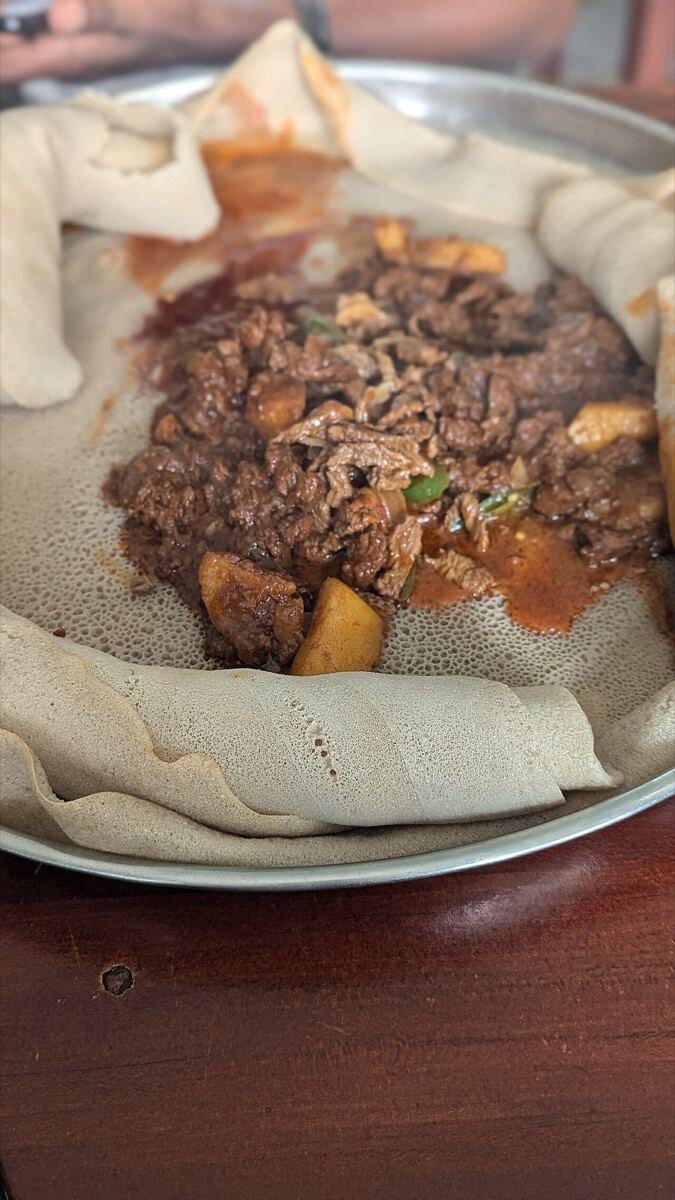
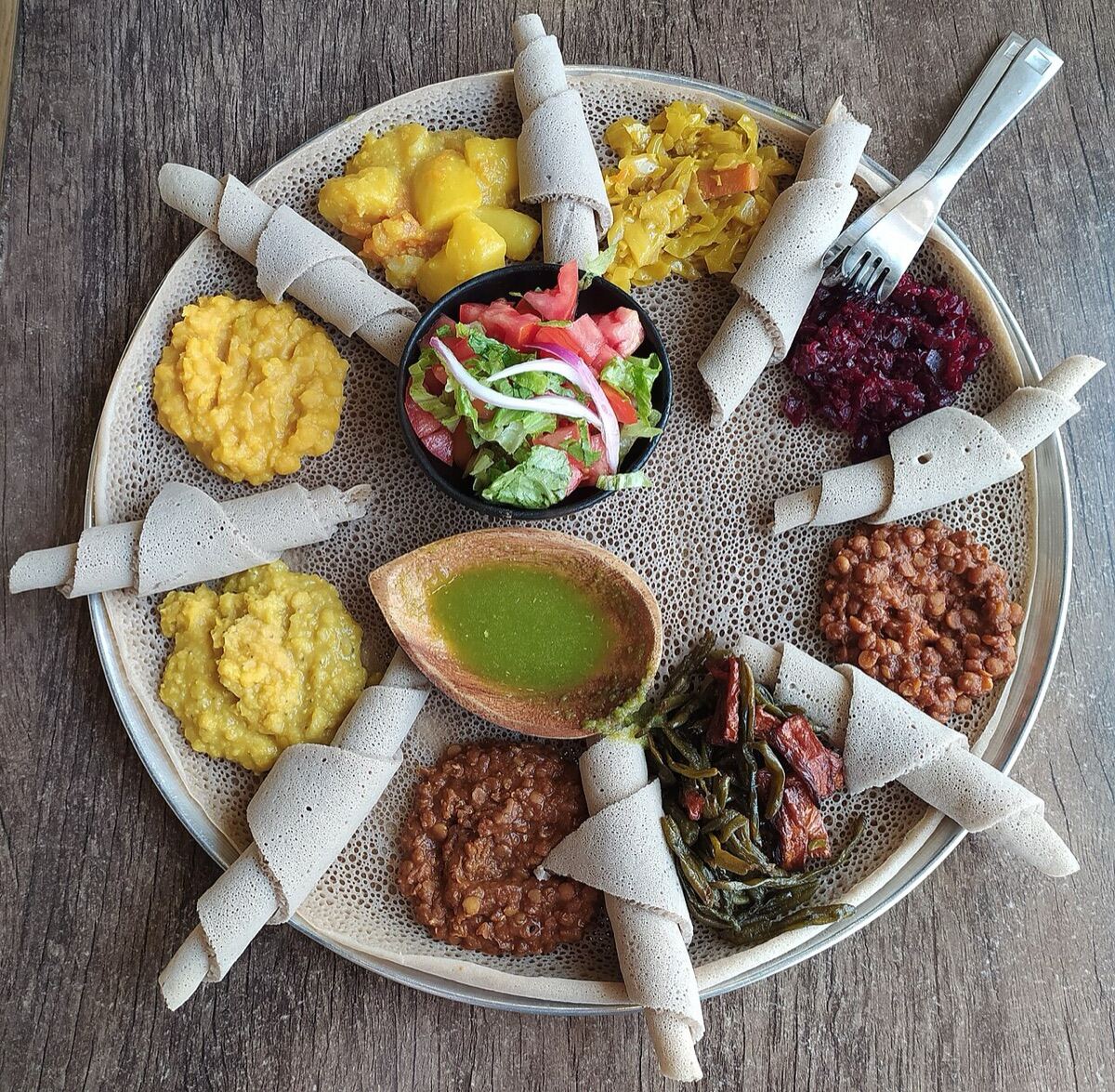
What is injera?
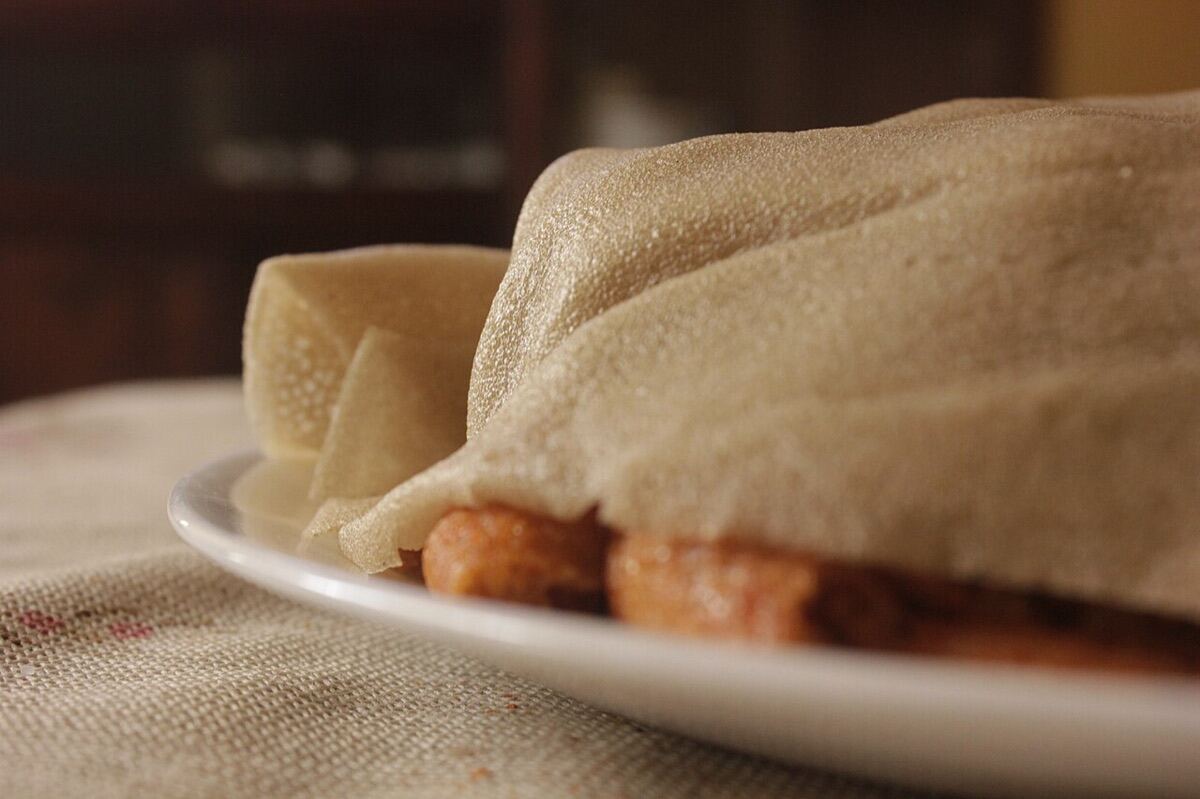
Injera is the soft, spongy, slightly sour flatbread that almost every Ethiopian meal is served on. It's made from teff, a tiny grain grown in the highlands, mixed with water and left to ferment for a few days, then poured into a wide pan and steamed on one side only, which gives it its bubbly top. It's your plate and your spoon: stews are spooned on top, and you eat by tearing off pieces to scoop them up.
How to eat it
- 1Wash your hands first. Restaurants bring water and soap to the table, or have a sink nearby.
- 2Use your right hand only. The left is not used for food.
- 3Tear off a piece from the rolled injera on the side, or from the edge of the big one underneath.
- 4Pinch, don't dip: wrap the piece round a little stew with your fingertips and lift it to your mouth.
- 5Eat from the part in front of you, and save the stew-soaked injera underneath for last: it's the best bit.
- 6Gursha: if someone feeds you a bite with their hand, it's a sign of friendship. Accept it, and return one if you like.
Hvad du skal spise
- Doro watKrydret kyllingegryde med et kogt æg; højtidsretten.
- TibsSauteret okse- eller lammekød med løg og chili.
- KitfoHakket oksekød med krydret smør, serveret råt eller let tilberedt (bed om leb leb).
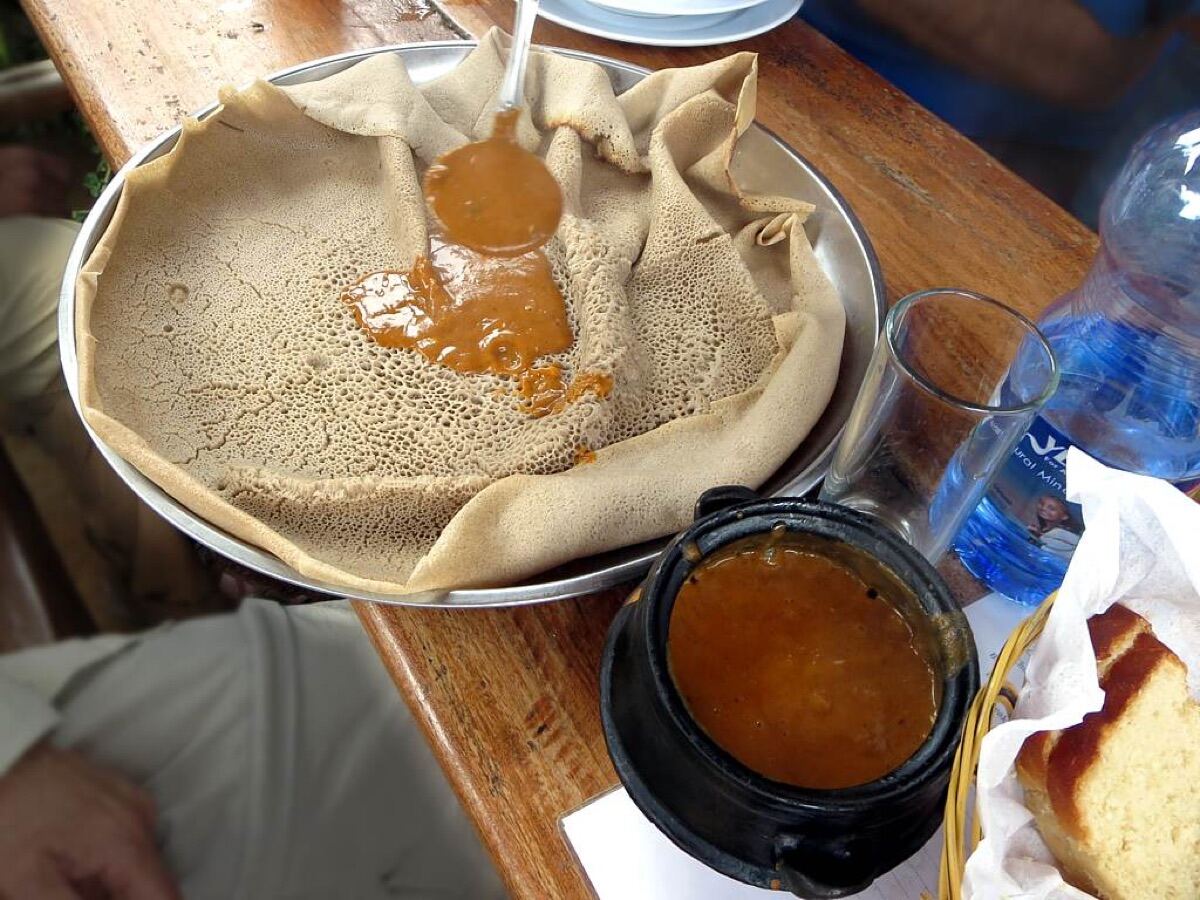 ShiroKikærtegryde; vegansk og overalt.
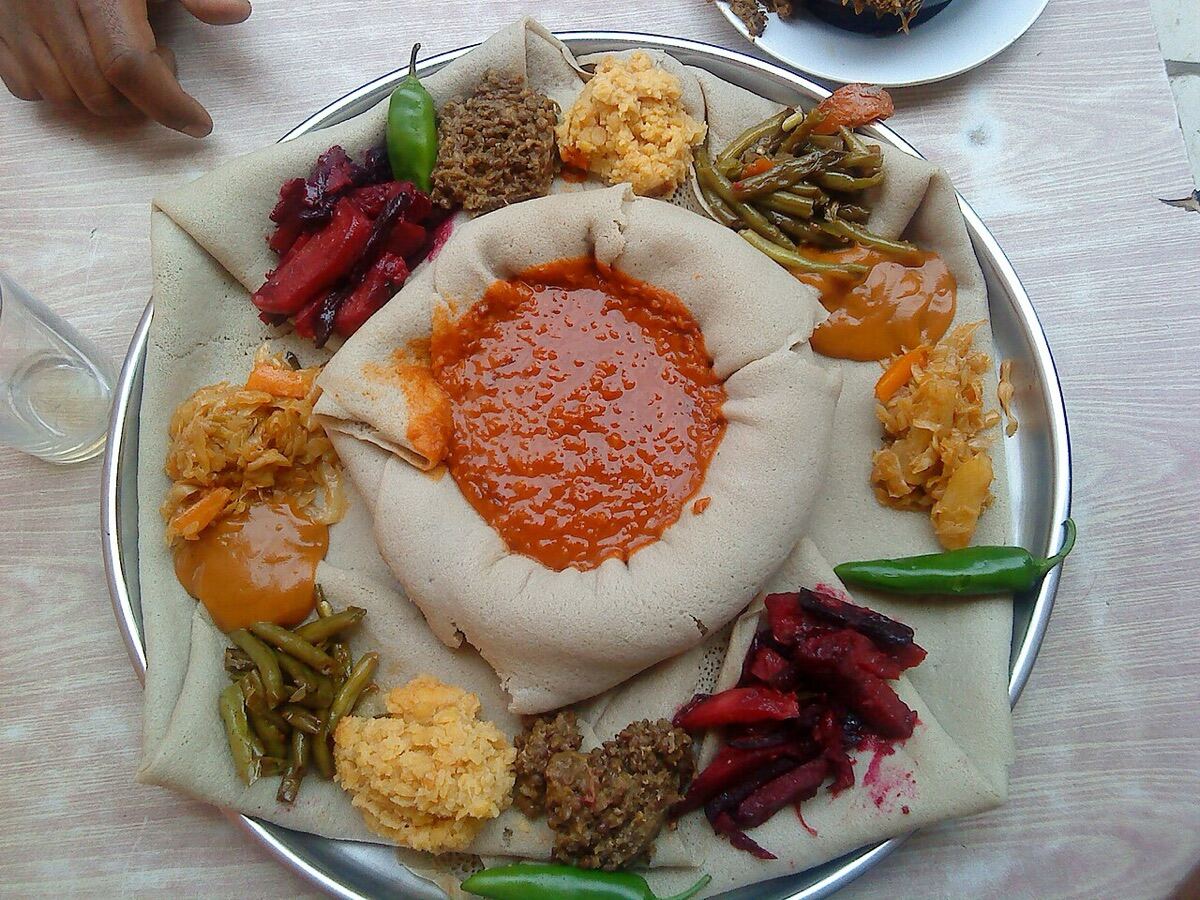 BeyaynetuEt fad med veganske fasteretter. Se Veganske rejsende.
- FirfirRevet injera i sauce, en morgenmadsfavorit.
Kaffens hjemland
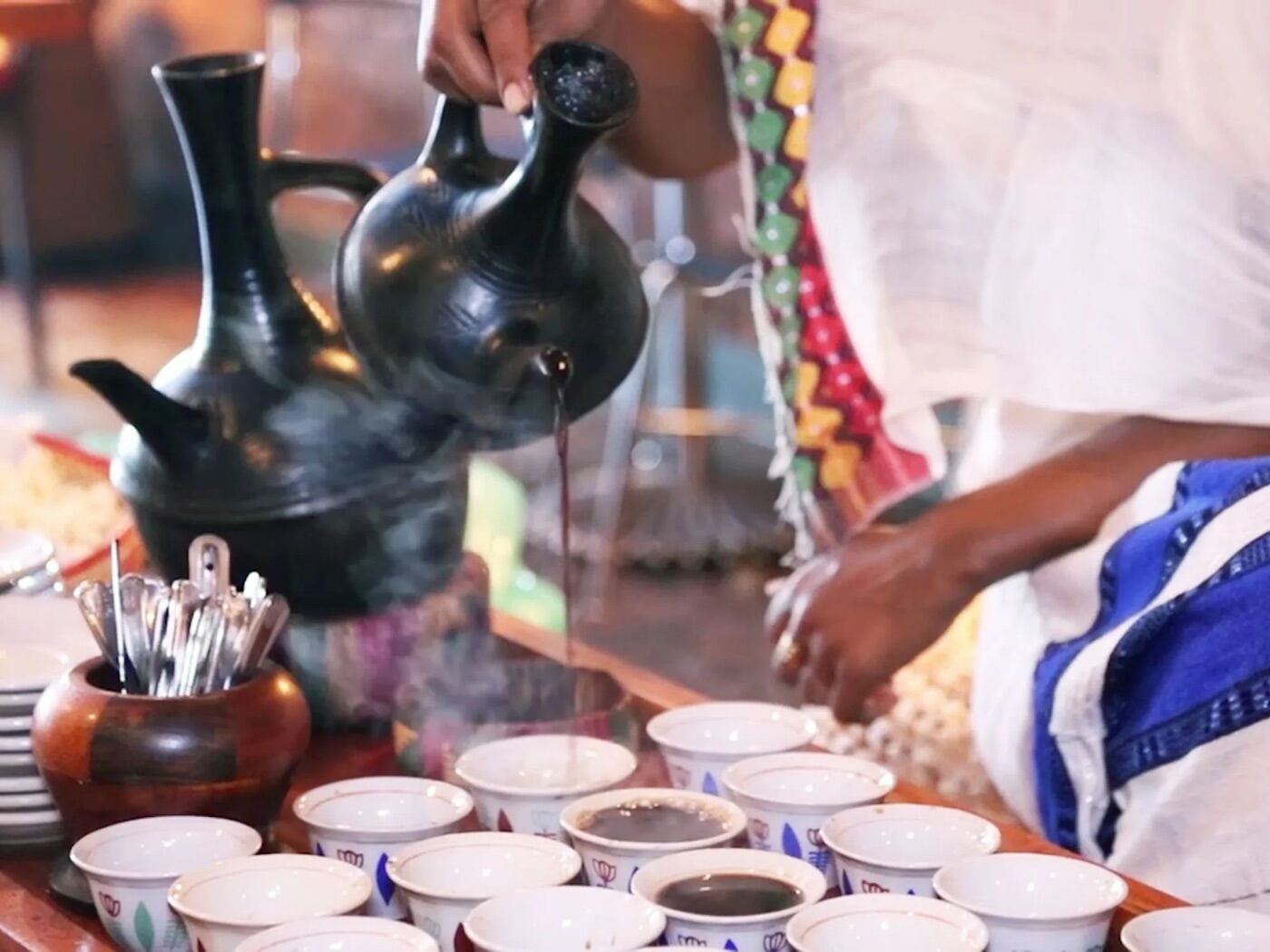 En etiopisk kaffeceremoni
Kaffe kommer fra Etiopien. Planten vokser vildt i de sydvestlige skove i Kaffa, og ifølge legenden var det en gedehyrde ved navn Kaldi, der først lagde mærke til dens energi. Kaffe er stadig kernen i hverdagen: med buna byder folk en gæst velkommen, afrunder en samtale og får eftermiddagen til at gå.
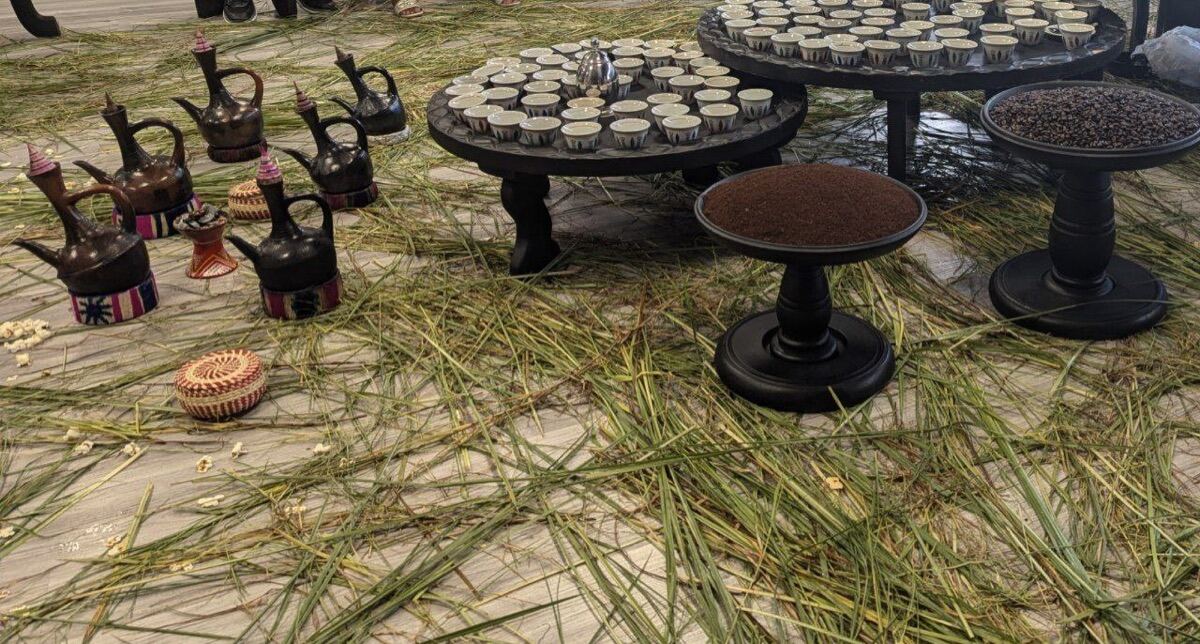
- Kaffeceremonien: grønne bønner ristes over gløder, males i hånden og brygges i en jebena af ler, mens der brænder røgelse og serveres popcorn ved siden af. Den tager en time eller mere, og det forventes, at du bliver.
- Tre runder: abol, tona og bereka. Det er høfligt at tage imod alle tre; den tredje siges at bringe velsignelse.
- Hverdagskaffe: små buna bets (kaffehuse) ligger på hver gade, og Addis elsker en macchiato. En kop koster et par dusin birr.
- Til at tage med hjem: køb forseglede detailpakker fra Yirgacheffe, Sidama, Harar eller Guji, og gem kvitteringen (eksportgrænse 2 kg).
Hvad du skal drikke
Inddelt, så det er nemt at springe alkohol eller koffein over.
Kaffe og teKoffein
- Buna · Etiopisk kaffe, sort eller med sukker; prøv ceremonien.
- Macchiato · Den foretrukne cafébestilling i Addis.
- Shai · Sød te, ofte krydret med kanel eller nellike.
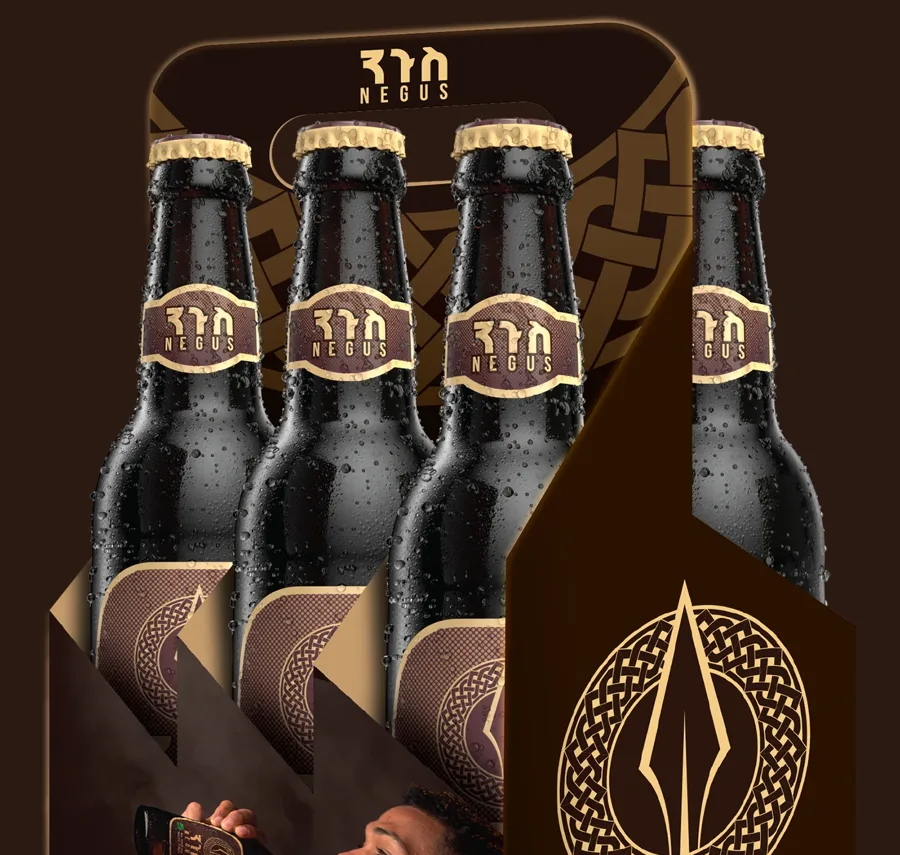 Negus, an Ethiopian coffee-flavoured non-alcoholic malt
AlkoholfritUden alkohol
- Sen'q · Maltdrik fra BGI Ethiopia, mærket som ikke-alkoholisk.
- Negus · Mørk maltdrik fra Habesha Breweries, mærket som alkoholfri.
- Spris · Lagdelt frisk juice: avocado, mango, papaya.
- Ambo · Naturligt kulsyreholdigt mineralvand fra Ambo.
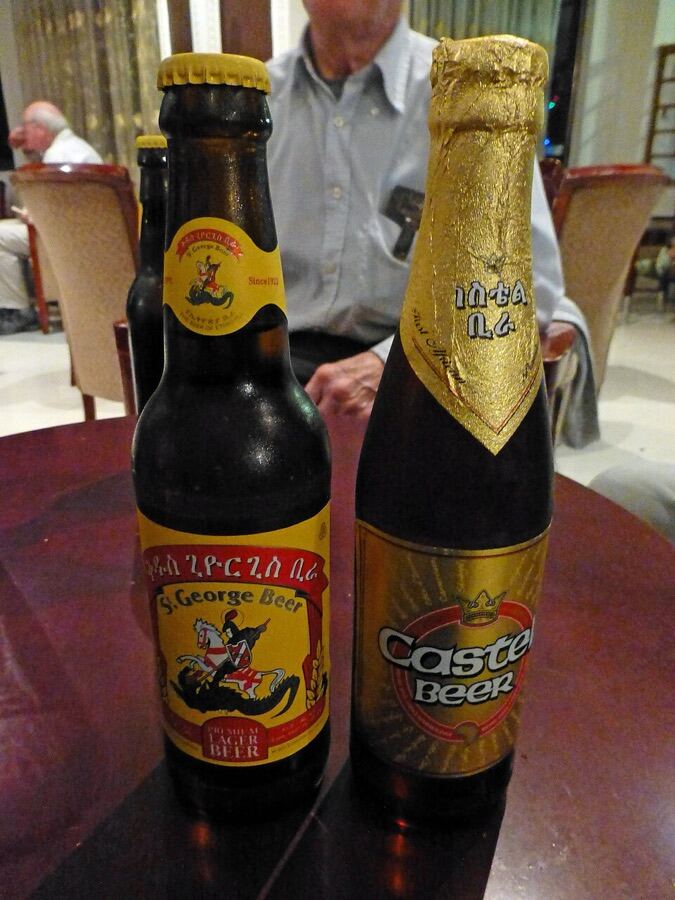
AlkoholAlkohol
- Tej · Honningvin, serveret i en rund flaske (berele).
- Tella og areke · Hjemmebrygget øl og en stærk spiritus.
- Lokale øl · St. George, Habesha, Walia, Meta, Bedele, Dashen og Harar.
Det spørger folk om
What is injera?
Injera is a large, soft, slightly sour fermented flatbread made from teff flour, sometimes mixed with wheat or barley. Ethiopian food is served on it, and you tear it with your right hand to scoop up stews (wat) and vegetables.
Is Ethiopian food good for vegans?
Yes. On Wednesdays, Fridays and during Orthodox fasting seasons, most restaurants serve fasting food (tsom), which is fully vegan. Beyaynetu, a platter of several fasting dishes on injera, is the best first-time order.
Is injera gluten-free?
Only if it's pure teff. Injera is sometimes mixed with wheat or barley flour, so ask.
What is kitfo?
Kitfo is minced beef with spiced butter and mitmita (chilli powder). It's served raw unless you ask for leb leb (lightly cooked) or yebesele (cooked).
How much does a meal cost in Addis Ababa?
About 250 to 500 ETB for shiro or beyaynetu at a local restaurant, or 600 to 1,200 ETB at a mid-range or hotel restaurant. Meat dishes such as tibs or doro wat cost about 500 to 1,000 ETB locally and 1,000 to 2,500 ETB mid-range.