
Muslim travellers
Islam reached Ethiopia before it reached Medina: around 615 CE the Prophet Muhammad's first followers found refuge with the king of Aksum, the First Hijra, remembered at the Al-Nejashi Mosque in Negash. Today about a third of Ethiopians, roughly 40 million people, are Muslim, almost all Sunni of the Shafi'i school with strong Sufi traditions; you'll hear the call to prayer across Addis, and Eid is a public holiday. More on Wikipedia.
Qibla: almost due north
From Addis Ababa, face 4.7° east of north, towards Mecca, 1,383 km away. Mosques show it already; the gold line on the map below points the way.
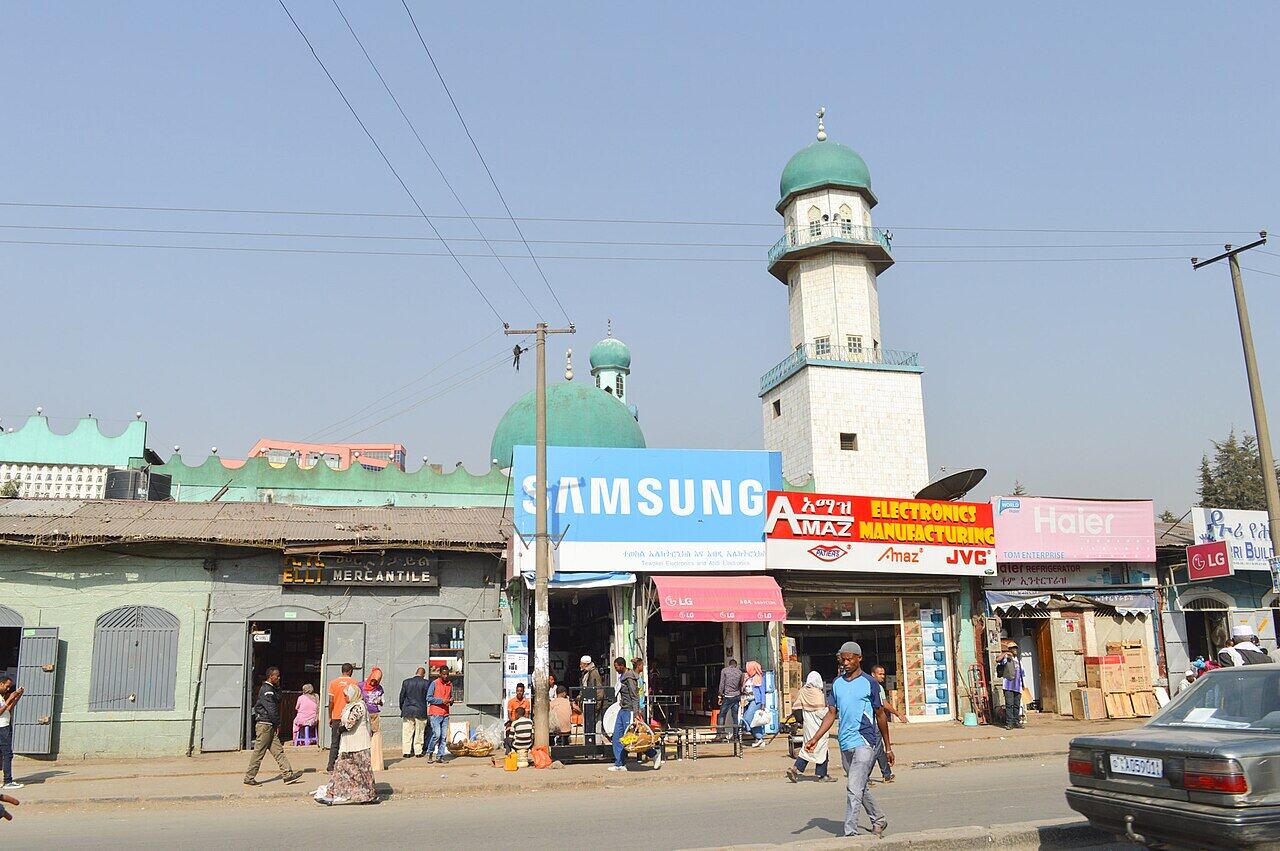
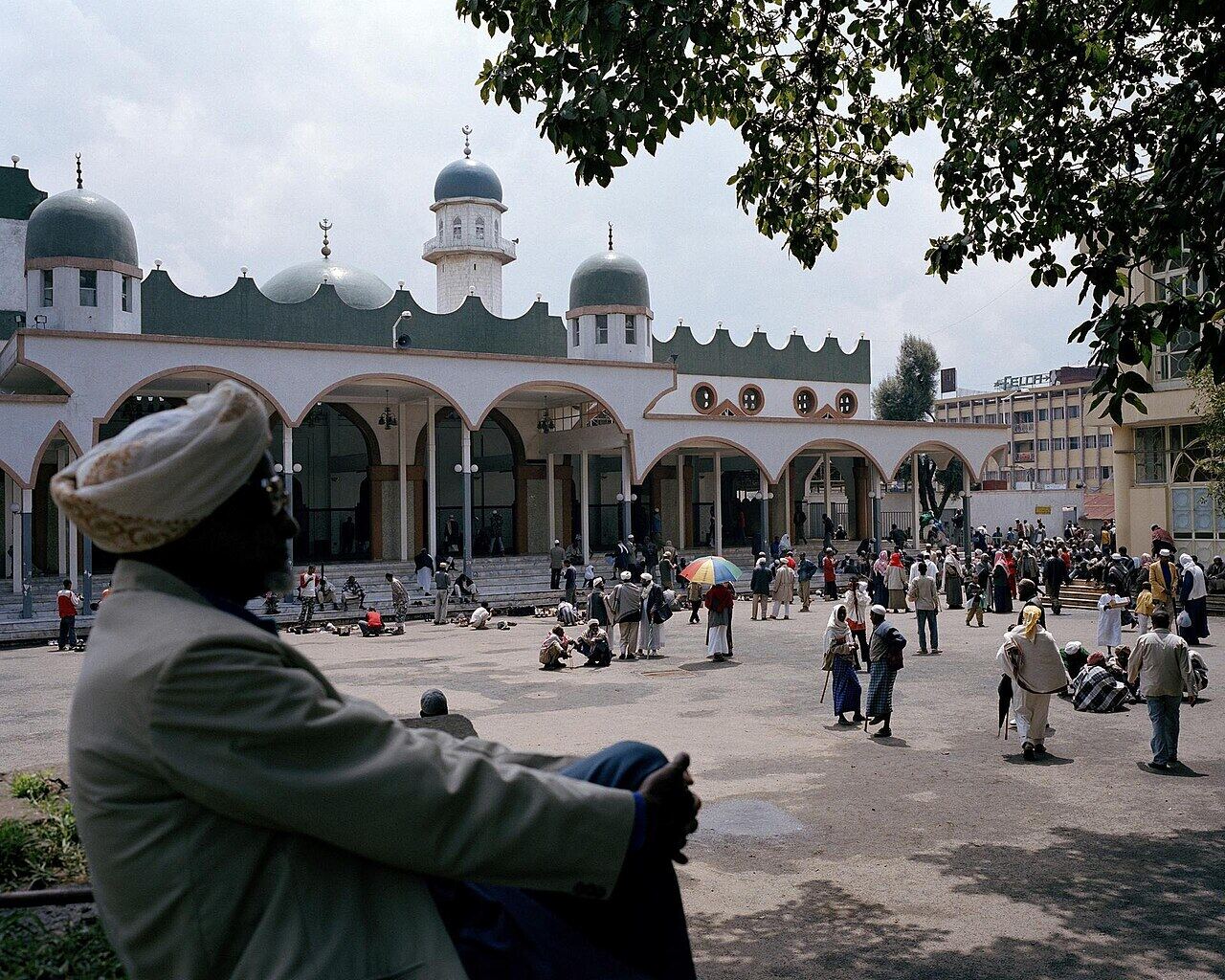
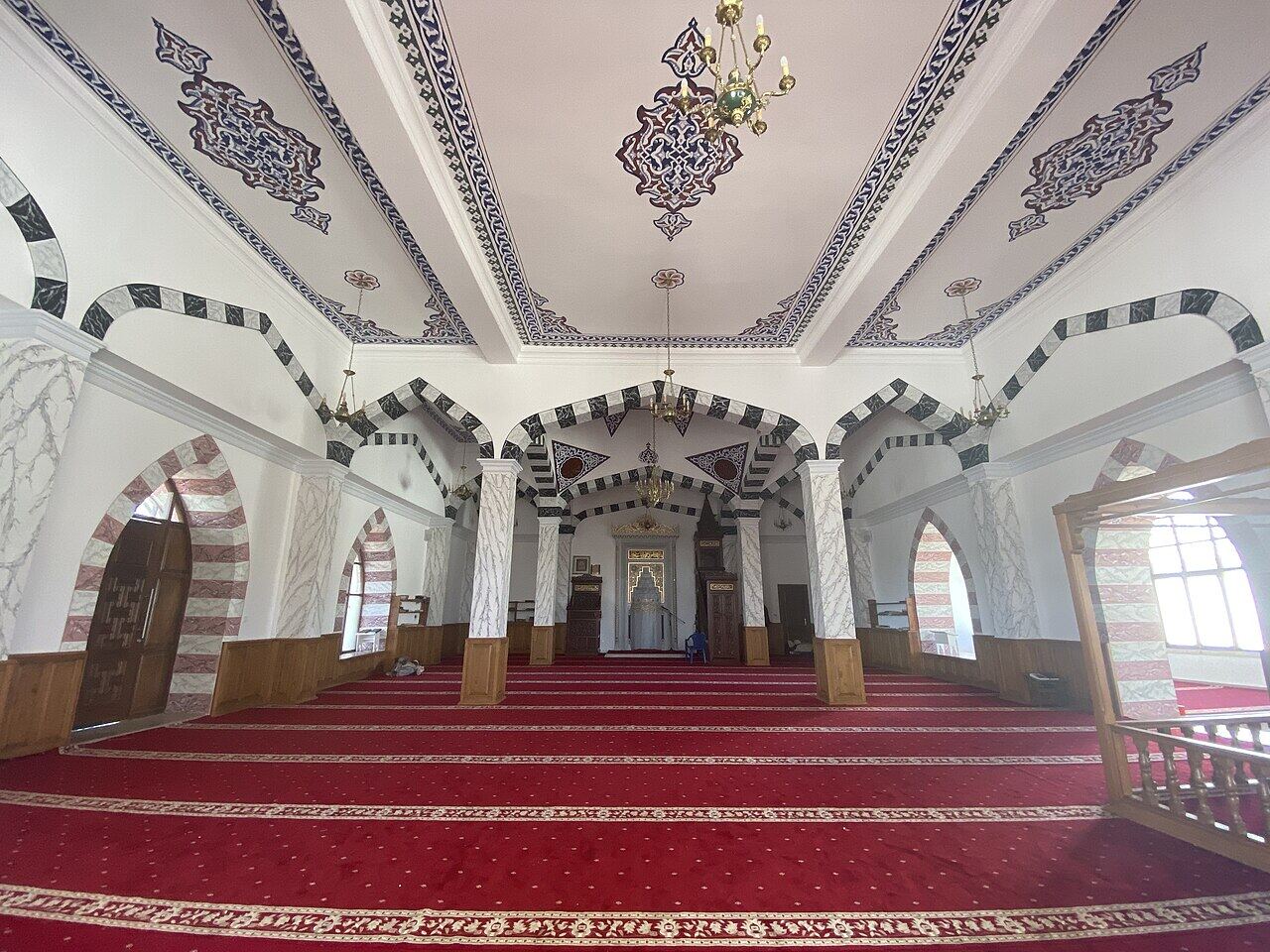
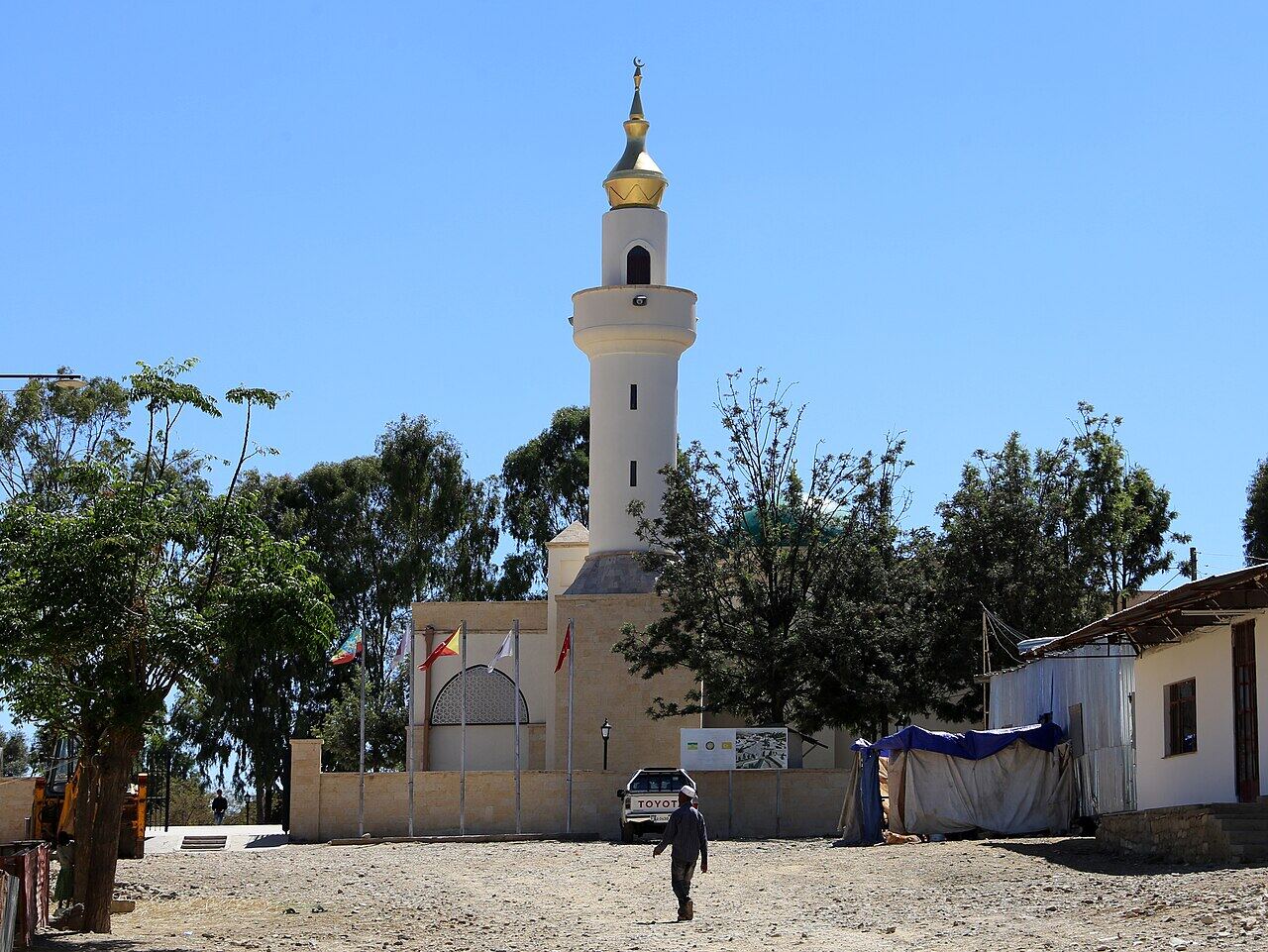
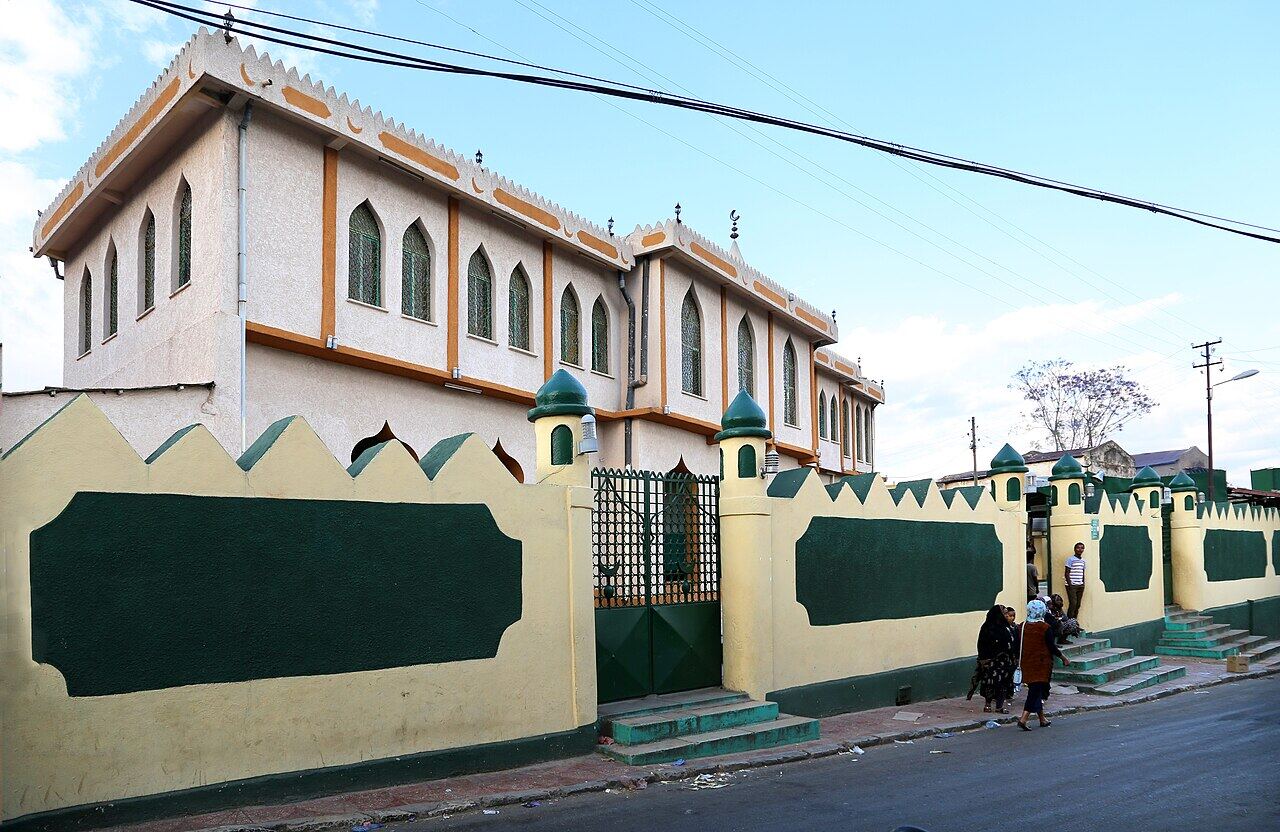
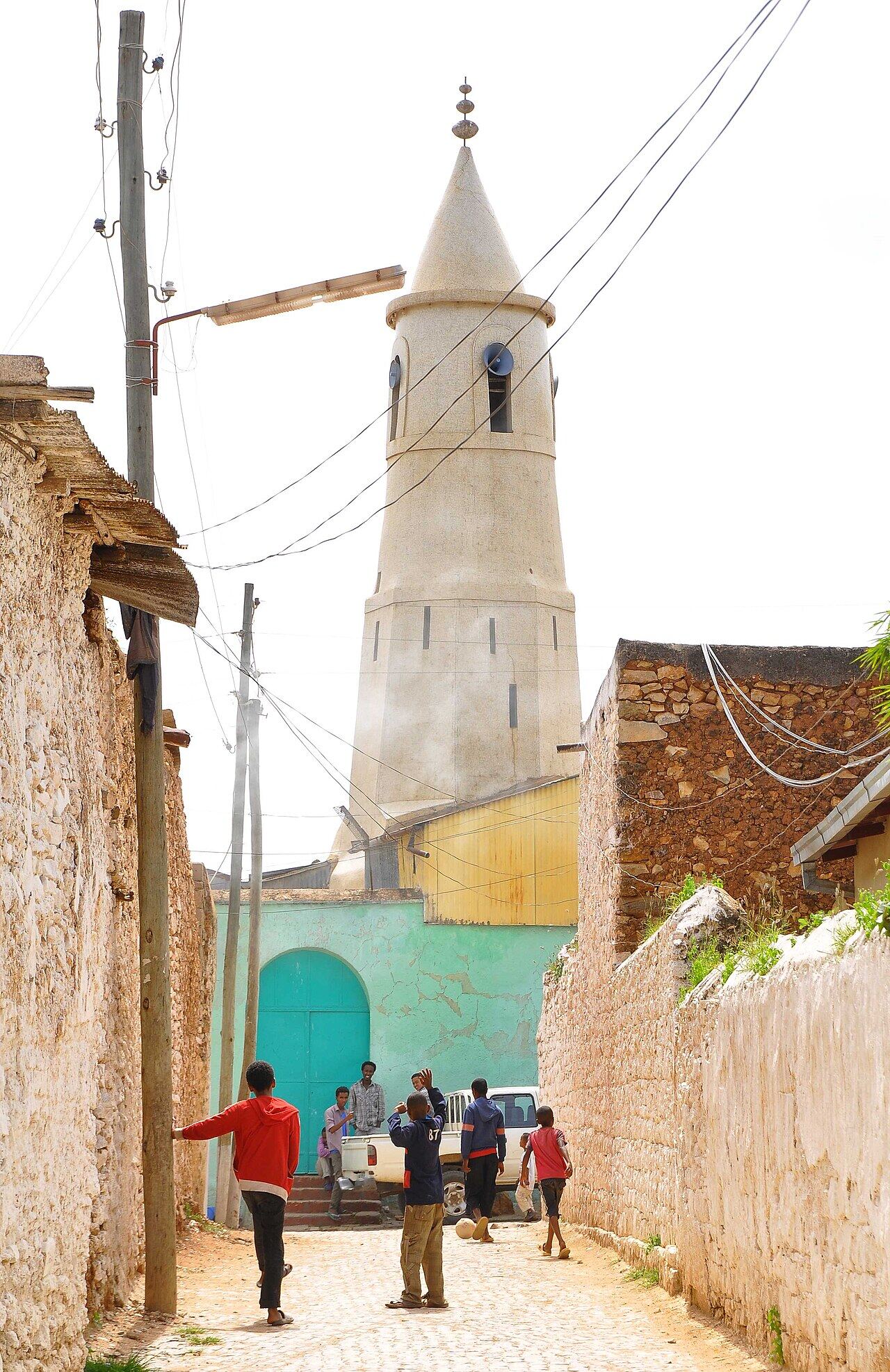
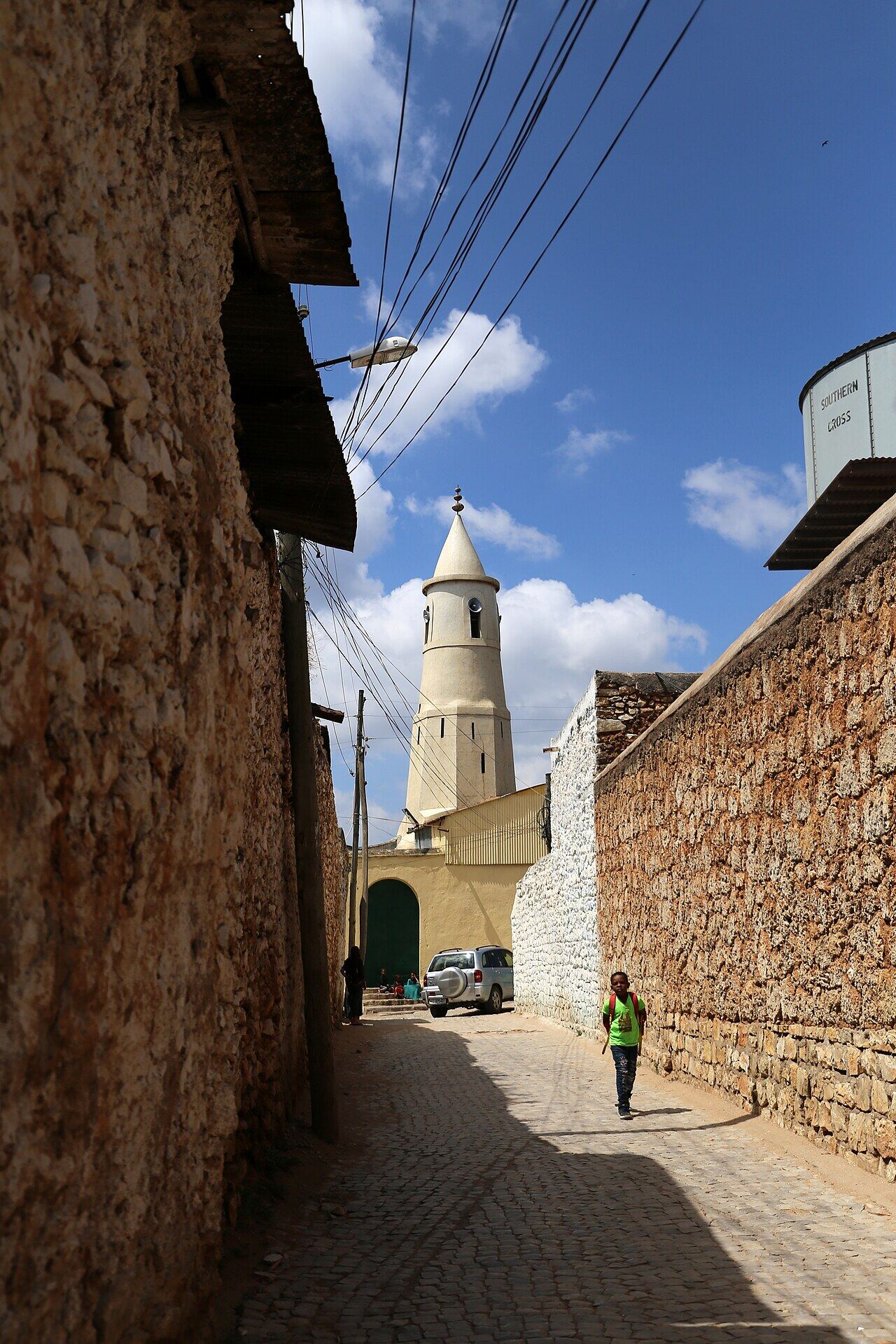
- You'll find mosques in every part of Addis Ababa. The Grand Anwar Mosque in Merkato is the largest.
- Halal: pork is rarely sold in Ethiopia. Muslims buy meat from Muslim butchers and eat at Muslim-run restaurants, which are easy to find and often have Islamic names; if you're not sure, ask. There is no national halal label for restaurants.
- Drinks: Sen'q (Sinq) and Negus are malt drinks labelled non-alcoholic, as is Malta Guinness; fresh juice (spris), coffee, tea and Ambo sparkling water are everywhere. Tej (honey wine), tella (home brew), areke and local beers contain alcohol. [More on food and drink](/essentials/food-delivery).
- Muslim butchers stay open on Wednesdays and Fridays, when many others close.
- Most Ethiopian Muslims speak Amharic, Afaan Oromo or Somali rather than Arabic, though Arabic is used in prayer.
- If you carry a prayer mat (musalla), you can pray almost anywhere; ask politely in shops, offices or hotels.
- Shia Muslims: there's no known public Shia mosque in Addis. The Embassy of Iran (Iran Street, Nifas Silk Lafto) hosts gatherings such as Ashura and Eid al-Ghadir; contact its cultural section.
- Friday midday prayers (Jumu'ah) are busy; arrive early. Many government offices close at about 11:45 am on Fridays for the prayer, so schedule appointments for the morning.
Mosques in Addis Ababa105 mapped
From OpenStreetMap, so not every place is listed. Tap a dot for directions.
Google Maps has more places, photos and opening hours; search "mosque", "church" or "synagogue" near you.
Questions people ask
What is the main religion in Ethiopia?
Most Ethiopians are Ethiopian Orthodox Tewahedo Christians or Muslims. There is also a large and growing Protestant (P'ent'ay) community, and smaller Catholic and other groups.
What should I wear to visit an Orthodox church in Ethiopia?
Cover your shoulders and knees, and women should cover their hair with a scarf (netela). You'll also remove your shoes at the entrance of the inner church.
Can tourists visit mosques in Addis Ababa?
Yes, visitors are welcome at most mosques outside service times if they dress modestly and behave respectfully. Wear long sleeves and long trousers or a skirt (women cover their hair), remove your shoes before entering, and avoid Friday midday prayers unless attending.
Can I take photos inside churches in Ethiopia?
Ask first. Orthodox churches often charge a camera fee, flash isn't allowed, and you should never photograph people praying without permission.
Are there English-language church services in Addis Ababa?
Yes. Some Mekane Yesus churches hold services in English, the International Evangelical Church in the Bole area is an English-language Protestant church, and your hotel can point you to the nearest English Catholic Mass.
When do people fast in Ethiopia?
Orthodox Christians fast (no animal products) on most Wednesdays and Fridays and during longer seasons, especially the 55 days before Easter. Muslims fast from dawn to sunset during Ramadan. Restaurants stay open, but be considerate about eating in front of people who are fasting.