
 English
 Français
 Español
 العربية
 中文
 עברית
 Deutsch
 Dansk
 हिन्दी
 Soomaali
 Kiswahili
Ethiopian food
Most meals come on injera, a soft, slightly sour flatbread you tear with your right hand to scoop up stews, and this is the birthplace of coffee. Here's what injera is and how to eat it, the dishes to try, the coffee ceremony and what to drink.
What is injera?
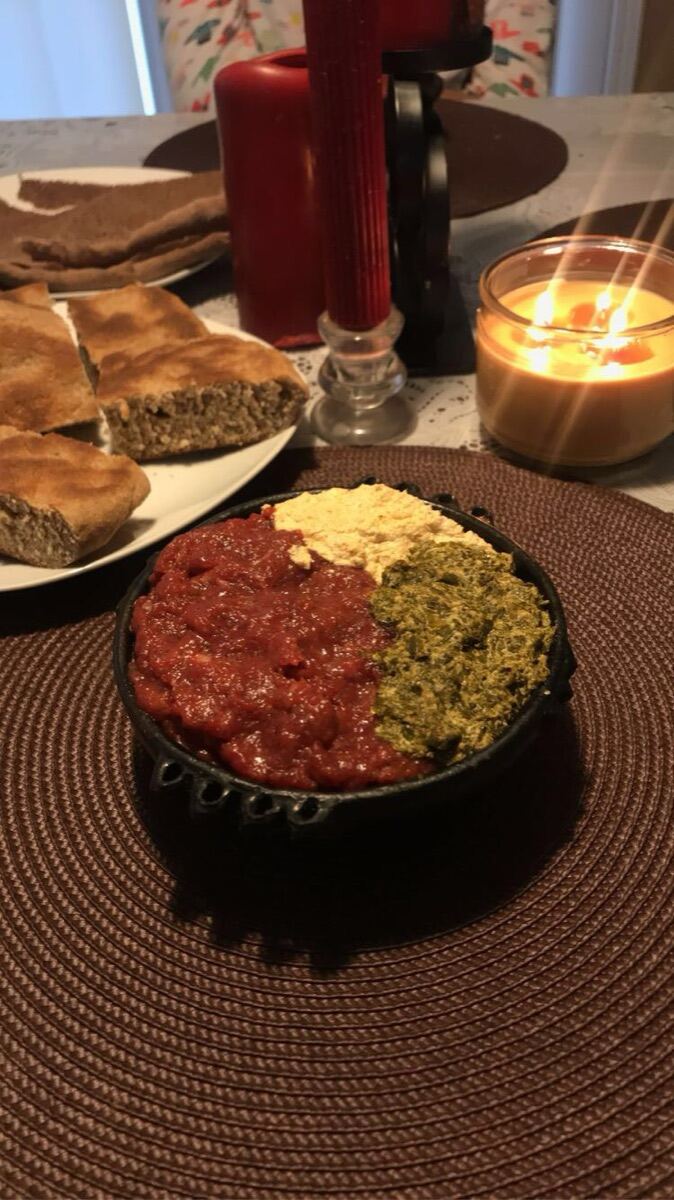
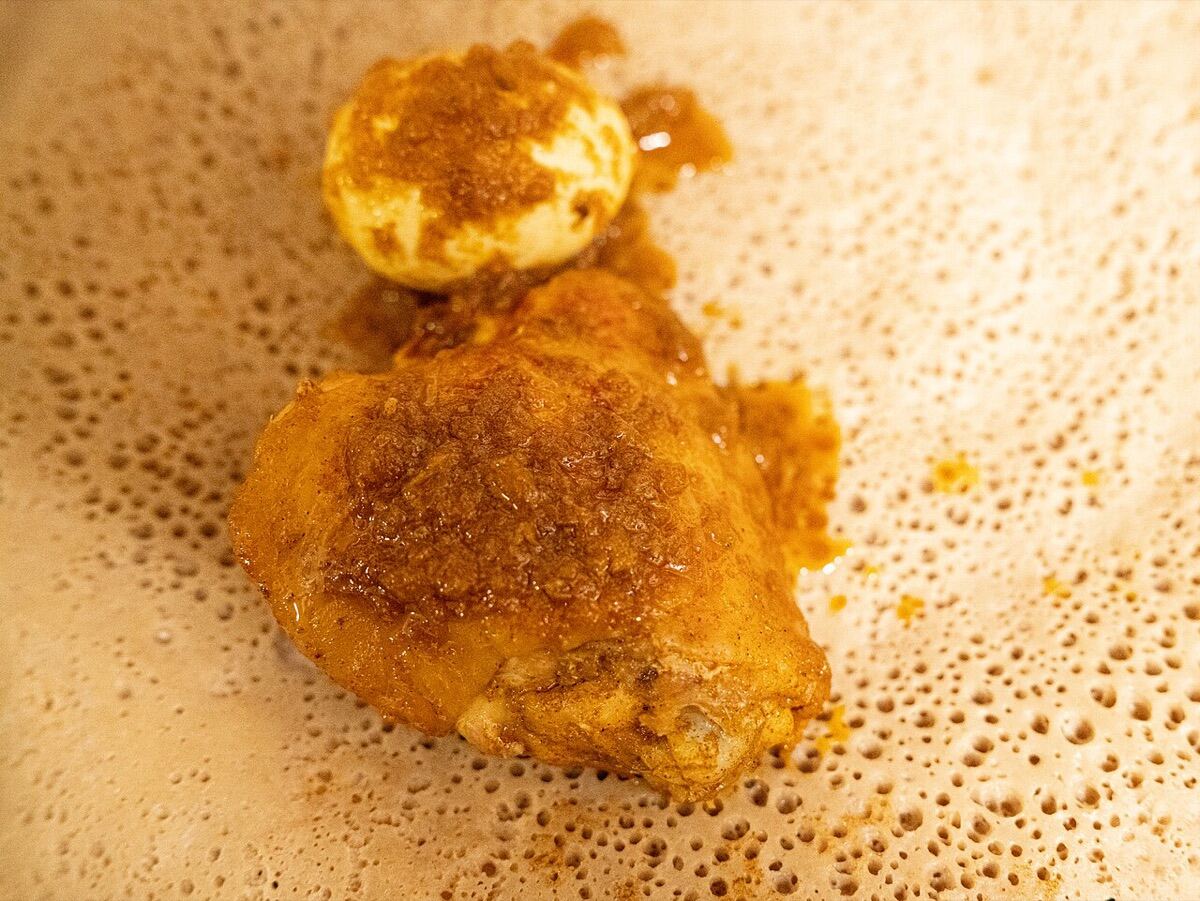
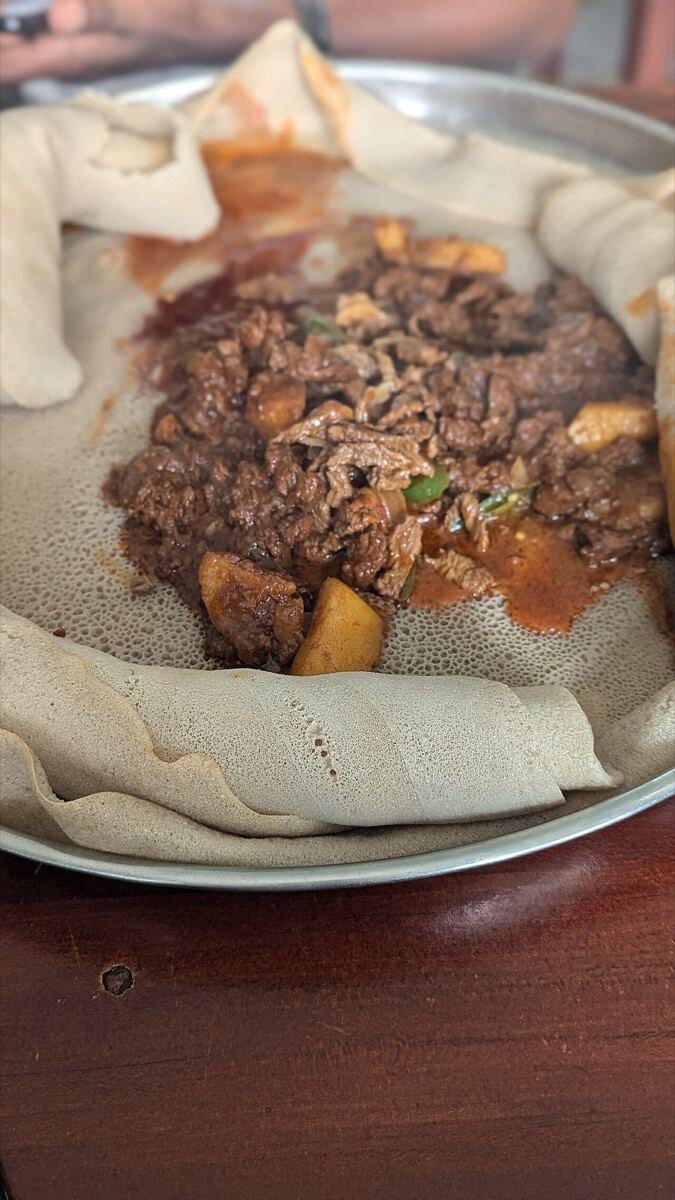
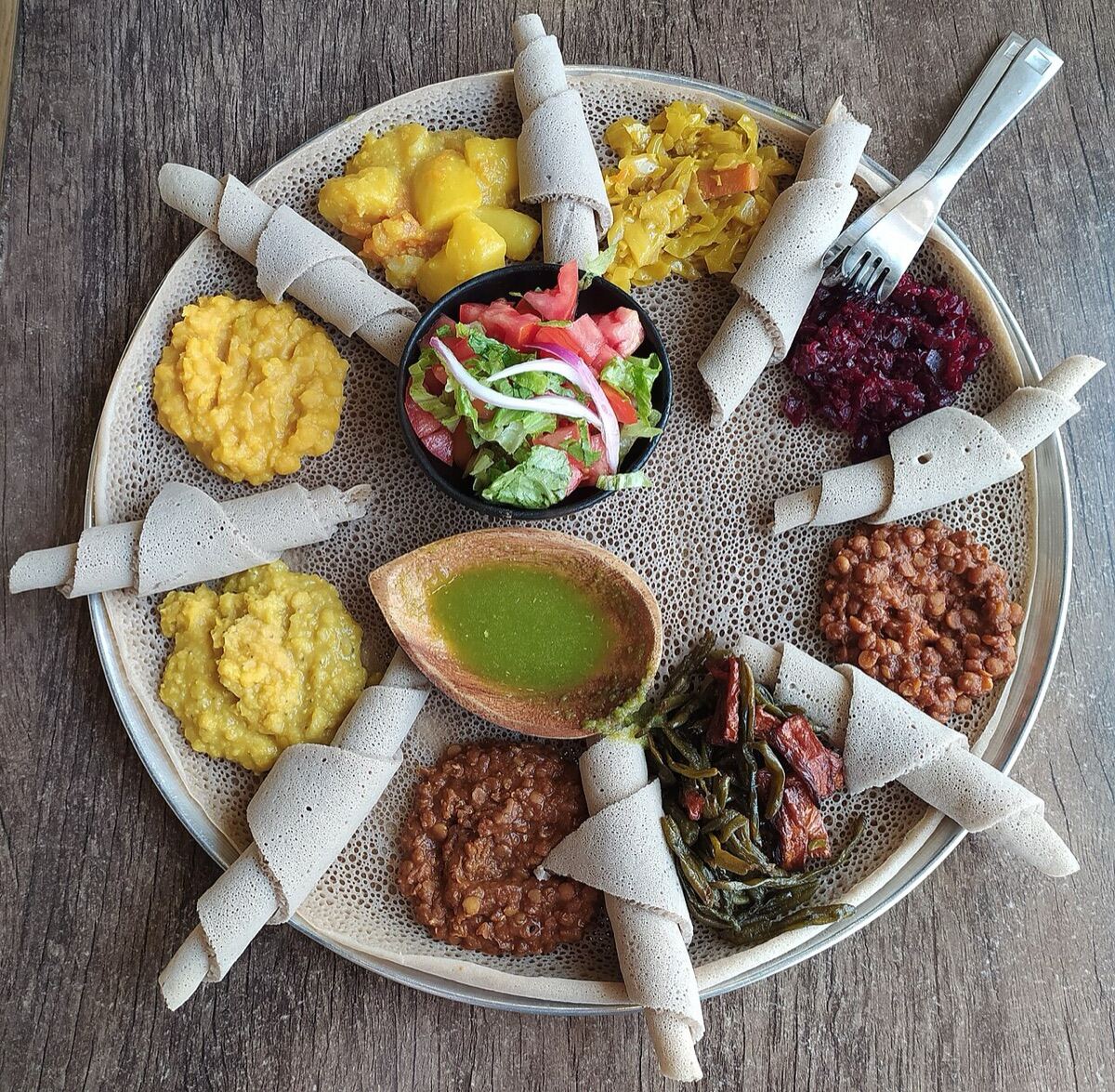
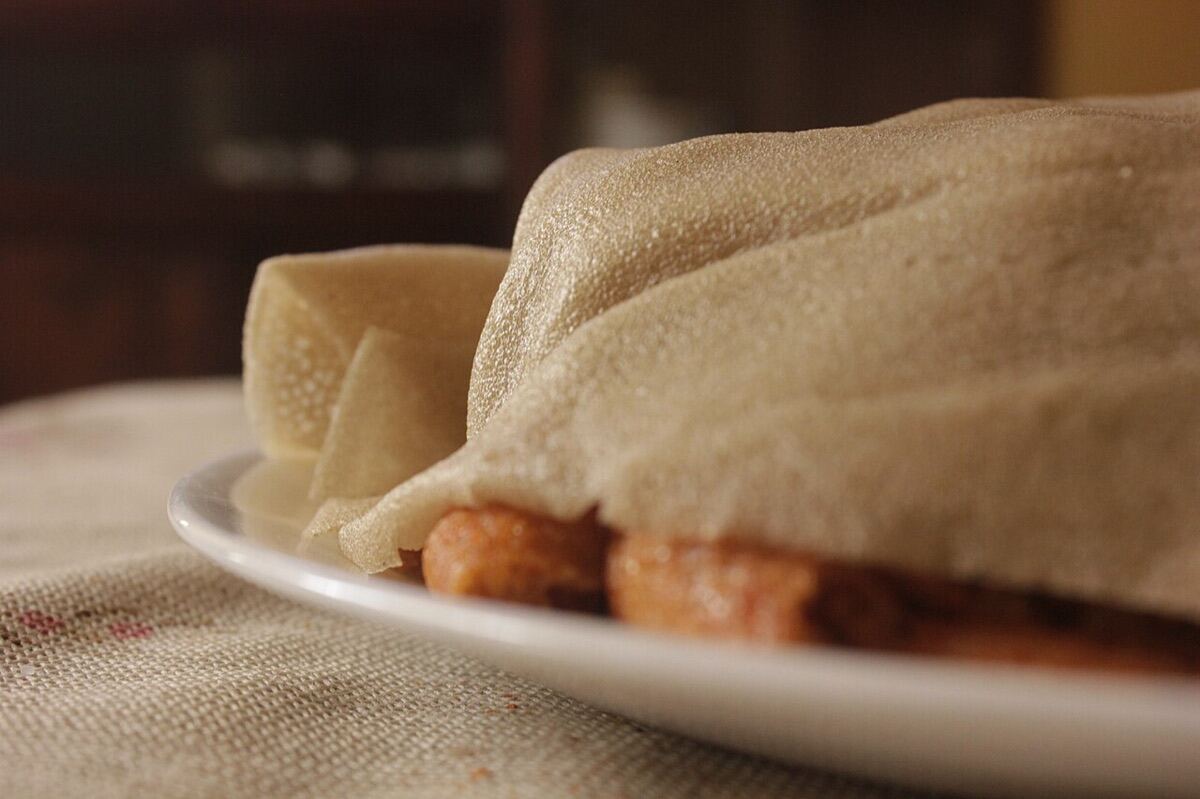
Injera is the soft, spongy, slightly sour flatbread that almost every Ethiopian meal is served on. It's made from teff, a tiny grain grown in the highlands, mixed with water and left to ferment for a few days, then poured into a wide pan and steamed on one side only, which gives it its bubbly top. It's your plate and your spoon: stews are spooned on top, and you eat by tearing off pieces to scoop them up.
How to eat it
- 1Wash your hands first. Restaurants bring water and soap to the table, or have a sink nearby.
- 2Use your right hand only. The left is not used for food.
- 3Tear off a piece from the rolled injera on the side, or from the edge of the big one underneath.
- 4Pinch, don't dip: wrap the piece round a little stew with your fingertips and lift it to your mouth.
- 5Eat from the part in front of you, and save the stew-soaked injera underneath for last: it's the best bit.
- 6Gursha: if someone feeds you a bite with their hand, it's a sign of friendship. Accept it, and return one if you like.
What to eat
- Doro watSpicy chicken stew with a boiled egg; the holiday dish.
- TibsSautéed beef or lamb with onion and chilli.
- KitfoMinced beef with spiced butter, served raw or lightly cooked (ask for leb leb).
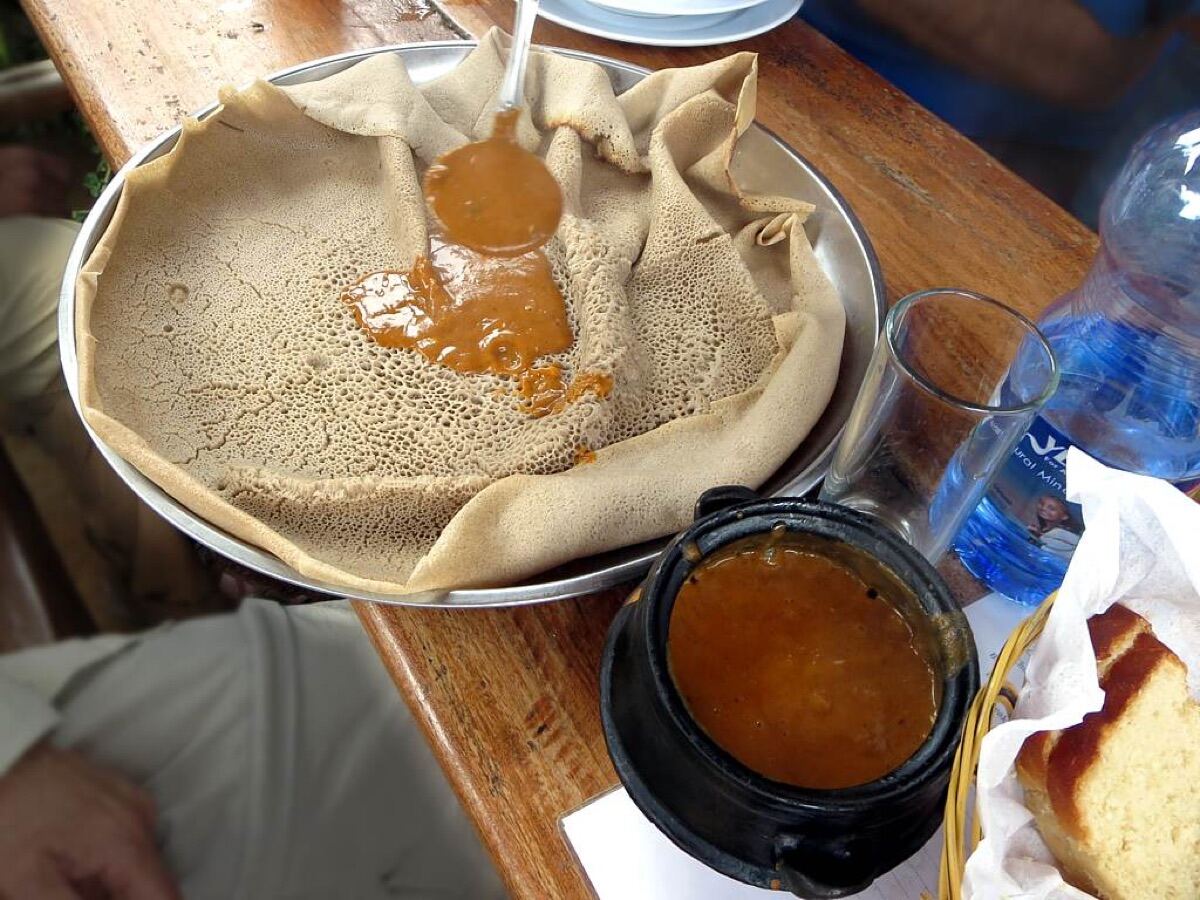 ShiroChickpea stew; vegan and everywhere.
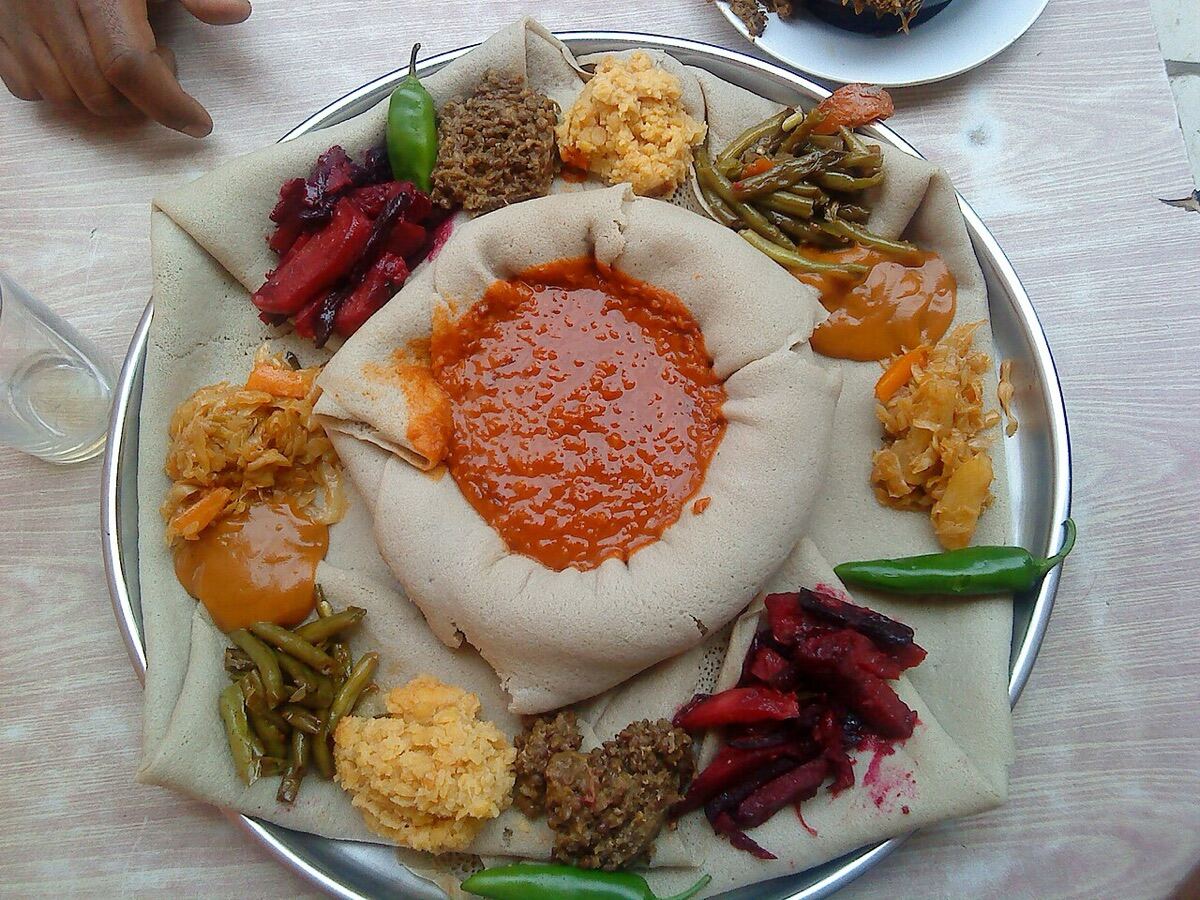 BeyaynetuA platter of vegan fasting dishes. See Vegan travellers.
- FirfirShredded injera in sauce, a breakfast favourite.
The home of coffee
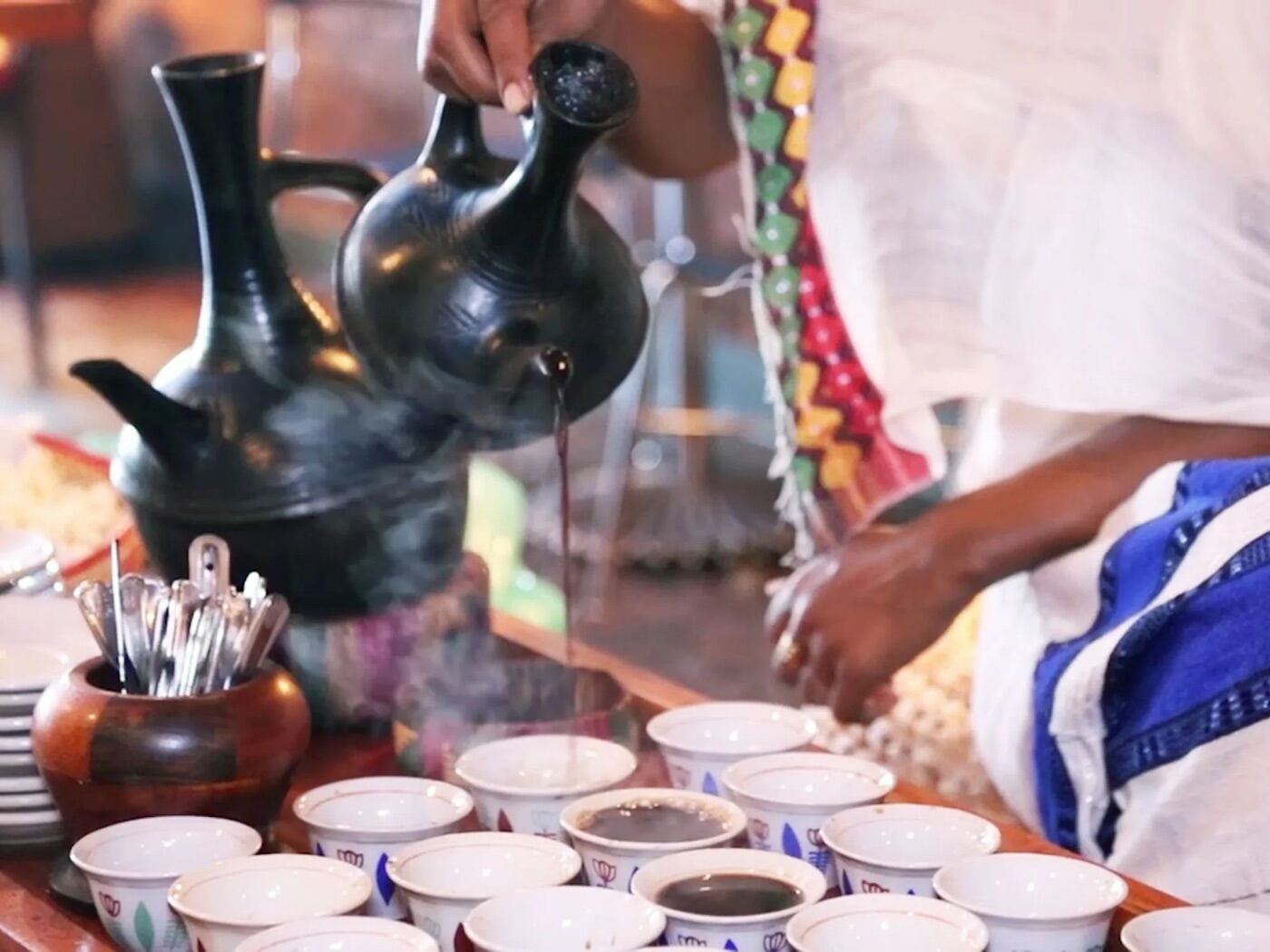 An Ethiopian coffee ceremony
Coffee comes from Ethiopia. The plant grows wild in the southwestern forests of Kaffa, and legend says a goat herder named Kaldi first noticed its energy. Coffee is still at the heart of daily life: buna is how people welcome a guest, settle a conversation and pass the afternoon.
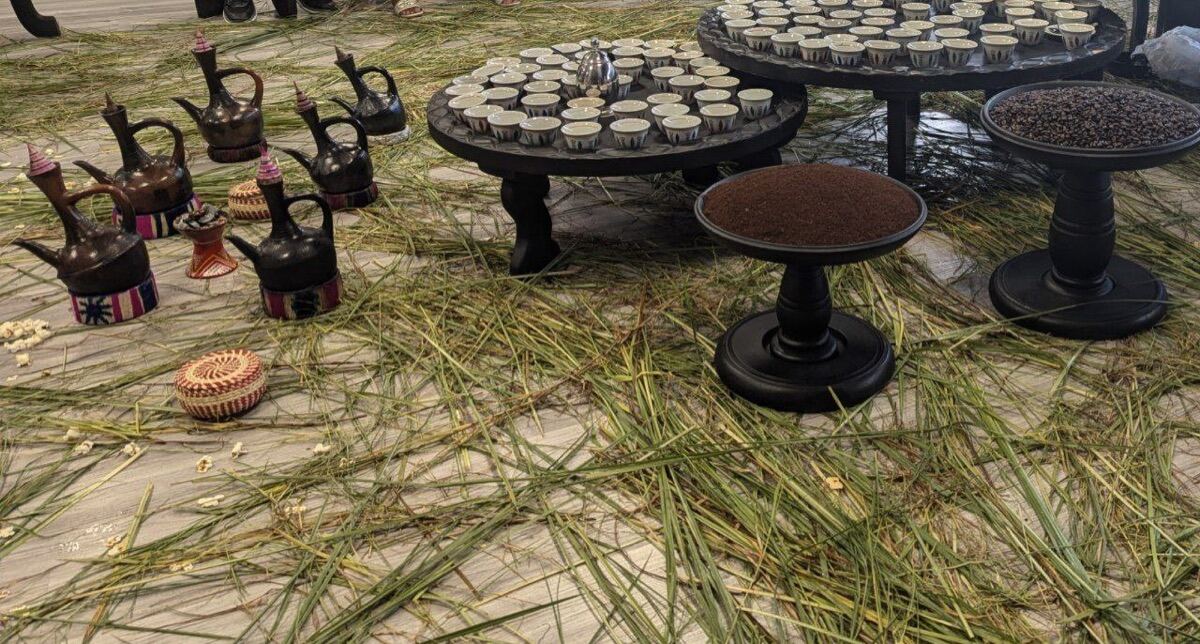
- The coffee ceremony: green beans are roasted over coals, ground by hand and brewed in a clay jebena, with incense burning and popcorn on the side. It takes an hour or more, and you're expected to stay.
- Three rounds: abol, tona and bereka. Accepting all three is polite; the third is said to bring a blessing.
- Everyday coffee: small buna bets (coffee houses) are on every street, and Addis loves a macchiato. A cup costs a few dozen birr.
- To take home: buy sealed retail packs from Yirgacheffe, Sidama, Harar or Guji, and keep the receipt (export limit 2 kg).
What to drink
Grouped so it's easy to skip alcohol or caffeine.
Coffee and teaCaffeine
- Buna · Ethiopian coffee, black or with sugar; try the ceremony.
- Macchiato · The favourite café order in Addis.
- Shai · Sweet tea, often spiced with cinnamon or clove.
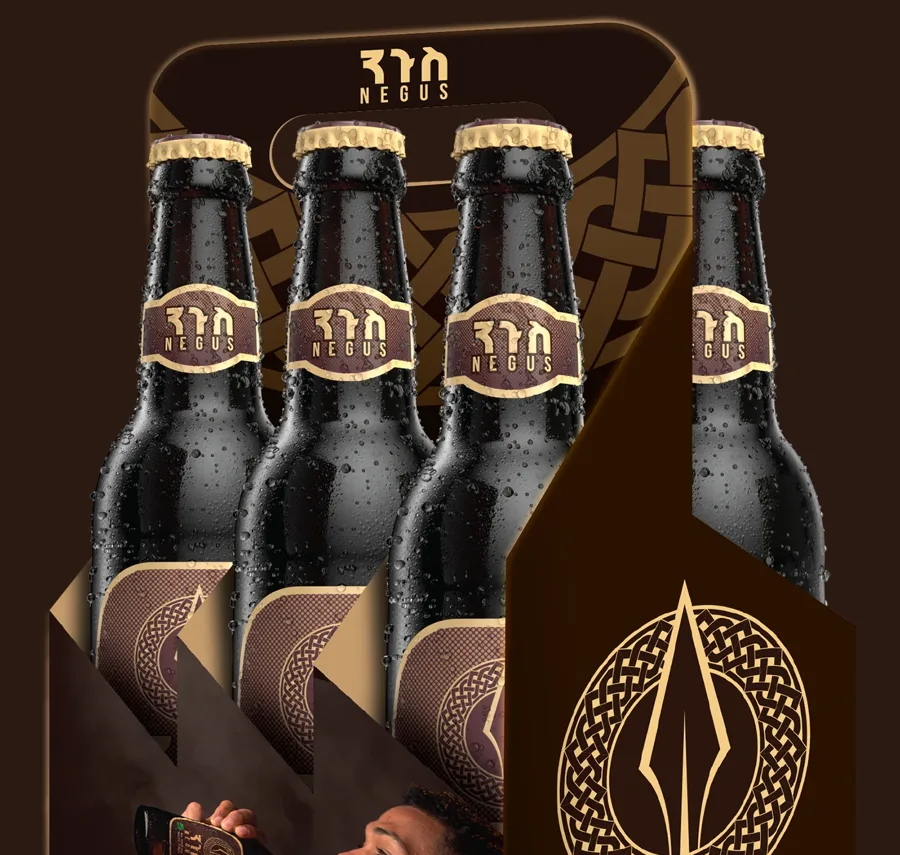 Negus, an Ethiopian coffee-flavoured non-alcoholic malt
Non-alcoholicNo alcohol
- Sen'q · Malt drink by BGI Ethiopia, labelled non-alcoholic.
- Negus · Dark malt drink by Habesha Breweries, labelled alcohol-free.
- Spris · Layered fresh juice: avocado, mango, papaya.
- Ambo · Naturally sparkling mineral water from Ambo.
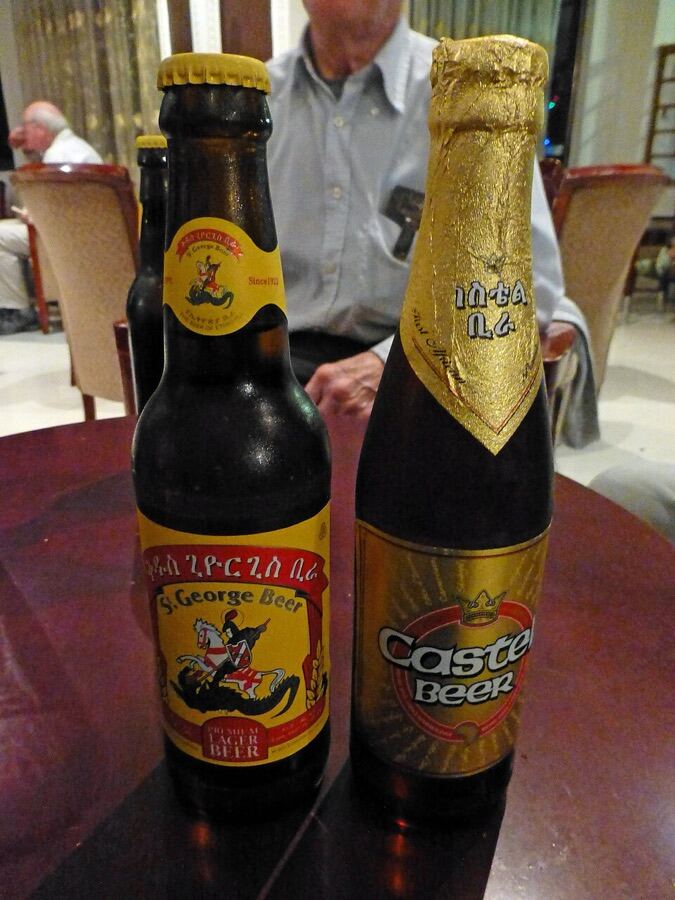
AlcoholAlcohol
- Tej · Honey wine, served in a round flask (berele).
- Tella and areke · Home-brewed beer and a strong spirit.
- Local beers · St. George, Habesha, Walia, Meta, Bedele, Dashen and Harar.
Questions people ask
What is injera?
Injera is a large, soft, slightly sour fermented flatbread made from teff flour, sometimes mixed with wheat or barley. Ethiopian food is served on it, and you tear it with your right hand to scoop up stews (wat) and vegetables.
Is Ethiopian food good for vegans?
Yes. On Wednesdays, Fridays and during Orthodox fasting seasons, most restaurants serve fasting food (tsom), which is fully vegan. Beyaynetu, a platter of several fasting dishes on injera, is the best first-time order.
Is injera gluten-free?
Only if it's pure teff. Injera is sometimes mixed with wheat or barley flour, so ask.
What is kitfo?
Kitfo is minced beef with spiced butter and mitmita (chilli powder). It's served raw unless you ask for leb leb (lightly cooked) or yebesele (cooked).
How much does a meal cost in Addis Ababa?
About 250 to 500 ETB for shiro or beyaynetu at a local restaurant, or 600 to 1,200 ETB at a mid-range or hotel restaurant. Meat dishes such as tibs or doro wat cost about 500 to 1,000 ETB locally and 1,000 to 2,500 ETB mid-range.