
 English
 Français
 Español
 العربية
 中文
 עברית
 Deutsch
 Dansk
 हिन्दी
 Soomaali
 Kiswahili
Ethiopian food
Most meals come on injera, a soft, slightly sour flatbread you tear with your right hand to scoop up stews, and this is the birthplace of coffee. Here's what injera is and how to eat it, the dishes to try, the coffee ceremony and what to drink.
What is injera?
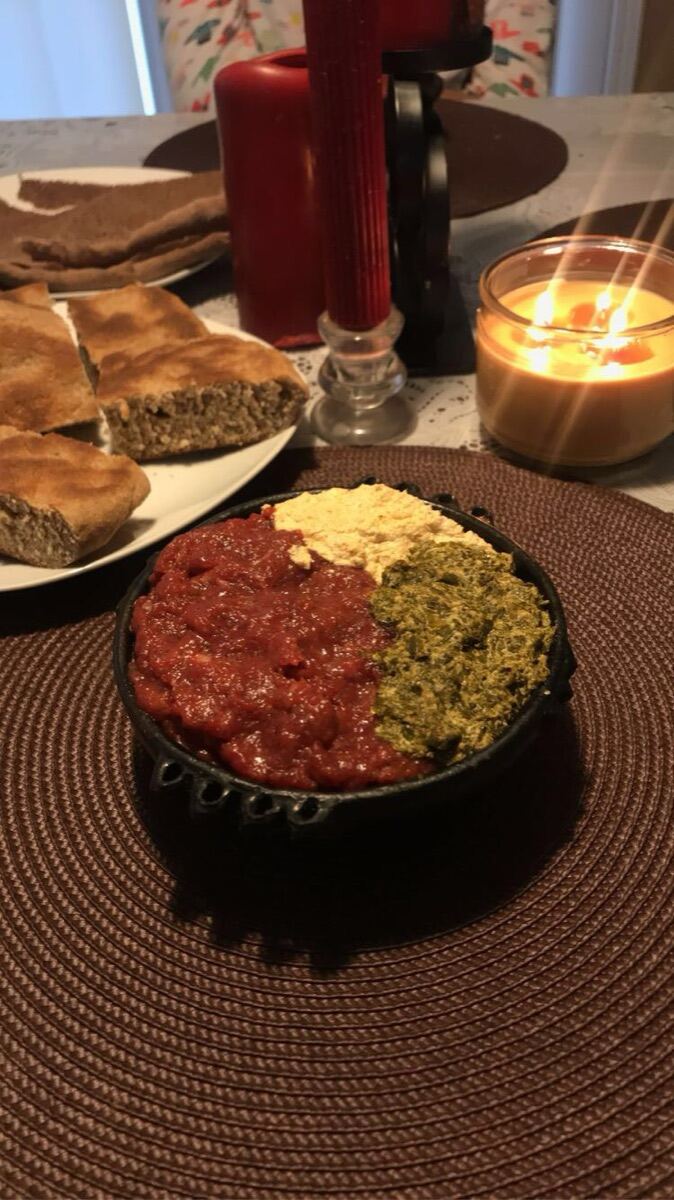
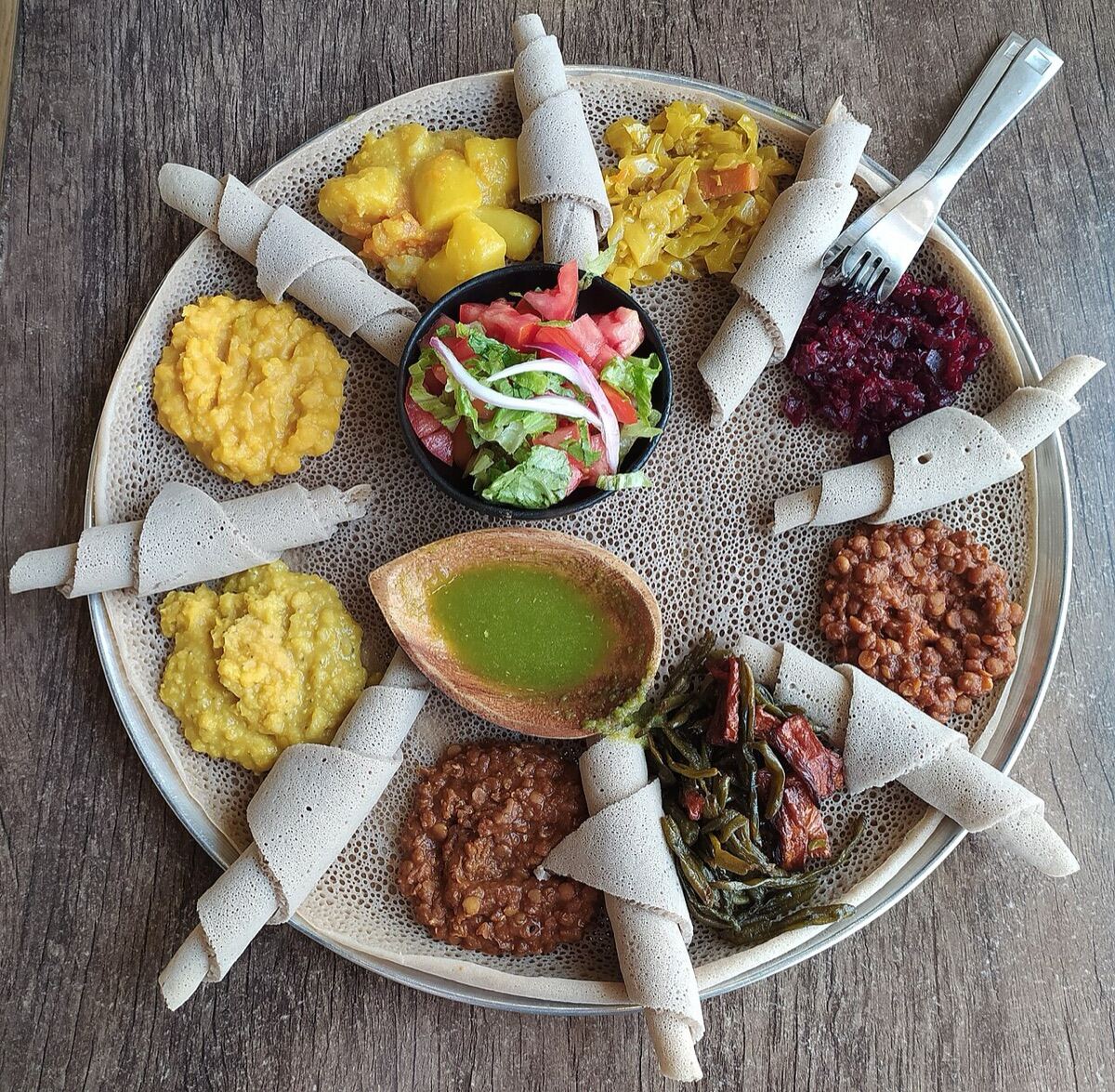
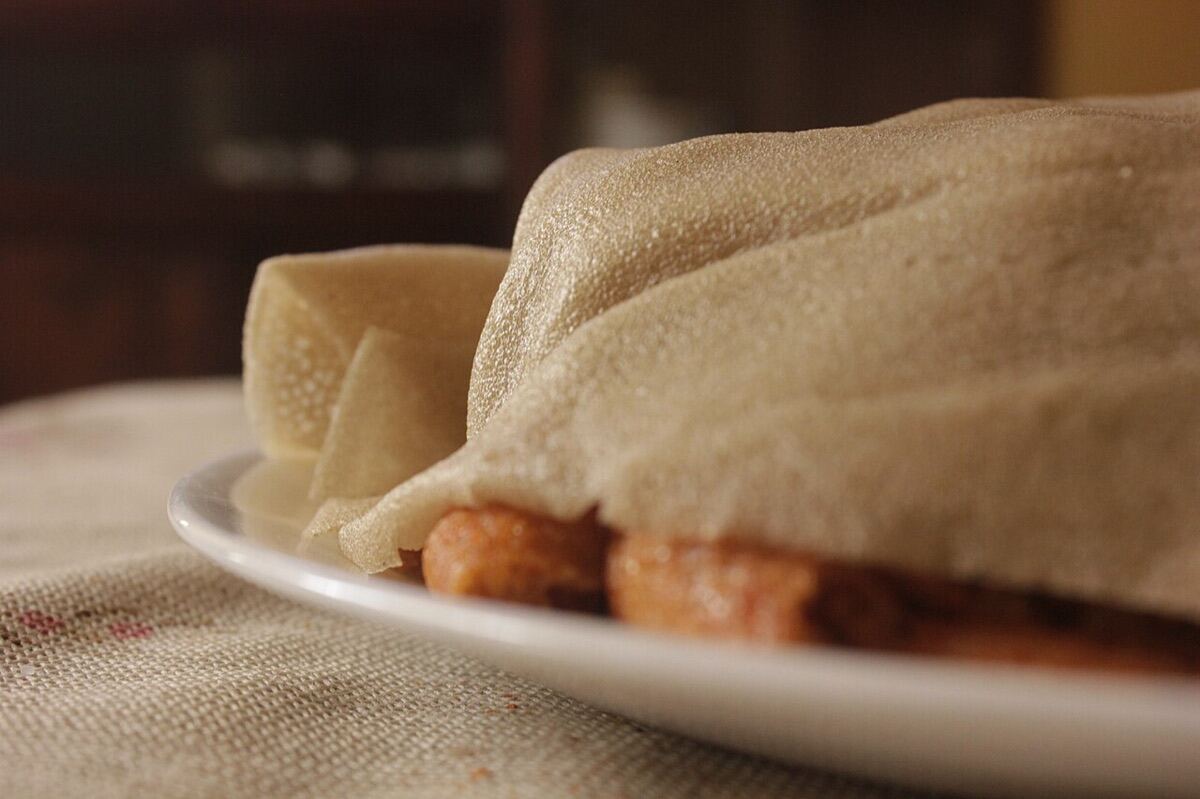
Injera is the soft, spongy, slightly sour flatbread that almost every Ethiopian meal is served on. It's made from teff, a tiny grain grown in the highlands, mixed with water and left to ferment for a few days, then poured into a wide pan and steamed on one side only, which gives it its bubbly top. It's your plate and your spoon: stews are spooned on top, and you eat by tearing off pieces to scoop them up.
How to eat it
- 1Wash your hands first. Restaurants bring water and soap to the table, or have a sink nearby.
- 2Use your right hand only. The left is not used for food.
- 3Tear off a piece from the rolled injera on the side, or from the edge of the big one underneath.
- 4Pinch, don't dip: wrap the piece round a little stew with your fingertips and lift it to your mouth.
- 5Eat from the part in front of you, and save the stew-soaked injera underneath for last: it's the best bit.
- 6Gursha: if someone feeds you a bite with their hand, it's a sign of friendship. Accept it, and return one if you like.
Waxa la cuno
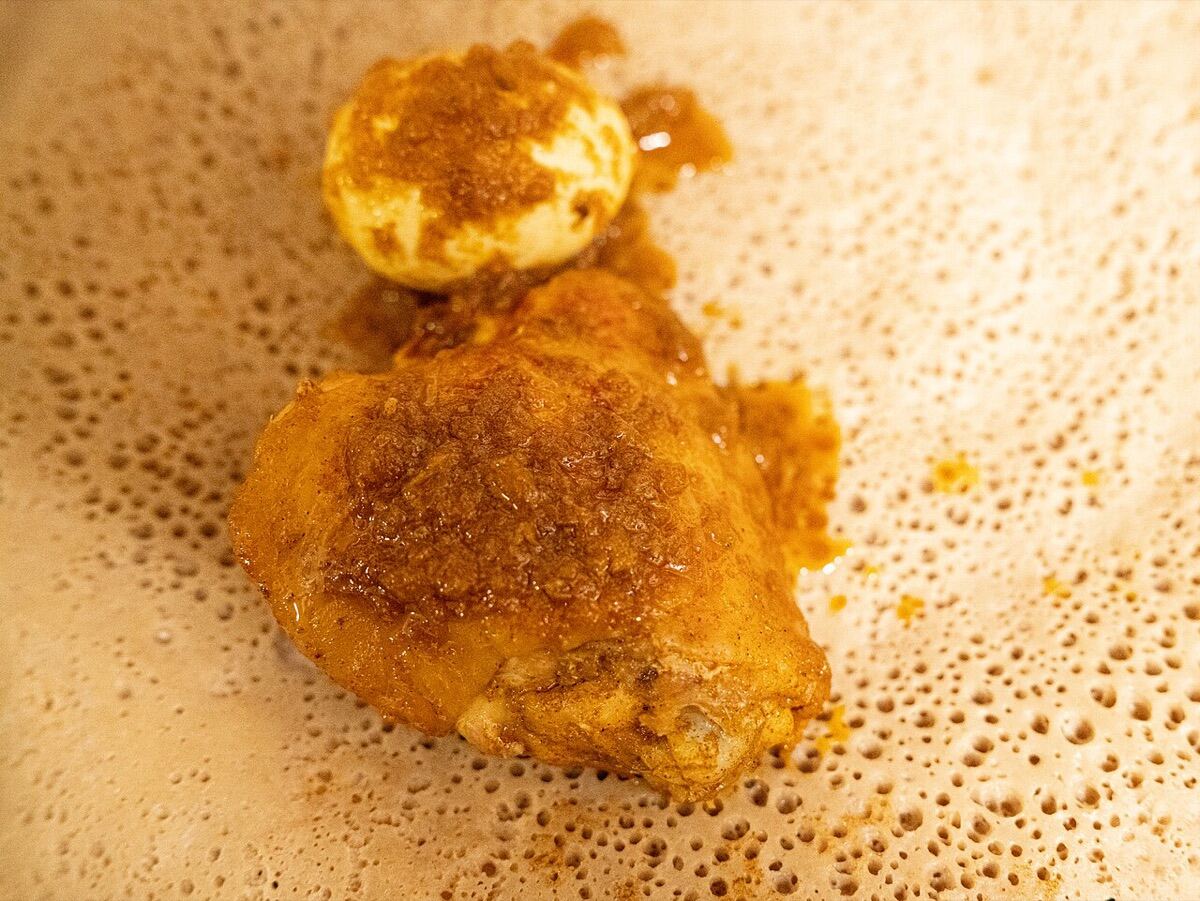
- Doro watMaraq digaag oo basbaas leh oo ay la socoto ukun la kariyay; cuntada ciidaha.
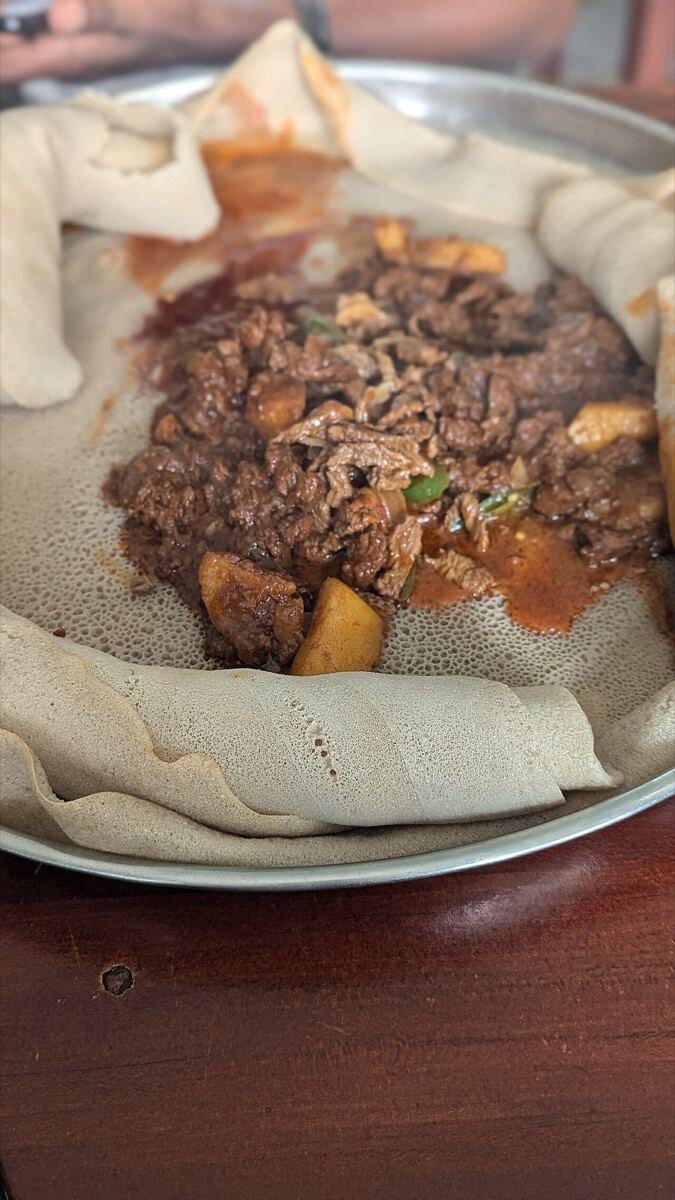
- TibsHilib lo'aad ama wan yar oo la shiilay, oo leh basal iyo basbaas.
- KitfoHilib lo'aad oo la shiiday oo leh subag xawaash leh, lagu bixiyo isagoo ceedhin ah ama xoogaa la kariyay (weydiiso leb leb).
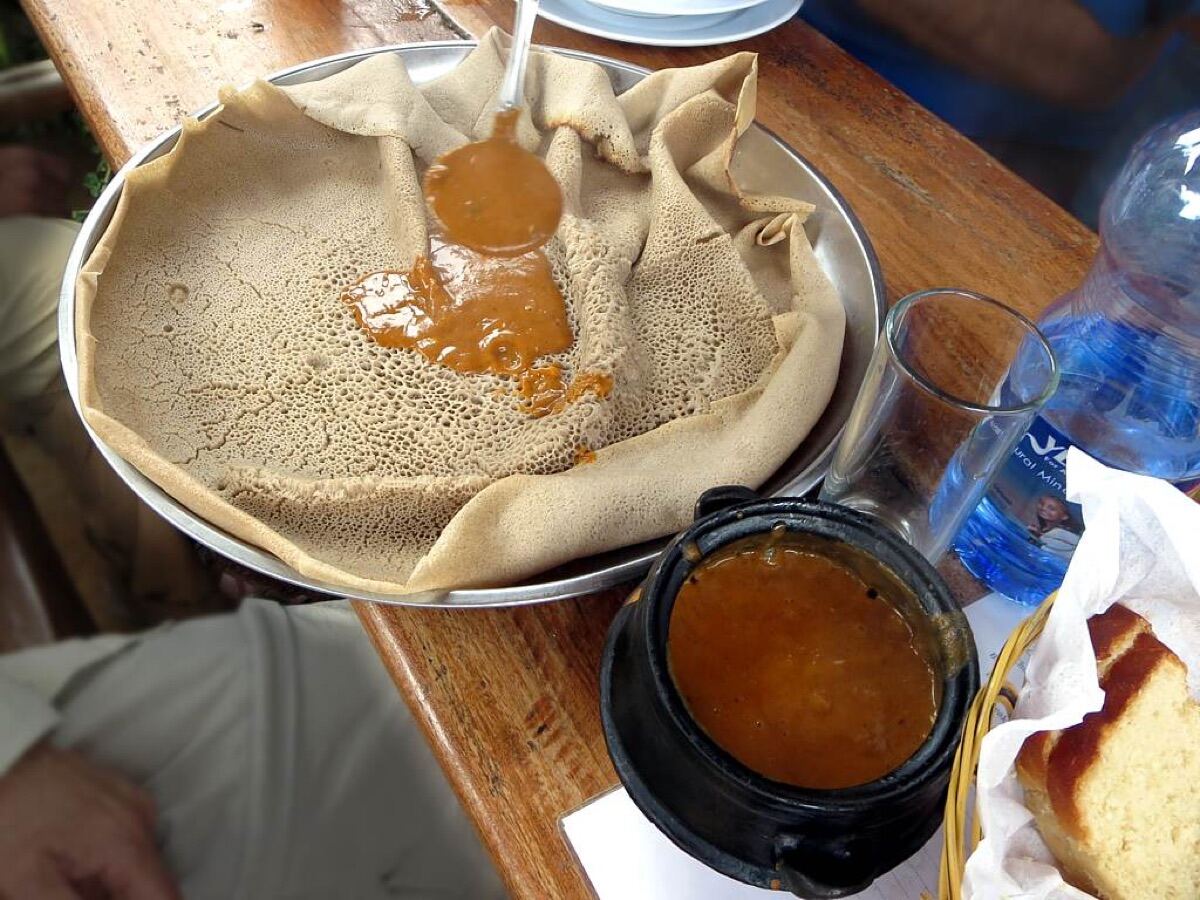 ShiroMaraq digir kaabuli (chickpea) ah; waa vegan, meel kastana waa laga helaa.
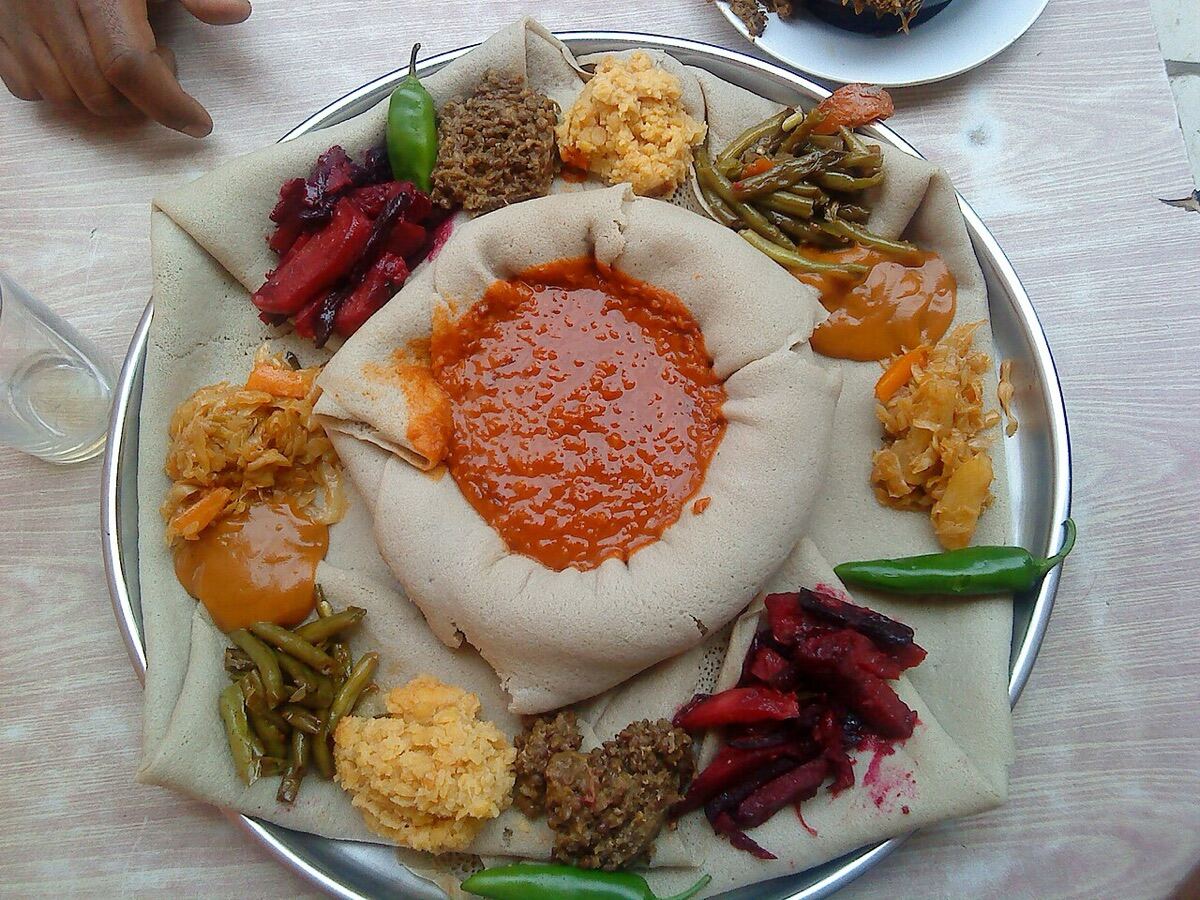 BeyaynetuSaxan cuntooyin soon ah oo vegan ah. Eeg Socotada vegan-ka ah.
- FirfirCanjeero (injera) la jarjaray oo suugo ku jirta, quraac aad loo jecel yahay.
Dalka uu ka yimid bunku
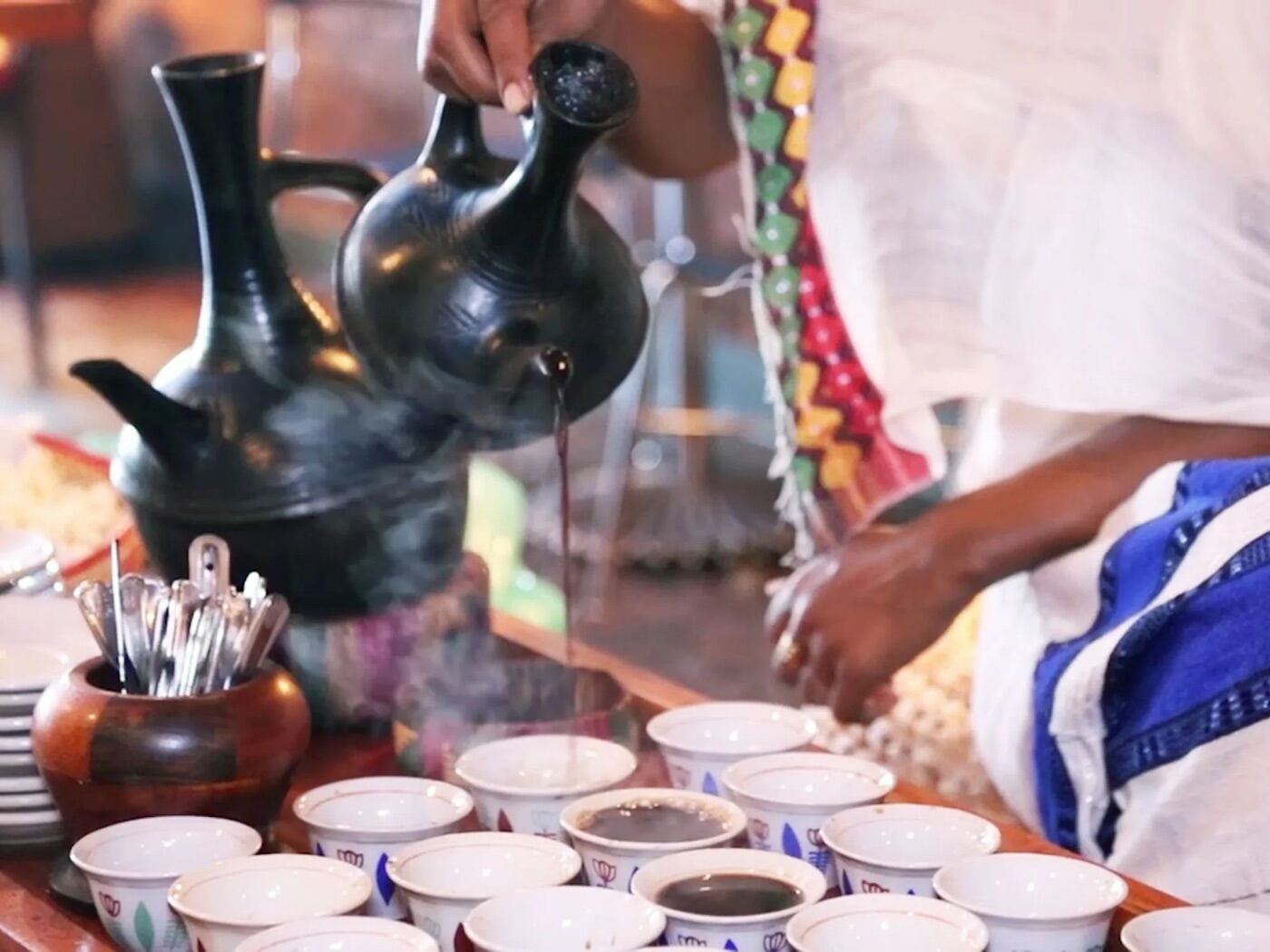 Xafladda bunka Itoobiya
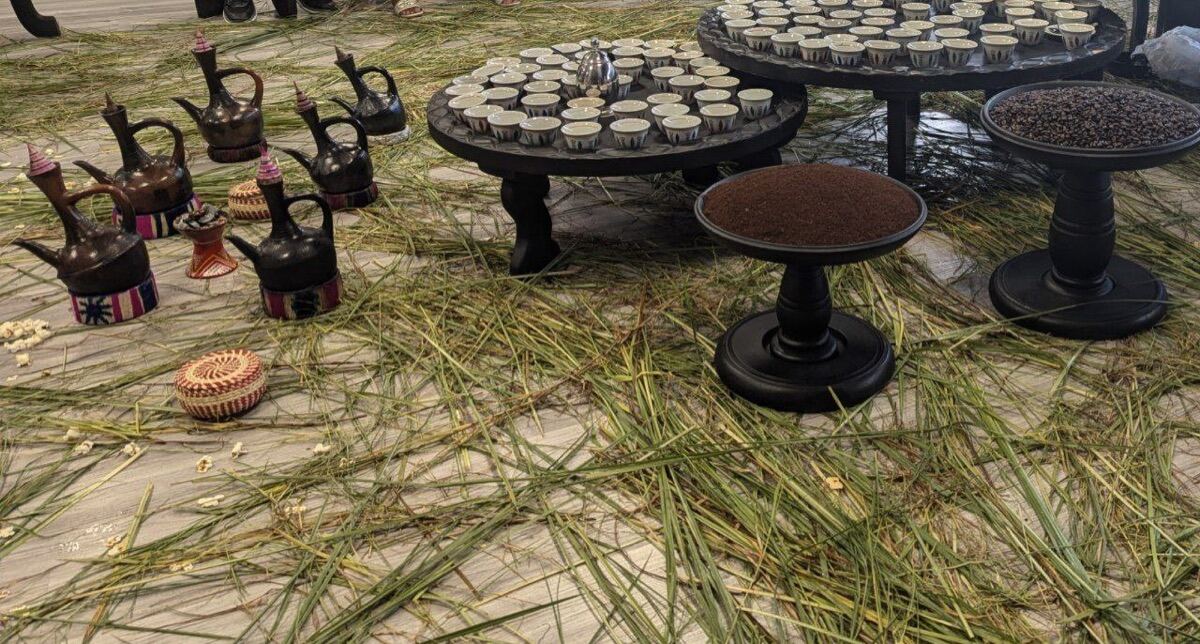
Bunku wuxuu ka yimid Itoobiya. Geedku wuxuu si duur ah uga baxaa kaymaha koonfur-galbeed ee Kaffa, sheekada dhaqanka ahna waxay leedahay ri' ilaaliye la oran jiray Kaldi ayaa markii ugu horreysay dareemay tamarta uu bixiyo. Bunku weli wuxuu ku jiraa wadnaha nolosha maalinlaha ah: buna waa sida dadku martida u soo dhoweeyaan, sheeko u dhammeystiraan, galabtana u dhaafiyaan.
- Xafladda bunka: bunka cagaaran waxaa lagu dubaa dhuxul, gacan ayaa lagu shiidaa, waxaana lagu kariyaa jebena dhoobo ah, iyadoo foox la shidayo oo salool (popcorn) dhinac yaal. Waxay qaadataa saacad ama ka badan, waxaana lagaa filayaa inaad joogto.
- Saddex wareeg: abol, tona iyo bereka. Aqbalaadda saddexdaba waa edeb; tan saddexaad waxaa la yiraahdaa barako ayay keentaa.
- Bunka maalinlaha ah: buna bet yaryar (maqaayadaha bunka) waxay ku yaalliin waddo kasta, Addis-na aad bay u jeceshahay macchiato. Koob wuxuu ku kacaa dhowr tobanaan oo birr.
- Si aad guriga ugu qaadato: iibso baakadaha xiran ee dukaanka laga iibiyo ee Yirgacheffe, Sidama, Harar ama Guji, oo hayso rasiidhka (xadka dhoofinta 2 kg).
Waxa la cabbo
Loo kala qaybiyay si ay u fududaato in laga fogaado khamriga ama kafeynka.
Bun iyo shaahKafeyn
- Buna · Bun Itoobiyaan ah, madow ama sonkor leh; tijaabi xafladda.
- Macchiato · Dalabka maqaayadda ee ugu jecel Addis.
- Shai · Shaah macaan, oo badanaa lagu daro qorfe ama dhego-yare (clove).
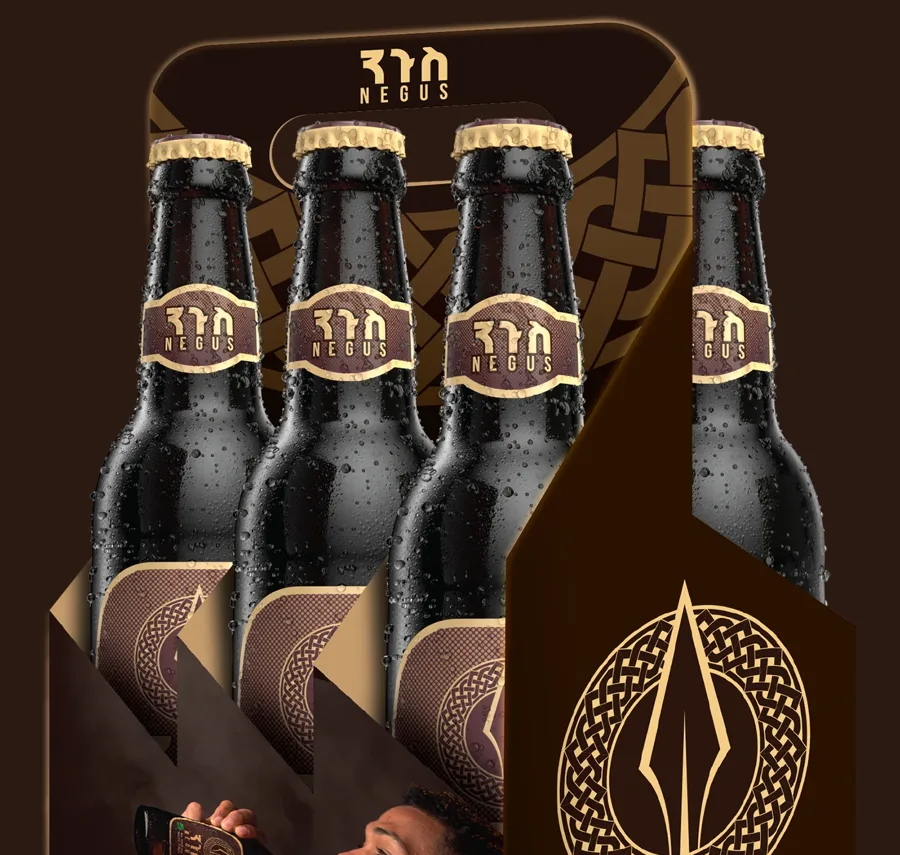 Negus, an Ethiopian coffee-flavoured non-alcoholic malt
Aan khamri lahaynKhamri ma leh
- Sen'q · Cabbitaan malt ah oo ay samayso BGI Ethiopia, oo lagu qoray inaanu khamri lahayn.
- Negus · Cabbitaan malt madow ah oo ay samayso Habesha Breweries, oo lagu qoray inaanu khamri ku jirin.
- Spris · Casiir cusub oo lakab-lakab ah: avokaado, cambe, babaay.
- Ambo · Biyo macdan ah oo si dabiici ah u xumbo leh, kana yimaada Ambo.
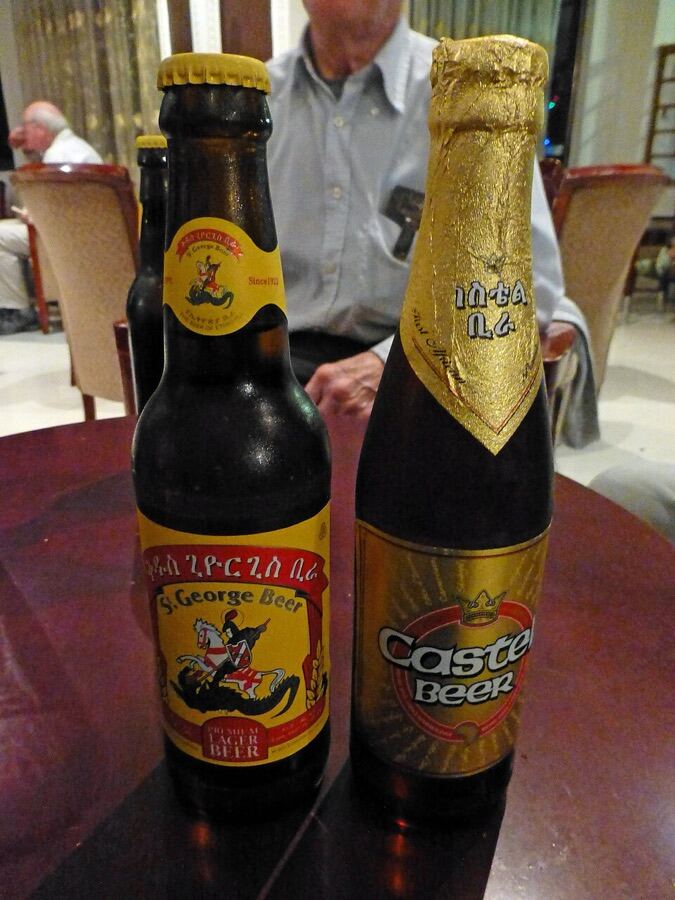
KhamriKhamri
- Tej · Khamri malab, lagu bixiyo dhalo wareegsan (berele).
- Tella iyo areke · Biir guriga lagu sameeyay iyo khamri adag.
- Biirooyinka deegaanka · St. George, Habesha, Walia, Meta, Bedele, Dashen and Harar.
Su'aalaha dadku weydiiyaan
What is injera?
Injera is a large, soft, slightly sour fermented flatbread made from teff flour, sometimes mixed with wheat or barley. Ethiopian food is served on it, and you tear it with your right hand to scoop up stews (wat) and vegetables.
Is Ethiopian food good for vegans?
Yes. On Wednesdays, Fridays and during Orthodox fasting seasons, most restaurants serve fasting food (tsom), which is fully vegan. Beyaynetu, a platter of several fasting dishes on injera, is the best first-time order.
Is injera gluten-free?
Only if it's pure teff. Injera is sometimes mixed with wheat or barley flour, so ask.
What is kitfo?
Kitfo is minced beef with spiced butter and mitmita (chilli powder). It's served raw unless you ask for leb leb (lightly cooked) or yebesele (cooked).
How much does a meal cost in Addis Ababa?
About 250 to 500 ETB for shiro or beyaynetu at a local restaurant, or 600 to 1,200 ETB at a mid-range or hotel restaurant. Meat dishes such as tibs or doro wat cost about 500 to 1,000 ETB locally and 1,000 to 2,500 ETB mid-range.