
 English
 Français
 Español
 العربية
 中文
 עברית
 Deutsch
 Dansk
 हिन्दी
 Soomaali
 Kiswahili
Ethiopian food
Most meals come on injera, a soft, slightly sour flatbread you tear with your right hand to scoop up stews, and this is the birthplace of coffee. Here's what injera is and how to eat it, the dishes to try, the coffee ceremony and what to drink.
What is injera?
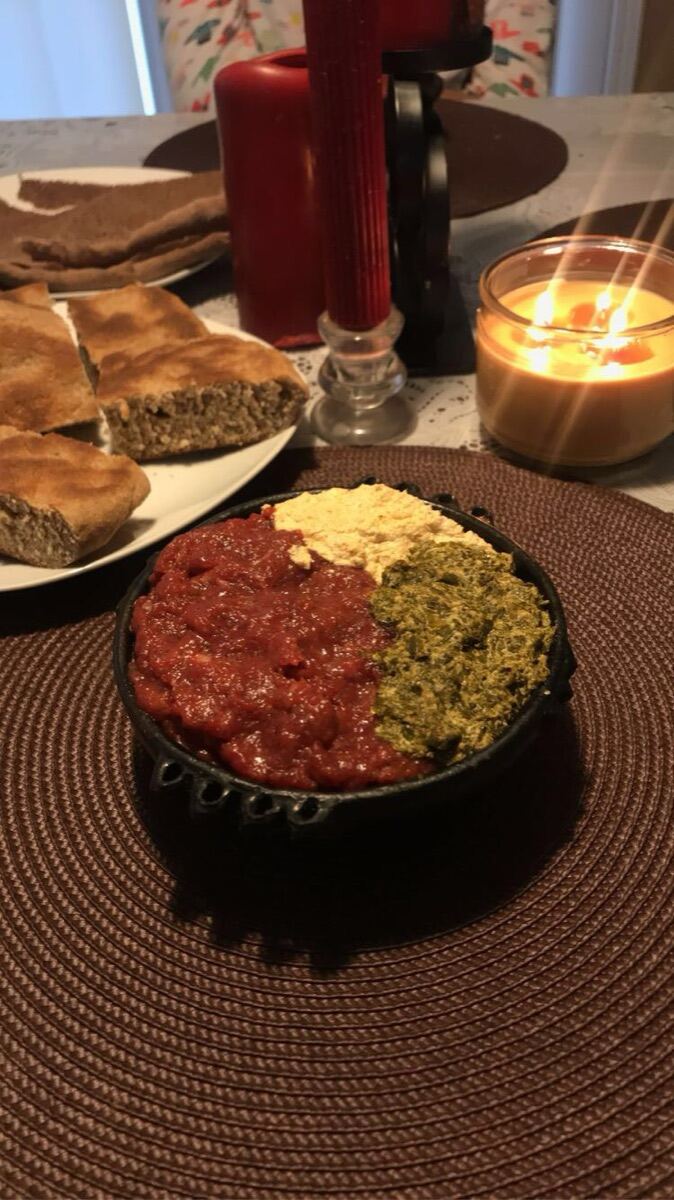
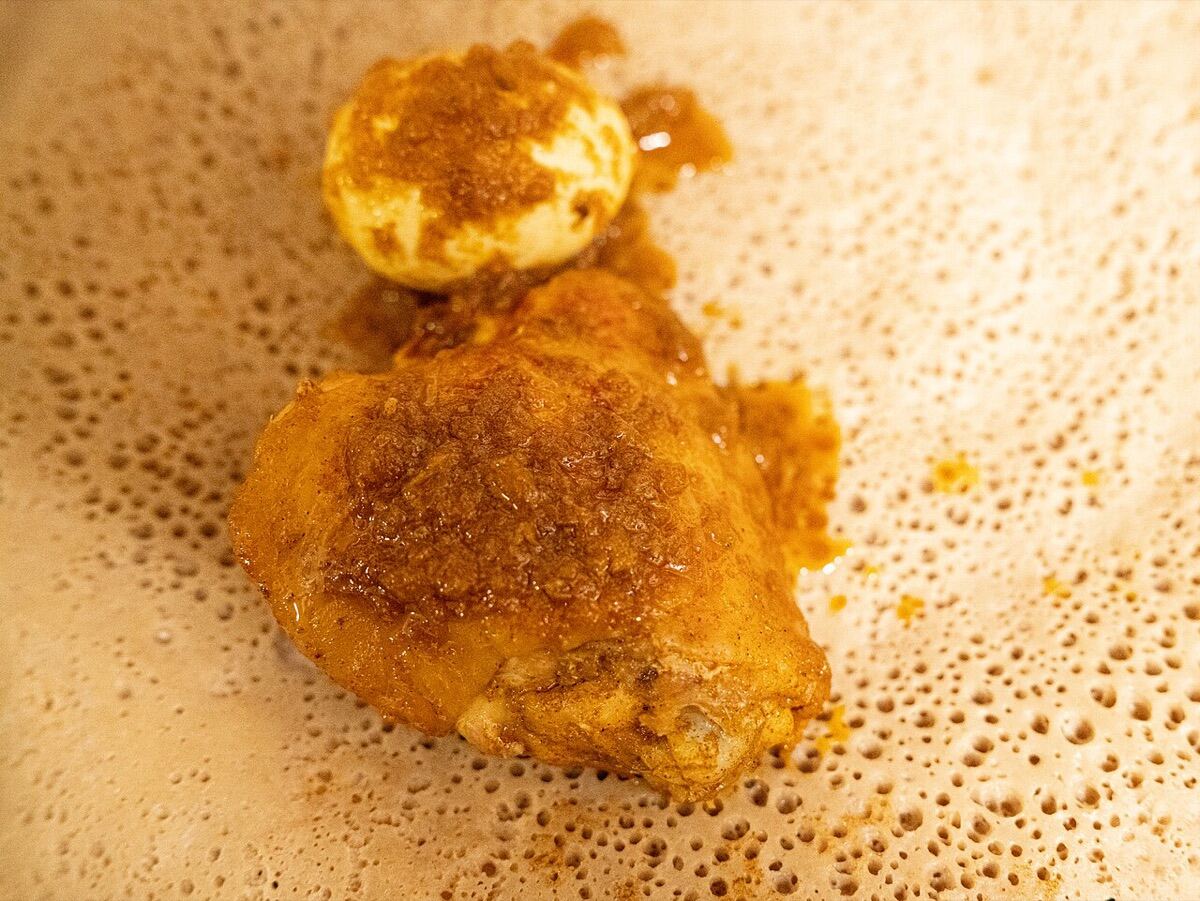
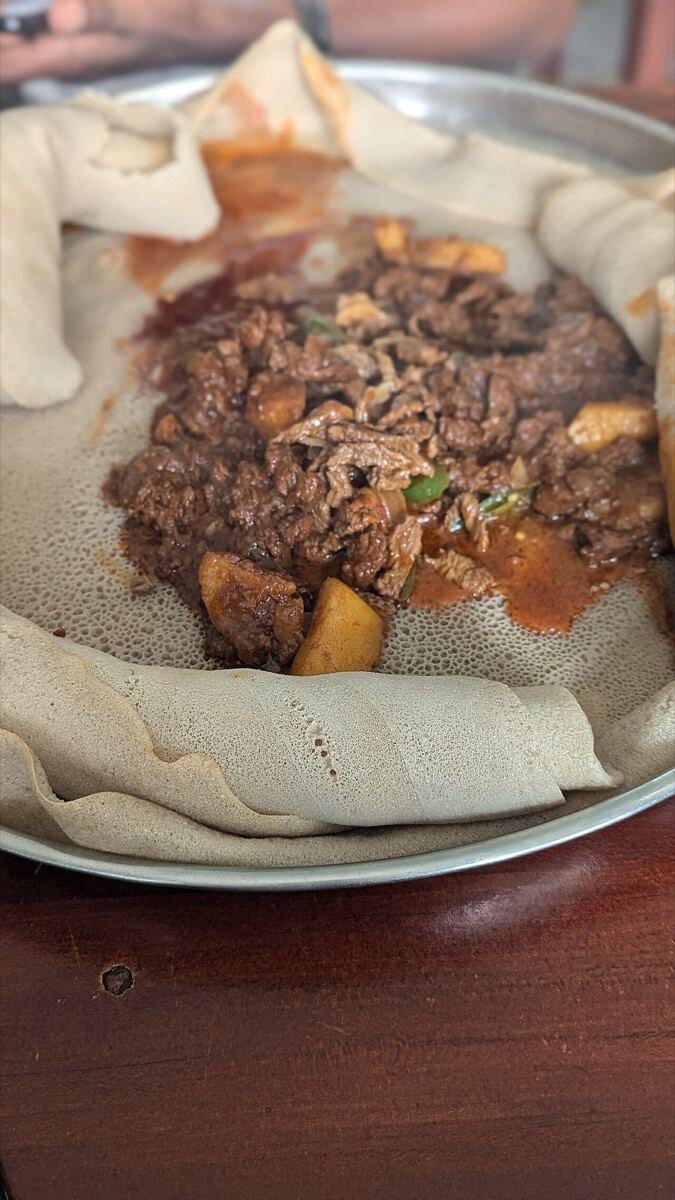
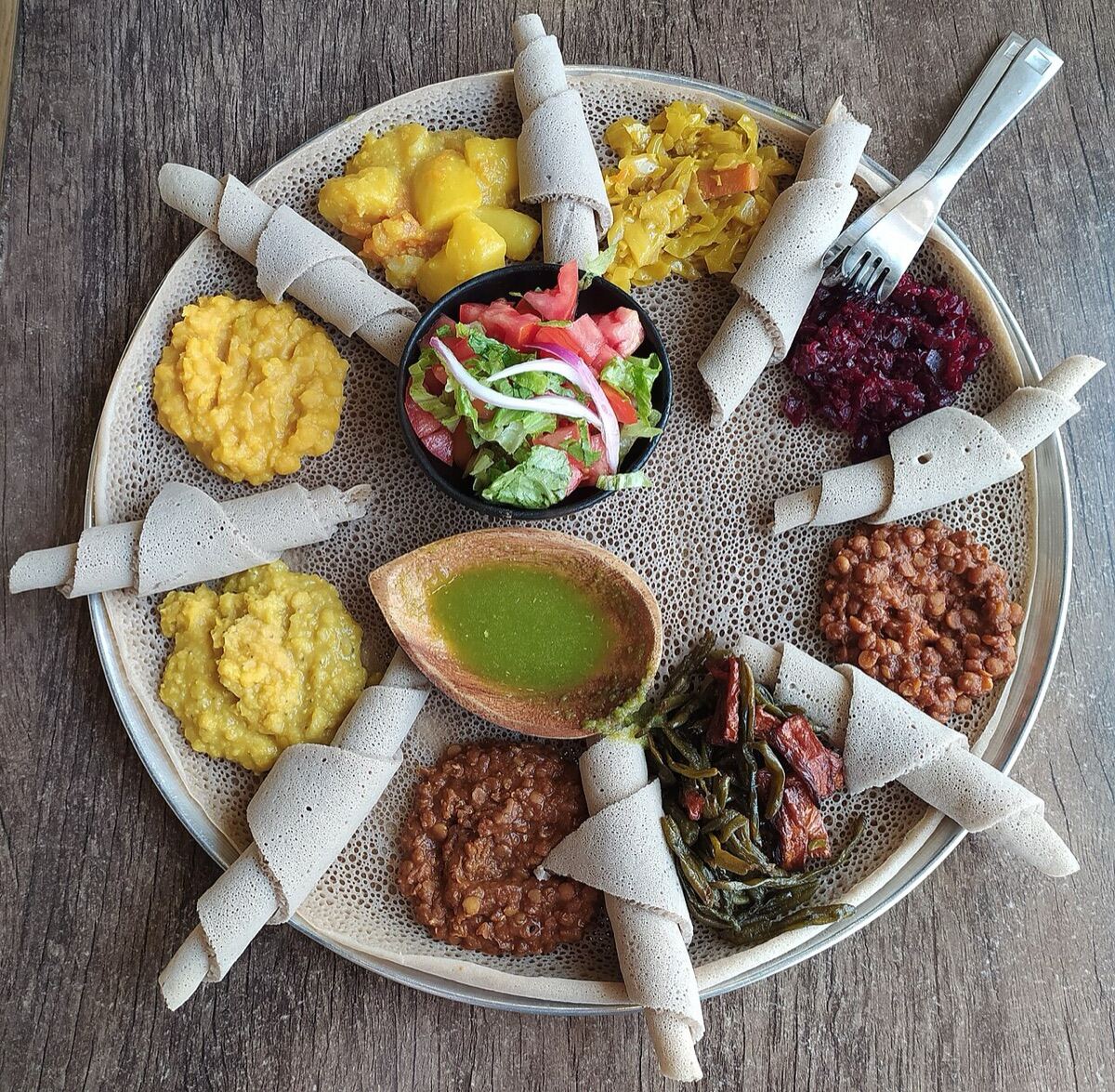
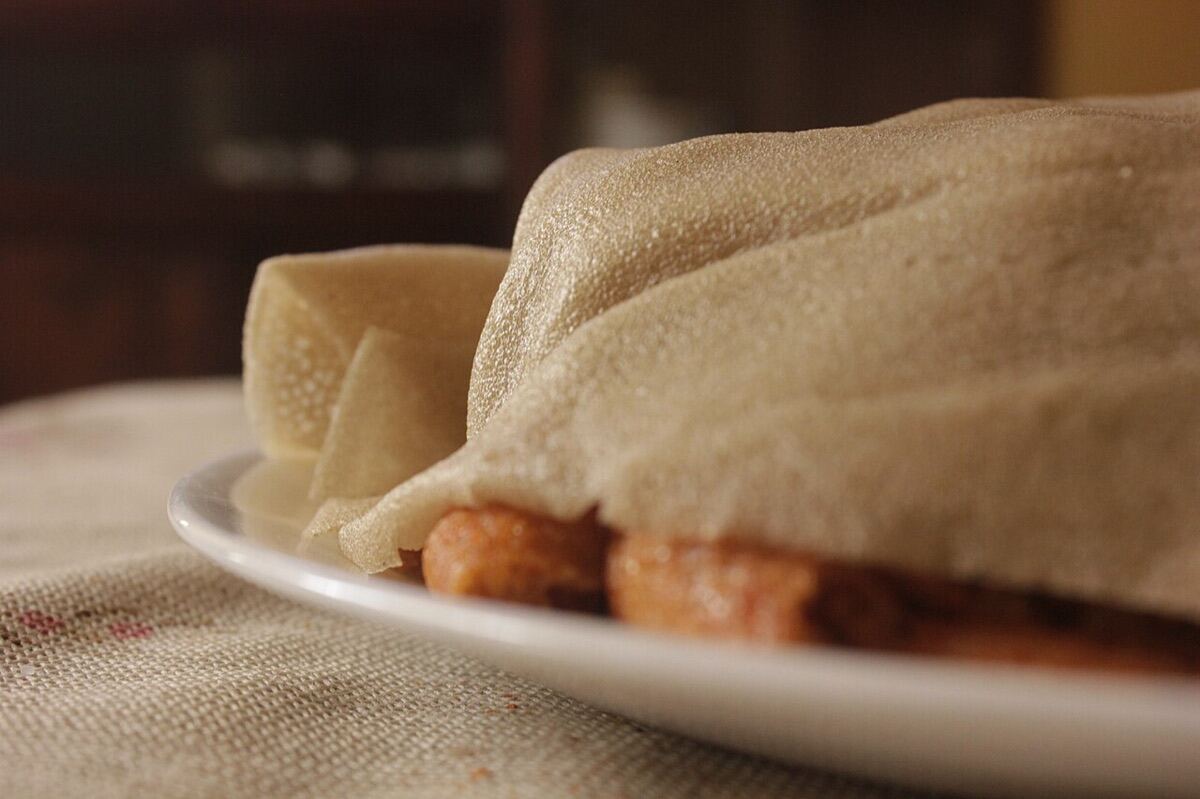
Injera is the soft, spongy, slightly sour flatbread that almost every Ethiopian meal is served on. It's made from teff, a tiny grain grown in the highlands, mixed with water and left to ferment for a few days, then poured into a wide pan and steamed on one side only, which gives it its bubbly top. It's your plate and your spoon: stews are spooned on top, and you eat by tearing off pieces to scoop them up.
How to eat it
- 1Wash your hands first. Restaurants bring water and soap to the table, or have a sink nearby.
- 2Use your right hand only. The left is not used for food.
- 3Tear off a piece from the rolled injera on the side, or from the edge of the big one underneath.
- 4Pinch, don't dip: wrap the piece round a little stew with your fingertips and lift it to your mouth.
- 5Eat from the part in front of you, and save the stew-soaked injera underneath for last: it's the best bit.
- 6Gursha: if someone feeds you a bite with their hand, it's a sign of friendship. Accept it, and return one if you like.
Was du essen solltest
- Doro watScharfer Hühnereintopf mit gekochtem Ei; das Feiertagsgericht.
- TibsSautiertes Rind- oder Lammfleisch mit Zwiebeln und Chili.
- KitfoRinderhack mit gewürzter Butter, roh oder leicht angegart serviert (frag nach leb leb).
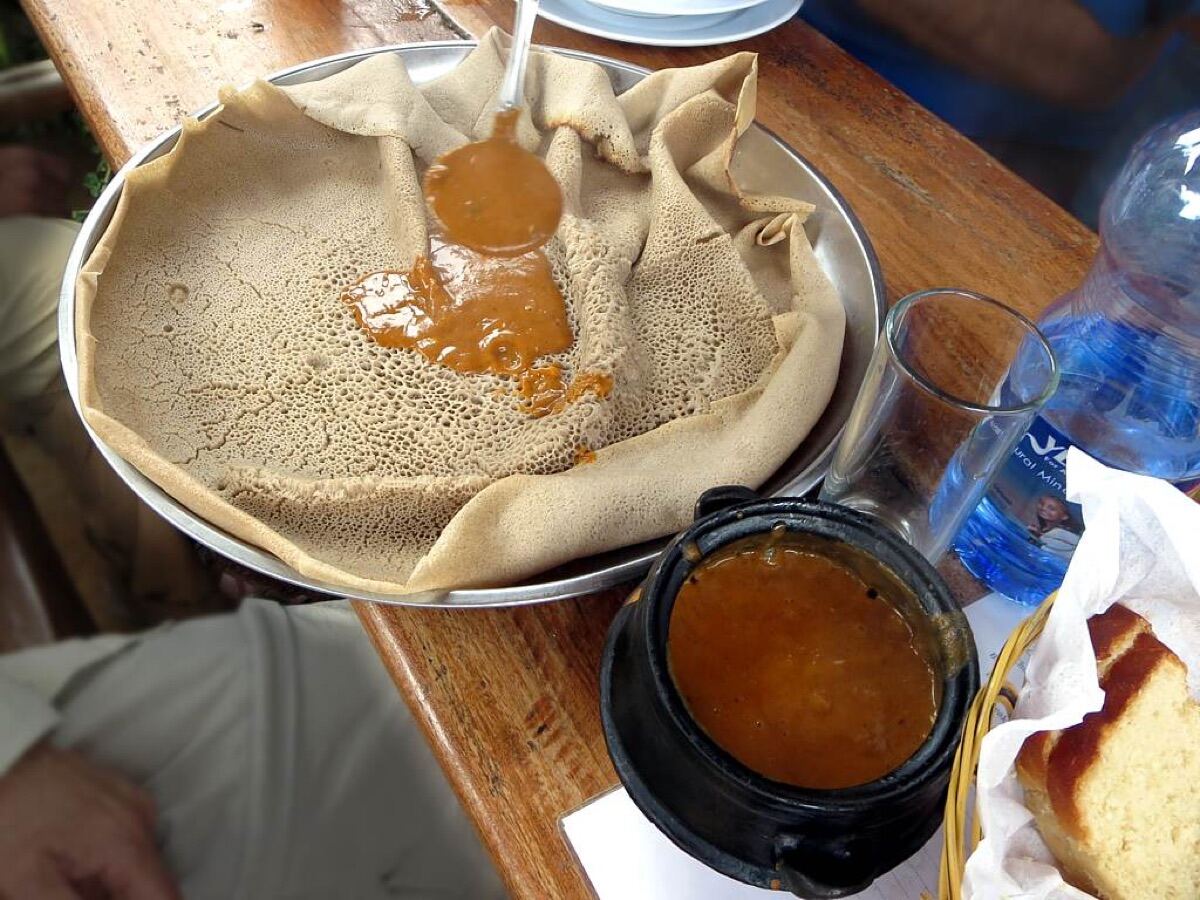 ShiroKichererbseneintopf; vegan und überall zu haben.
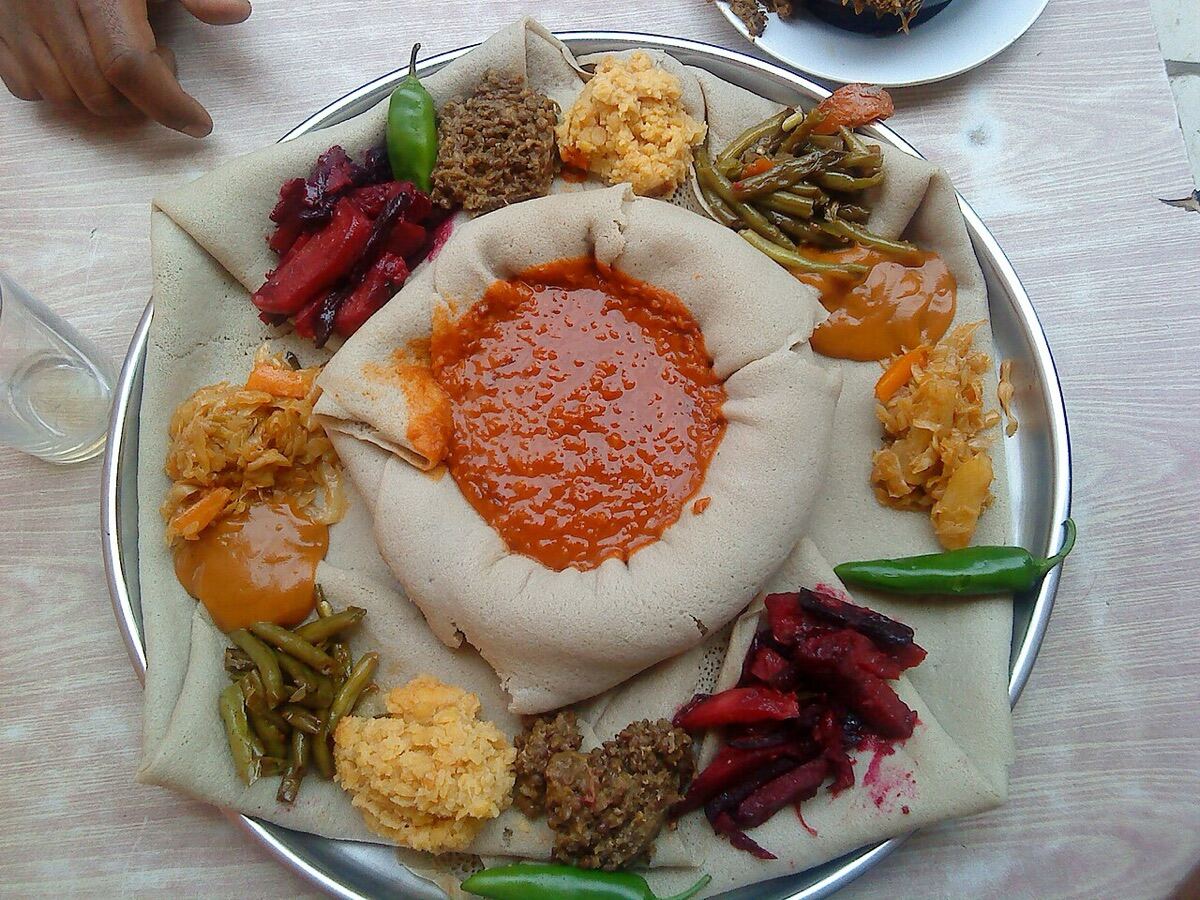 BeyaynetuEine Platte mit veganen Fastengerichten. Siehe Vegan reisen.
- FirfirZerrupfte Injera in Soße, ein beliebtes Frühstück.
Die Heimat des Kaffees
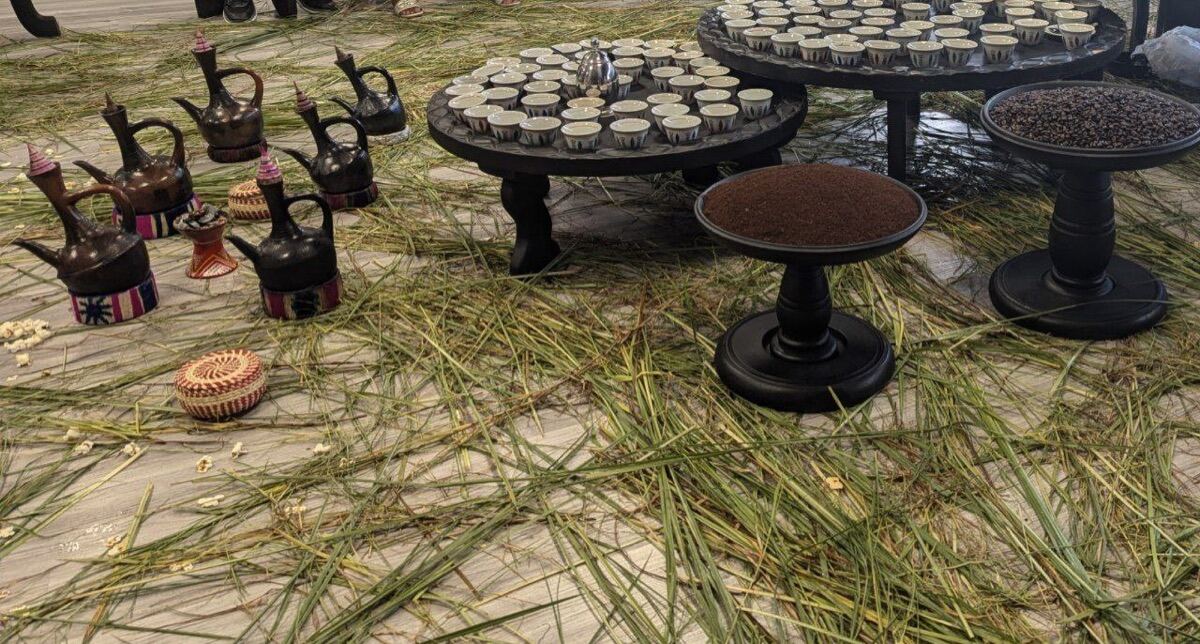
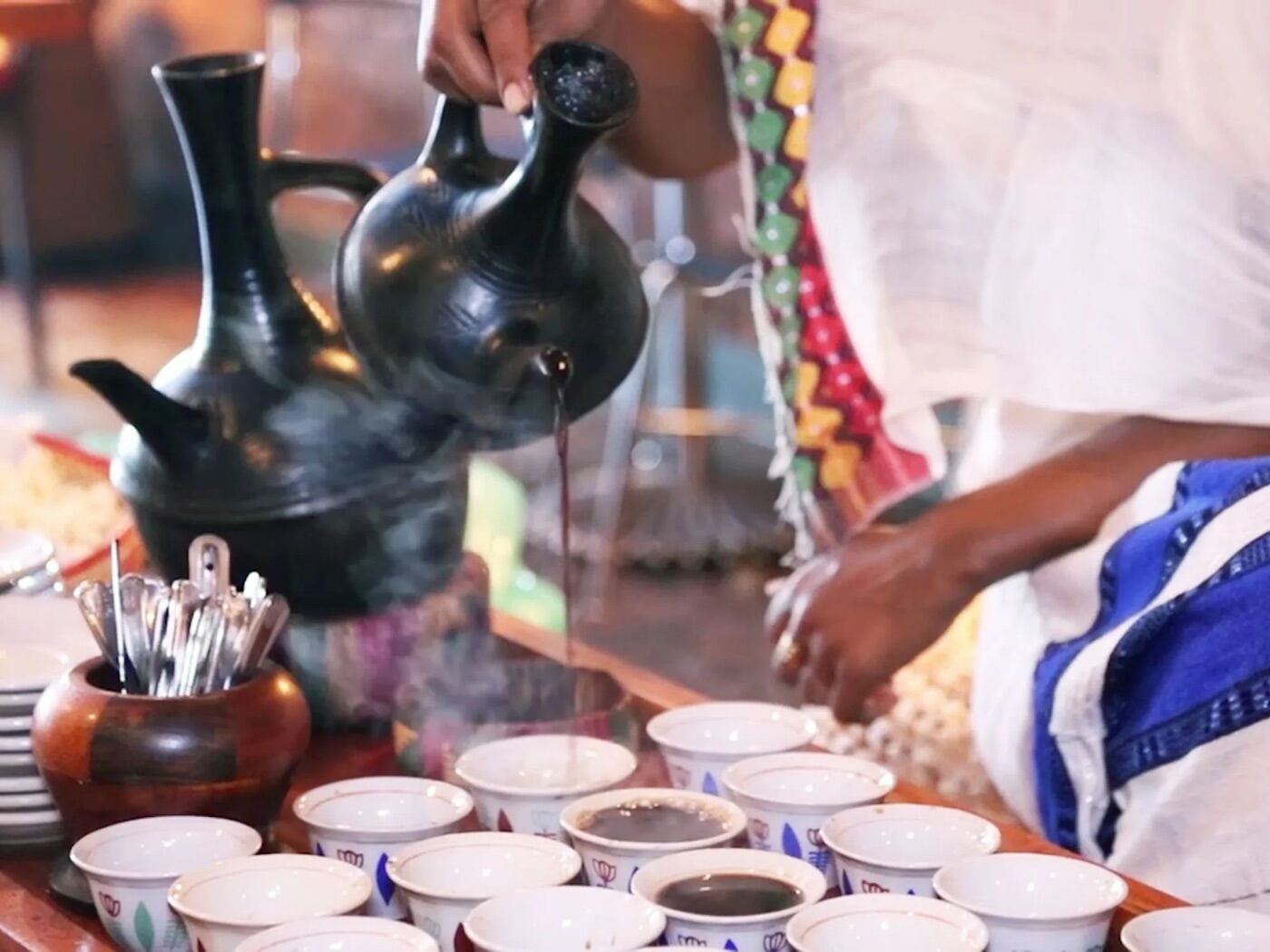 Eine äthiopische Kaffeezeremonie
Kaffee stammt aus Äthiopien. Die Pflanze wächst wild in den südwestlichen Wäldern von Kaffa, und der Legende nach bemerkte ein Ziegenhirte namens Kaldi als Erster ihre belebende Wirkung. Kaffee steht noch immer im Mittelpunkt des Alltags: Mit buna heißt man Gäste willkommen, klärt man Gespräche und verbringt man den Nachmittag.
- Die Kaffeezeremonie: Grüne Bohnen werden über Holzkohle geröstet, von Hand gemahlen und in einer tönernen jebena aufgebrüht, dazu brennt Weihrauch und es gibt Popcorn. Das dauert eine Stunde oder länger, und man erwartet, dass du bleibst.
- Drei Runden: abol, tona und bereka. Alle drei anzunehmen ist höflich; die dritte soll Segen bringen.
- Kaffee im Alltag: Kleine buna bets (Kaffeehäuser) gibt es in jeder Straße, und Addis liebt Macchiato. Eine Tasse kostet ein paar Dutzend Birr.
- Zum Mitnehmen nach Hause: Kauf versiegelte Handelspackungen aus Yirgacheffe, Sidama, Harar oder Guji und heb den Beleg auf (Ausfuhrgrenze 2 kg).
Was du trinken solltest
So gruppiert, dass du Alkohol oder Koffein leicht auslassen kannst.
Kaffee und TeeKoffein
- Buna · Äthiopischer Kaffee, schwarz oder mit Zucker; probier die Zeremonie.
- Macchiato · Die beliebteste Café-Bestellung in Addis.
- Shai · Süßer Tee, oft mit Zimt oder Nelken gewürzt.
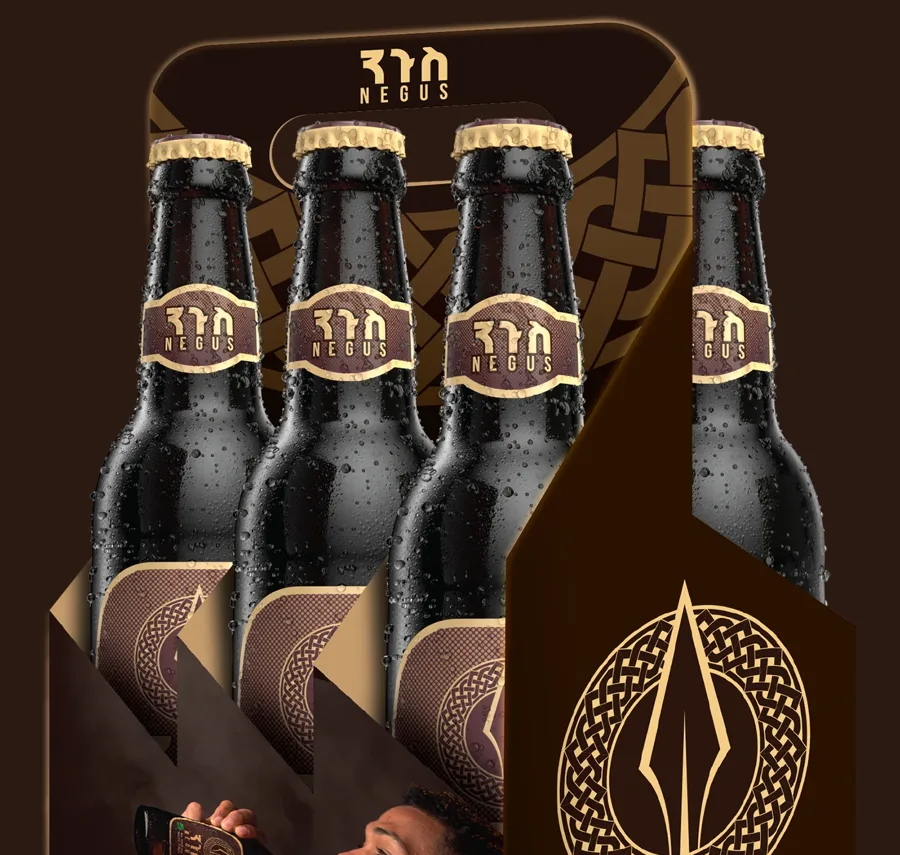 Negus, an Ethiopian coffee-flavoured non-alcoholic malt
AlkoholfreiKein Alkohol
- Sen'q · Malzgetränk von BGI Ethiopia, als alkoholfrei gekennzeichnet.
- Negus · Dunkles Malzgetränk von Habesha Breweries, als alkoholfrei gekennzeichnet.
- Spris · Geschichteter frischer Saft: Avocado, Mango, Papaya.
- Ambo · Natürlich sprudelndes Mineralwasser aus Ambo.
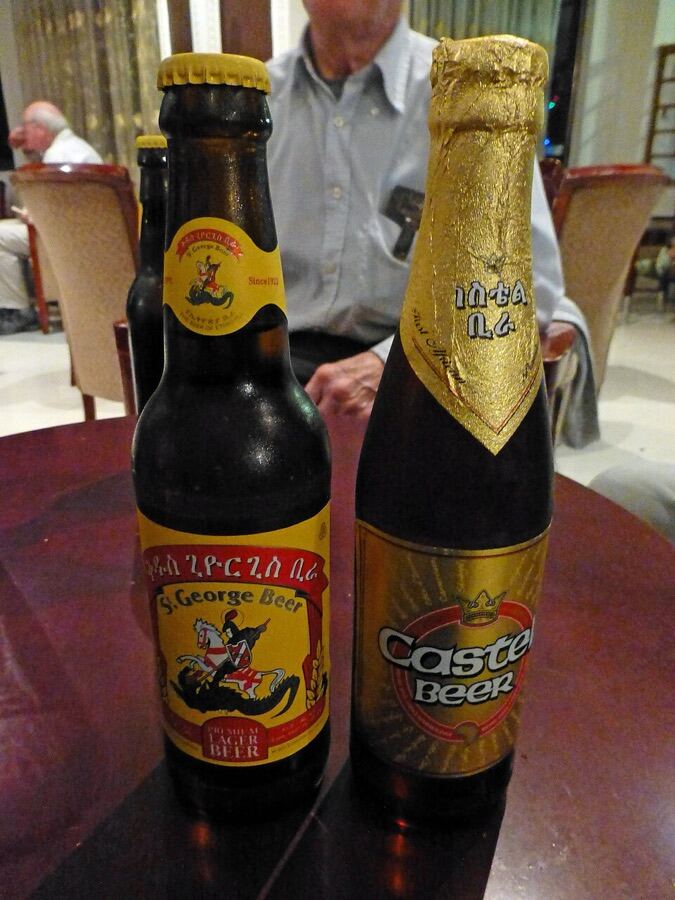
AlkoholAlkohol
- Tej · Honigwein, serviert in einer runden Karaffe (berele).
- Tella und Areke · Selbstgebrautes Bier und ein starker Schnaps.
- Lokale Biere · St. George, Habesha, Walia, Meta, Bedele, Dashen und Harar.
Häufige Fragen
What is injera?
Injera is a large, soft, slightly sour fermented flatbread made from teff flour, sometimes mixed with wheat or barley. Ethiopian food is served on it, and you tear it with your right hand to scoop up stews (wat) and vegetables.
Is Ethiopian food good for vegans?
Yes. On Wednesdays, Fridays and during Orthodox fasting seasons, most restaurants serve fasting food (tsom), which is fully vegan. Beyaynetu, a platter of several fasting dishes on injera, is the best first-time order.
Is injera gluten-free?
Only if it's pure teff. Injera is sometimes mixed with wheat or barley flour, so ask.
What is kitfo?
Kitfo is minced beef with spiced butter and mitmita (chilli powder). It's served raw unless you ask for leb leb (lightly cooked) or yebesele (cooked).
How much does a meal cost in Addis Ababa?
About 250 to 500 ETB for shiro or beyaynetu at a local restaurant, or 600 to 1,200 ETB at a mid-range or hotel restaurant. Meat dishes such as tibs or doro wat cost about 500 to 1,000 ETB locally and 1,000 to 2,500 ETB mid-range.