
 English
 Français
 Español
 العربية
 中文
 עברית
 Deutsch
 Dansk
 हिन्दी
 Soomaali
 Kiswahili
Ethiopian food
Most meals come on injera, a soft, slightly sour flatbread you tear with your right hand to scoop up stews, and this is the birthplace of coffee. Here's what injera is and how to eat it, the dishes to try, the coffee ceremony and what to drink.
What is injera?
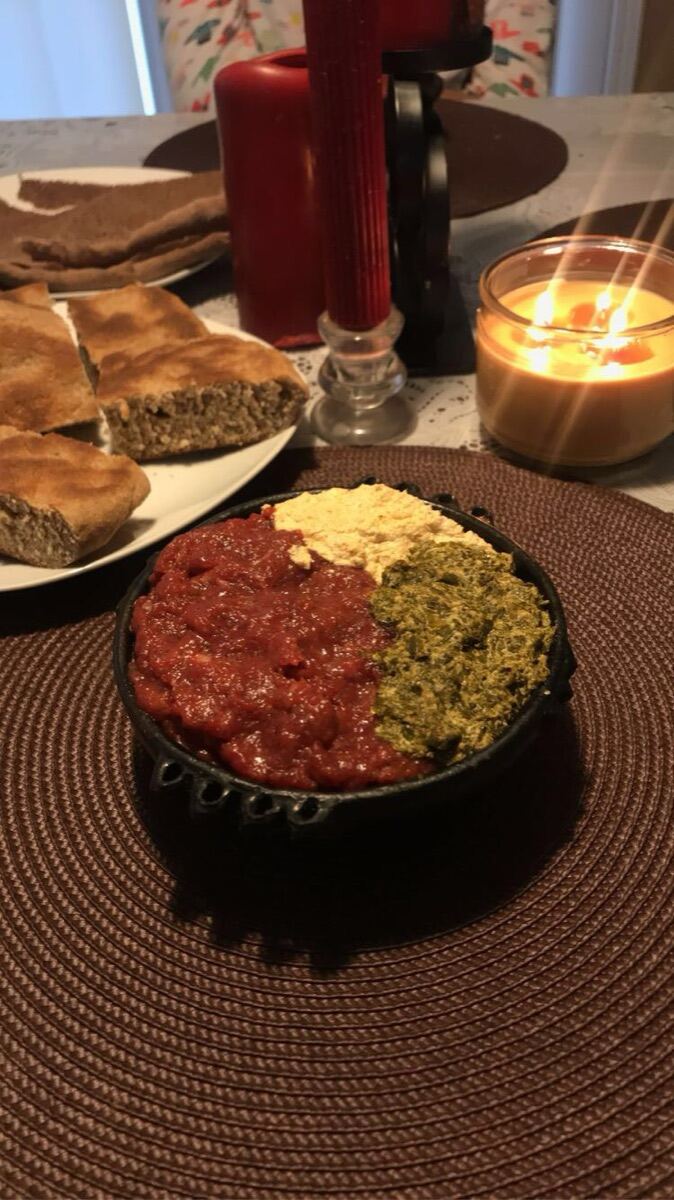
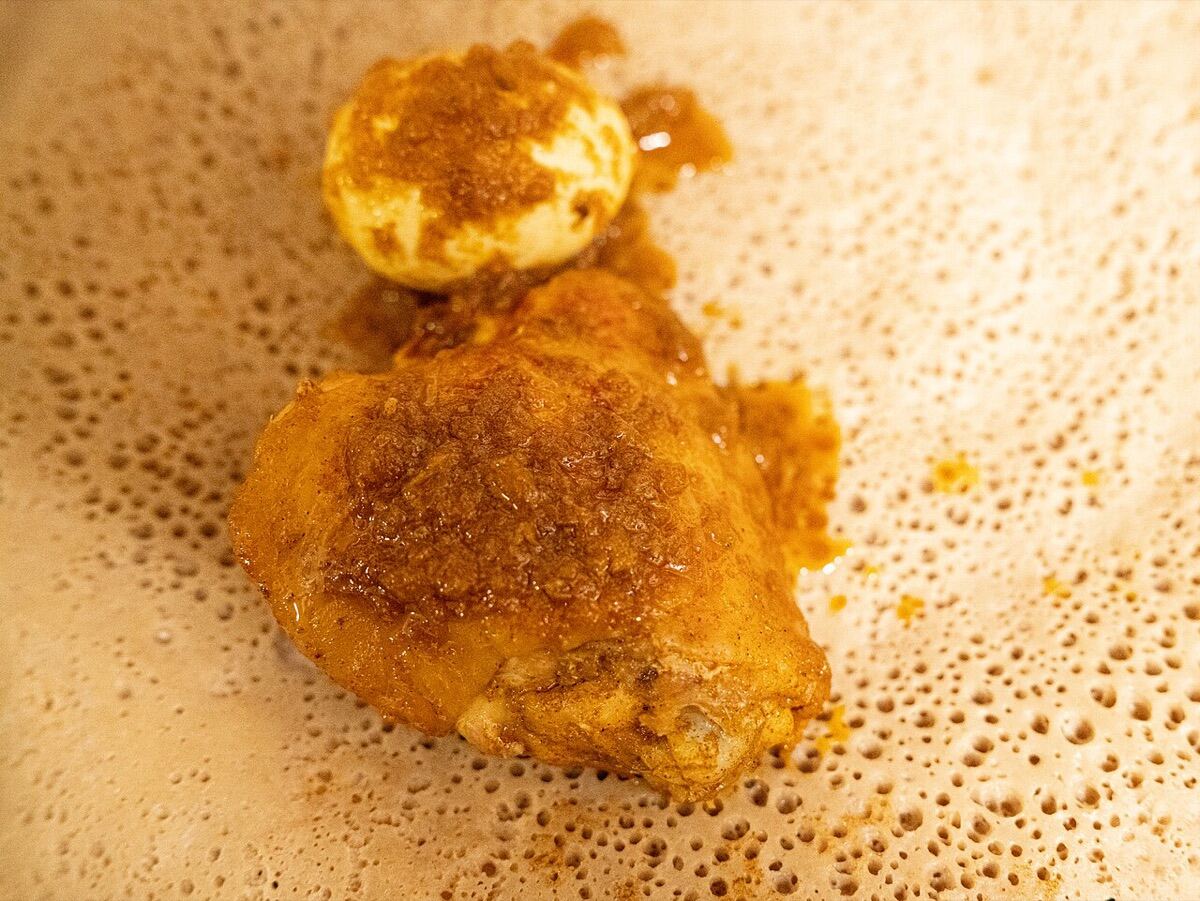
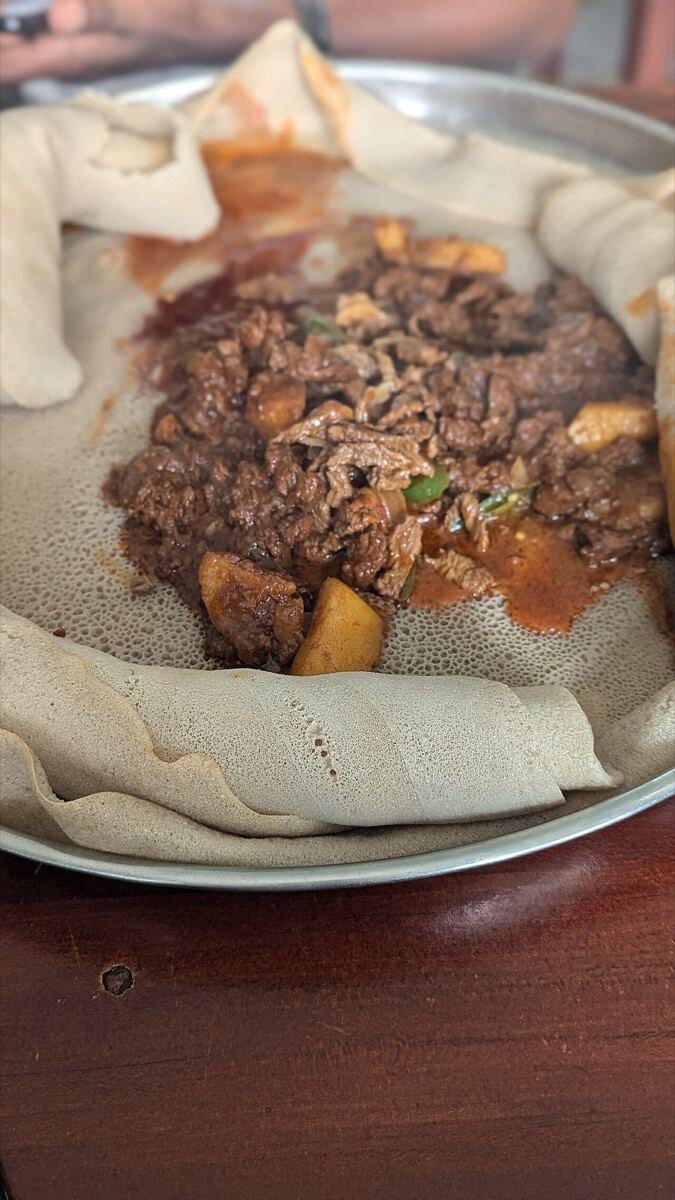
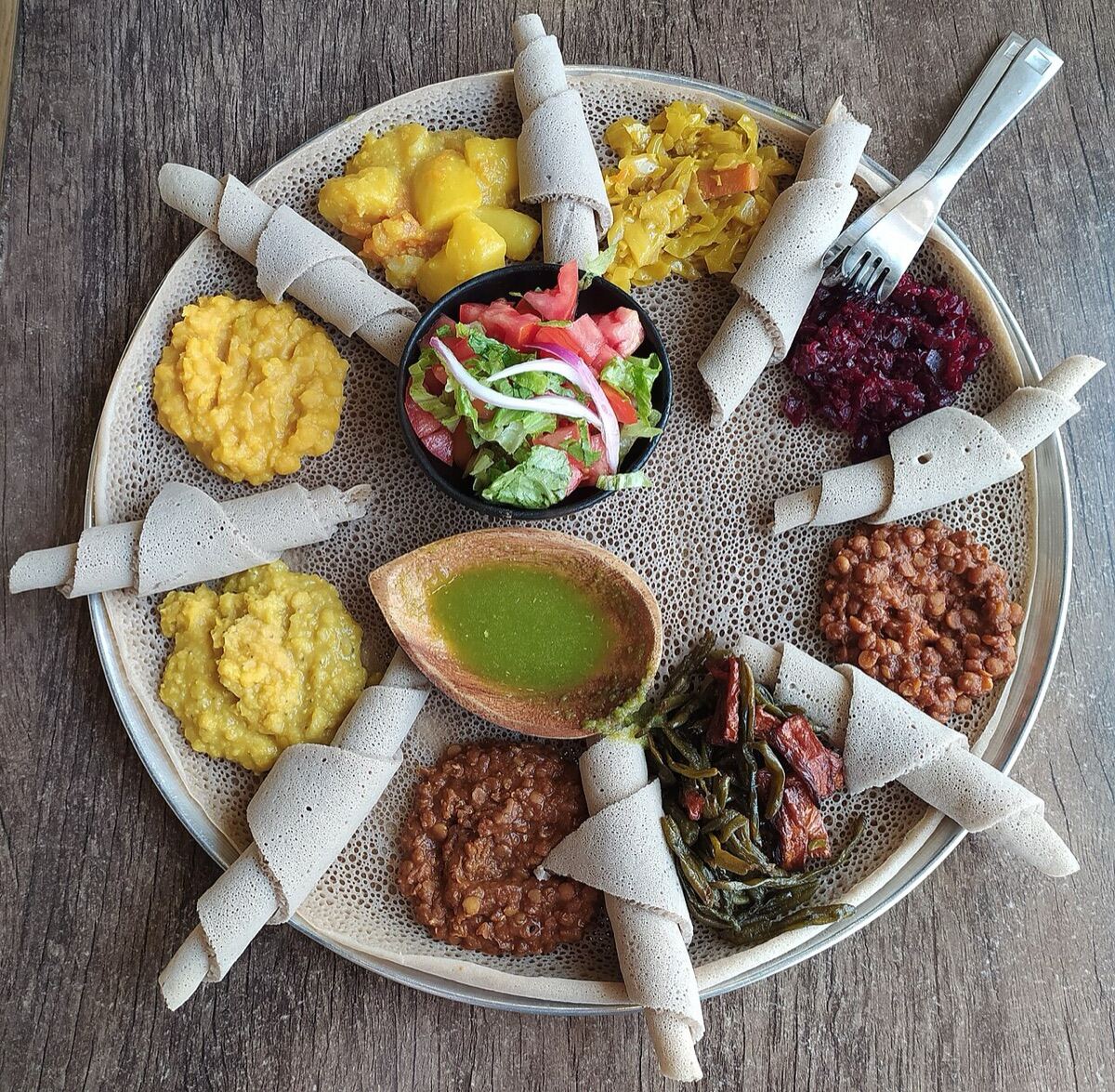
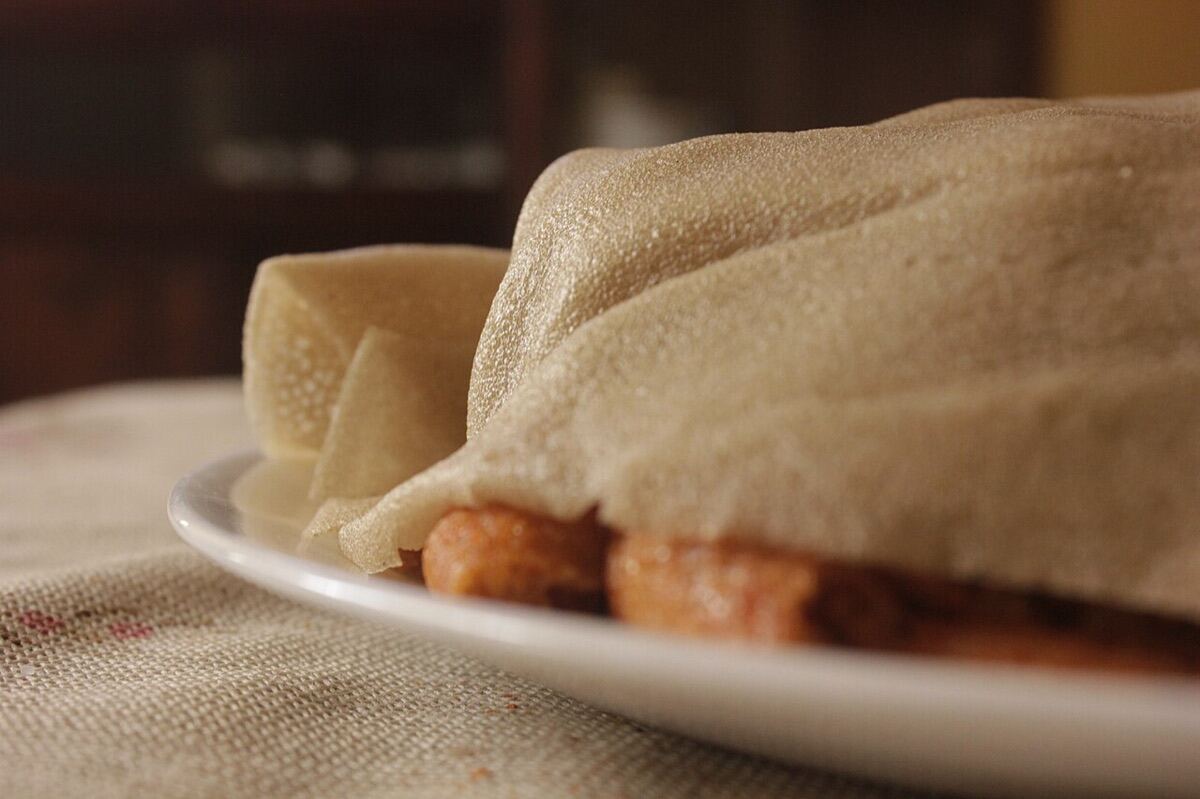
Injera is the soft, spongy, slightly sour flatbread that almost every Ethiopian meal is served on. It's made from teff, a tiny grain grown in the highlands, mixed with water and left to ferment for a few days, then poured into a wide pan and steamed on one side only, which gives it its bubbly top. It's your plate and your spoon: stews are spooned on top, and you eat by tearing off pieces to scoop them up.
How to eat it
- 1Wash your hands first. Restaurants bring water and soap to the table, or have a sink nearby.
- 2Use your right hand only. The left is not used for food.
- 3Tear off a piece from the rolled injera on the side, or from the edge of the big one underneath.
- 4Pinch, don't dip: wrap the piece round a little stew with your fingertips and lift it to your mouth.
- 5Eat from the part in front of you, and save the stew-soaked injera underneath for last: it's the best bit.
- 6Gursha: if someone feeds you a bite with their hand, it's a sign of friendship. Accept it, and return one if you like.
ماذا تأكل
- Doro watيخنة دجاج حارة مع بيضة مسلوقة؛ طبق الأعياد.
- Tibsلحم بقر أو ضأن مقلي مع البصل والفلفل الحار.
- Kitfoلحم بقر مفروم بالزبدة المتبّلة، يُقدَّم نيئًا أو مطهوًا قليلًا (اطلب leb leb).
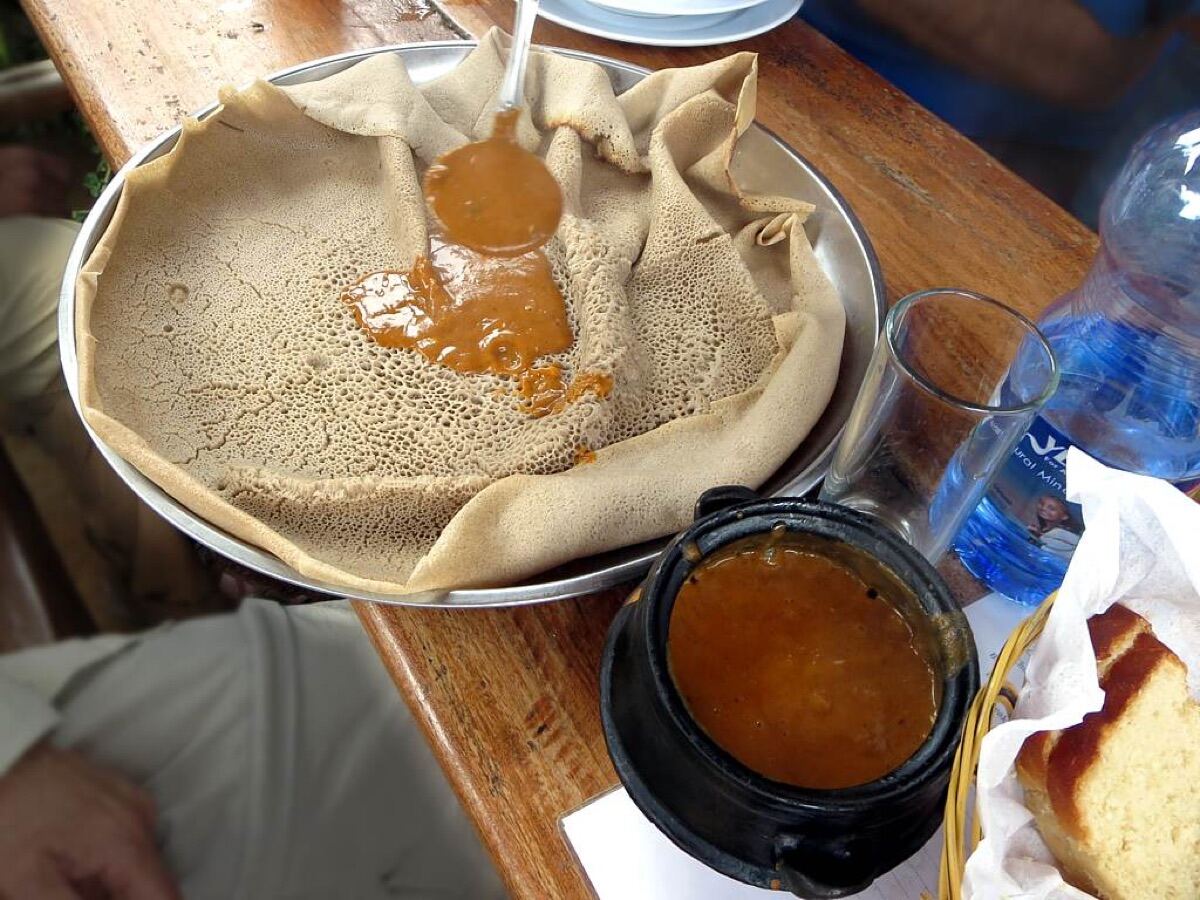 Shiroيخنة الحمص؛ نباتية وموجودة في كل مكان.
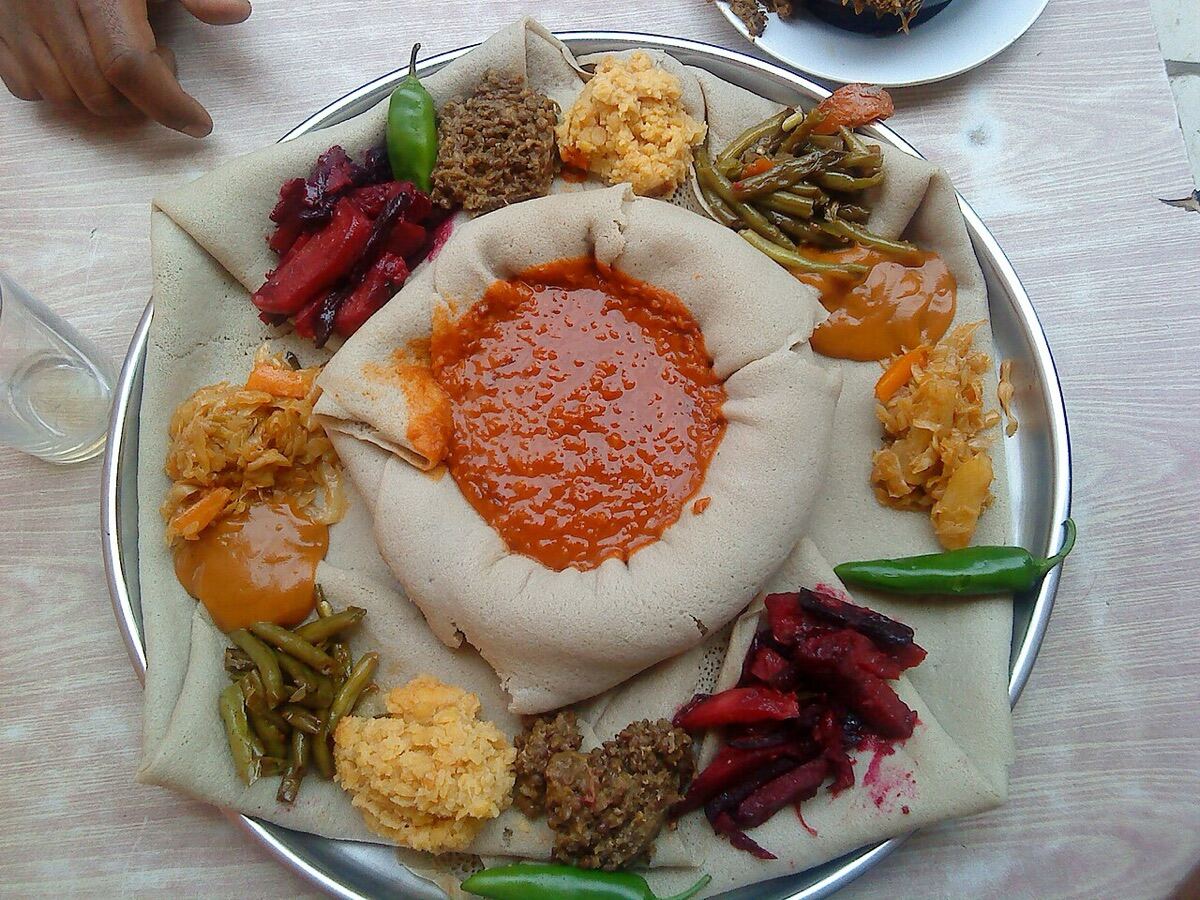 Beyaynetuطبق من أطباق الصيام النباتية. انظر المسافرون النباتيون.
- Firfirإنجيرا مقطّعة في صلصة، طبق مفضل على الفطور.
موطن القهوة
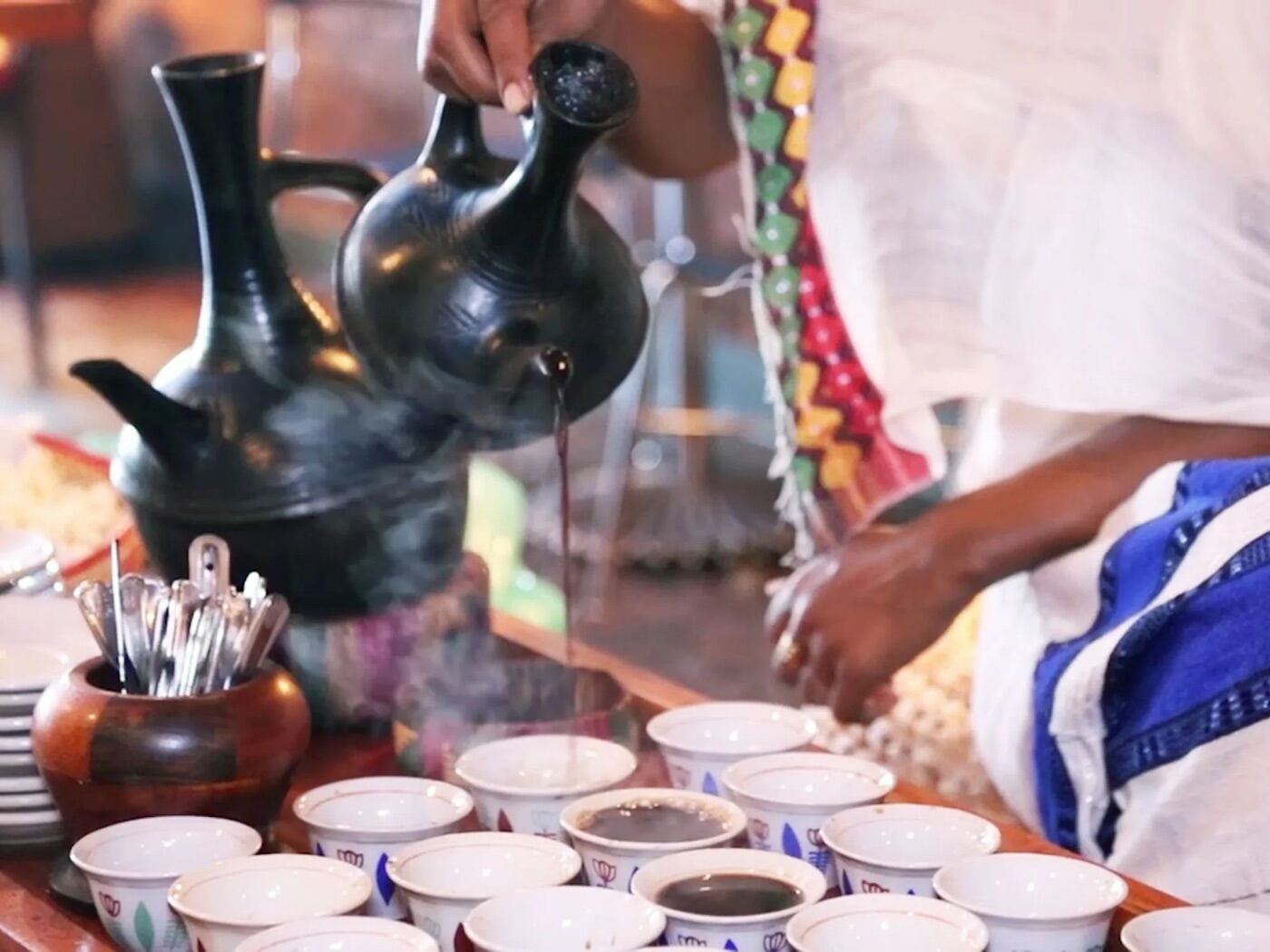 مراسم القهوة الإثيوبية
القهوة أصلها من إثيوبيا. ينمو النبات بريًّا في غابات كافا جنوب غربي البلاد، وتقول الأسطورة إن راعي ماعز اسمه كالدي كان أول من لاحظ أثرها المنشّط. ولا تزال القهوة في قلب الحياة اليومية: بالـ buna يرحّب الناس بالضيف، ويحسمون الحديث، ويمضون فترة ما بعد الظهر.
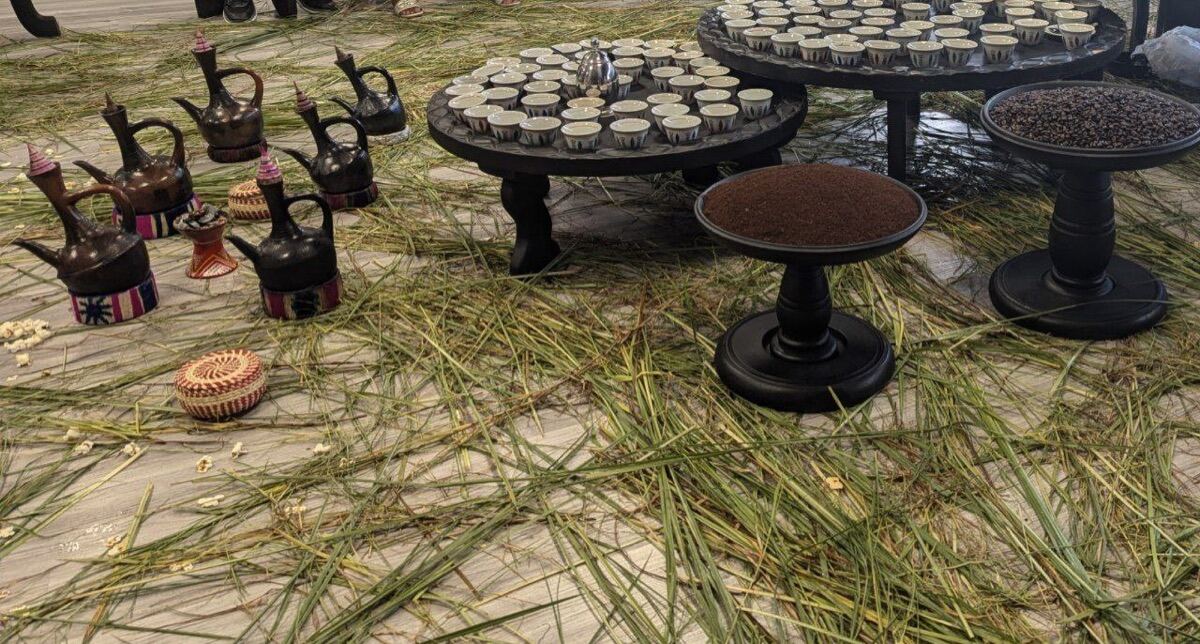
- مراسم القهوة: تُحمَّص الحبوب الخضراء على الفحم، وتُطحن يدويًا، وتُغلى في jebena من الفخار، مع حرق البخور وتقديم الفشار إلى جانبها. تستغرق ساعة أو أكثر، ويُتوقع منك أن تبقى.
- ثلاث جولات: abol وtona وbereka. من اللباقة قبول الثلاث؛ ويقال إن الثالثة تجلب البركة.
- القهوة اليومية: توجد buna bets صغيرة (مقاهٍ) في كل شارع، وأديس تعشق الماكياتو. يكلف الفنجان بضع عشرات من البر.
- لتأخذها معك: اشترِ عبوات تجارية مختومة من يرغاشيفي أو سيداما أو هرر أو غوجي، واحتفظ بالإيصال (حد التصدير 2 كغ).
ماذا تشرب
مصنّفة ليسهل عليك تجنّب الكحول أو الكافيين.
القهوة والشايكافيين
- Buna · القهوة الإثيوبية، سادة أو بالسكر؛ جرّب المراسم.
- Macchiato · الطلب المفضل في مقاهي أديس.
- Shai · شاي محلّى، غالبًا ما يُتبّل بالقرفة أو القرنفل.
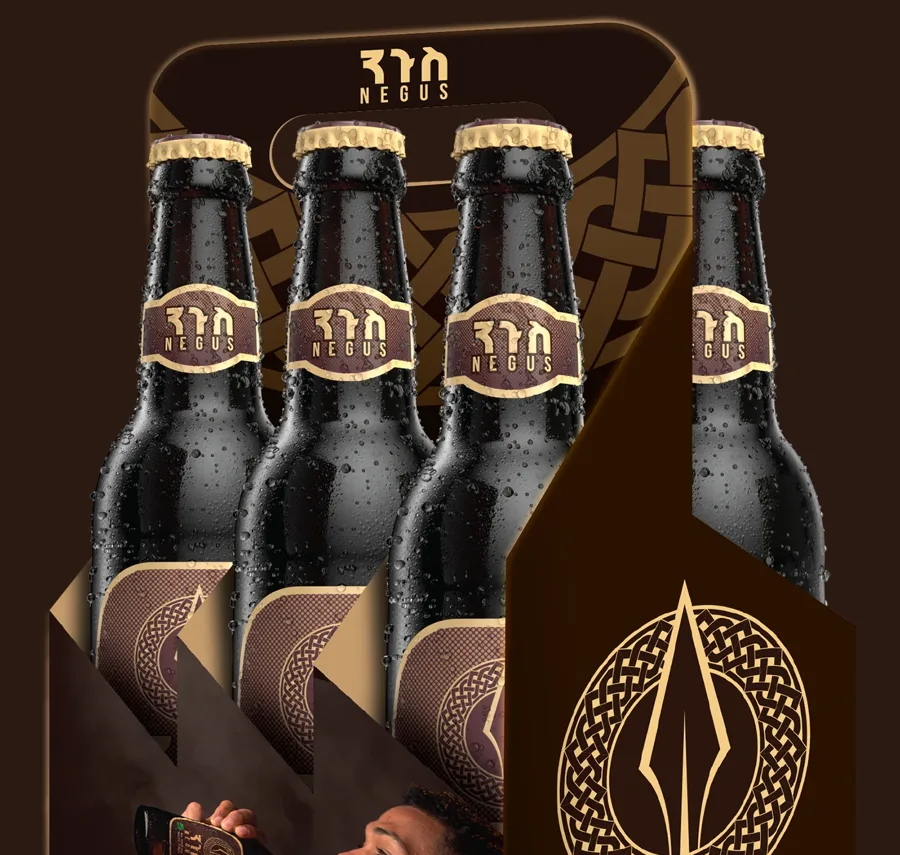 Negus, an Ethiopian coffee-flavoured non-alcoholic malt
مشروبات غير كحوليةبلا كحول
- Sen'q · مشروب شعير من BGI Ethiopia، مكتوب على ملصقه أنه غير كحولي.
- Negus · مشروب شعير داكن من Habesha Breweries، مكتوب على ملصقه أنه خالٍ من الكحول.
- Spris · عصير طازج بطبقات: أفوكادو، مانجو، بابايا.
- Ambo · مياه معدنية فوّارة طبيعيًا من أمبو.
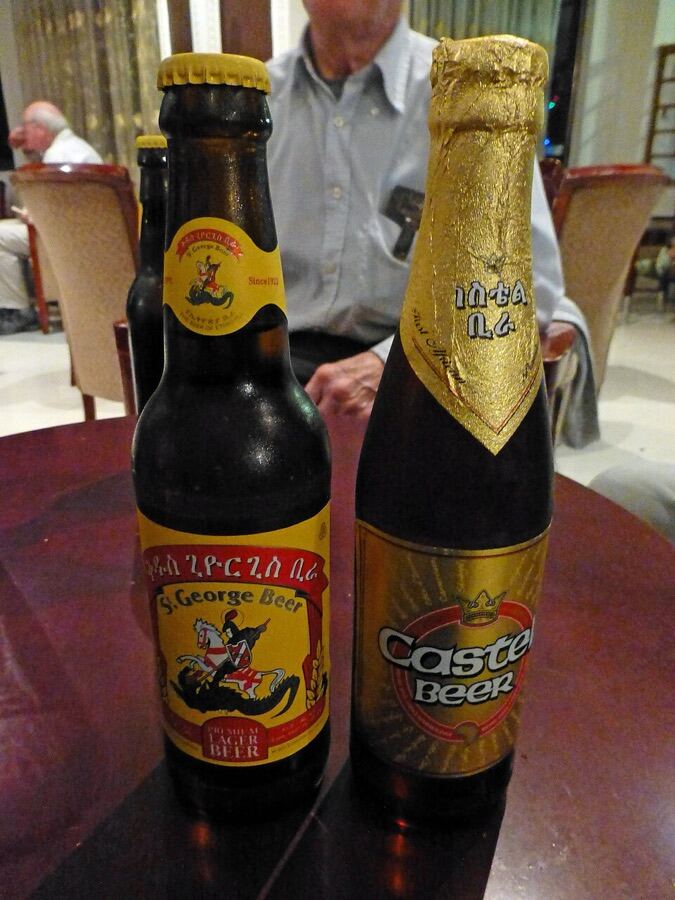
مشروبات كحوليةكحول
- Tej · نبيذ العسل، يُقدَّم في قارورة مستديرة (berele).
- Tella وareke · بيرة منزلية الصنع ومشروب روحي قوي.
- أنواع البيرة المحلية · St. George وHabesha وWalia وMeta وBedele وDashen وHarar.
أسئلة يطرحها الناس
What is injera?
Injera is a large, soft, slightly sour fermented flatbread made from teff flour, sometimes mixed with wheat or barley. Ethiopian food is served on it, and you tear it with your right hand to scoop up stews (wat) and vegetables.
Is Ethiopian food good for vegans?
Yes. On Wednesdays, Fridays and during Orthodox fasting seasons, most restaurants serve fasting food (tsom), which is fully vegan. Beyaynetu, a platter of several fasting dishes on injera, is the best first-time order.
Is injera gluten-free?
Only if it's pure teff. Injera is sometimes mixed with wheat or barley flour, so ask.
What is kitfo?
Kitfo is minced beef with spiced butter and mitmita (chilli powder). It's served raw unless you ask for leb leb (lightly cooked) or yebesele (cooked).
How much does a meal cost in Addis Ababa?
About 250 to 500 ETB for shiro or beyaynetu at a local restaurant, or 600 to 1,200 ETB at a mid-range or hotel restaurant. Meat dishes such as tibs or doro wat cost about 500 to 1,000 ETB locally and 1,000 to 2,500 ETB mid-range.